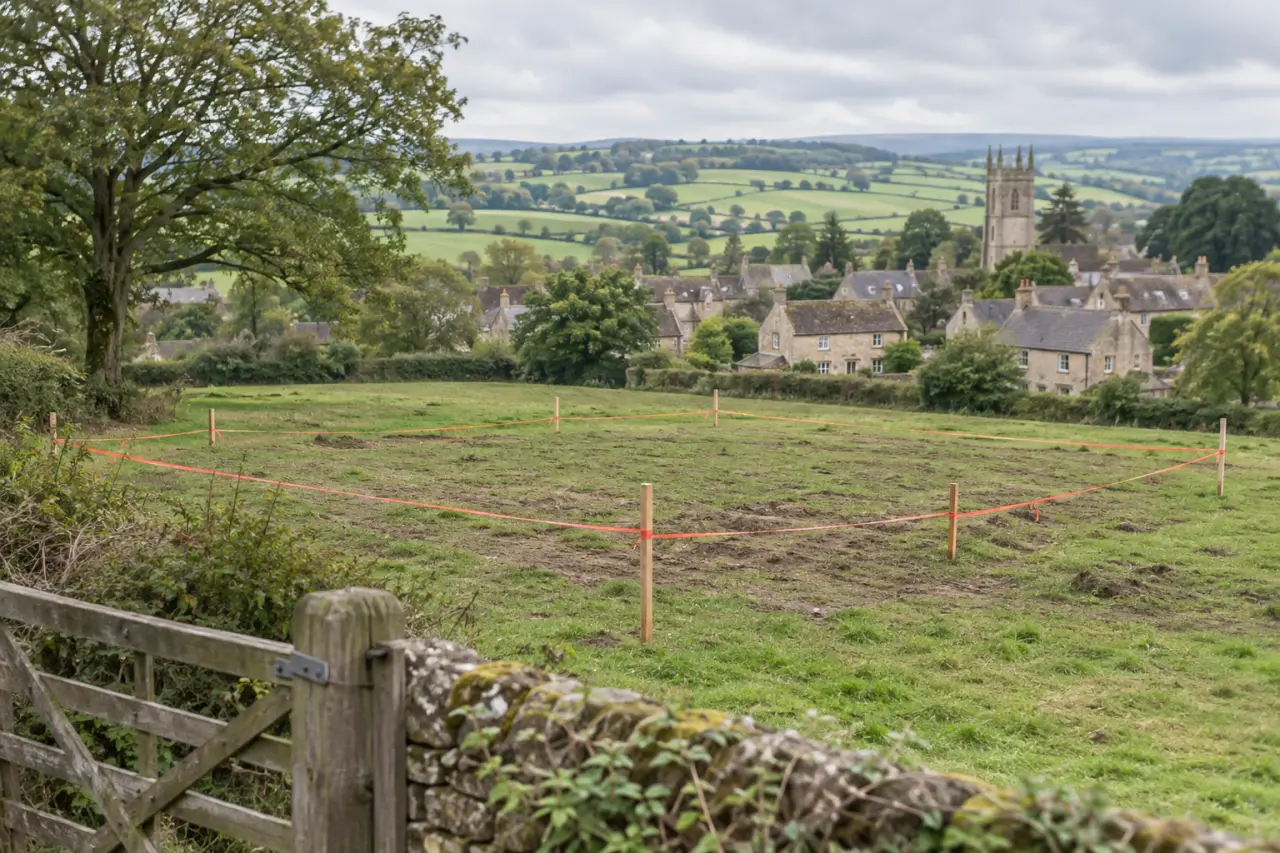
Buying a field that turns out to be registered common land or a town or village green is one of the costliest mistakes a land buyer in England can make. You may own the freehold, but you will not be free to fence it, build on it or stop the public using it. In some cases, a green can be registered after you complete, on the strength of 20 years of local use you knew nothing about.
This guide explains how to check if land is common land or a village green before you exchange contracts. It covers the commons register search, the CON29O common land enquiry, the risk of a village green application, and the restrictions that apply under the Commons Act 2006.
Why Common Land and Village Green Status Matters
Common land is land over which people other than the owner hold rights, such as grazing, collecting firewood (estovers) or taking turf (turbary). Around 3% of England is registered common land, roughly 400,000 hectares, much of it upland moorland in Cumbria, North Yorkshire and the South West. Most common land has an owner. Ownership and common status sit side by side.
Town and village greens are different. They are areas registered because local people have used them for lawful sports and pastimes. Once registered, a green is protected by Victorian statutes that make it a criminal offence to damage it or interfere with its use.
The practical effect for a buyer is simple. Registered status survives a sale. It binds you as the new owner, and removing it is slow, expensive and uncertain.
How to Check if Land Is Common Land: The Main Searches
No single search gives you the full answer. A careful buyer, or their solicitor, should use several sources.
1. Commons Register Search
Every county council and unitary authority in England acts as a commons registration authority. It holds the registers of common land and town or village greens first compiled under the Commons Registration Act 1965 and now maintained under the Commons Act 2006.
Each register entry has three sections:
- Land section: describes the land and shows it on a register map
- Rights section: lists the common rights and who holds them
- Ownership section: records any owner who registered under the 1965 Act (often blank)
You can ask the authority for an official search of the commons register, and many also allow you to inspect the registers in person or by appointment. Fees vary by authority, so check with the council directly. An official search result gives you a formal record of what the register showed on that date, which is more useful than an informal email reply.
Ask the authority two extra questions:
- Are there any pending applications to register the land, or nearby land, as common land or a green?
- Has any landowner statement or trigger event been recorded against the land?
Pending applications do not always appear on the register itself, so ask expressly.
2. The CON29O Common Land Enquiry
The standard local authority search (LLC1 plus CON29) does not cover common land. You need the optional enquiries on form CON29O. Question 22 asks whether the land, or any land adjoining it, is registered as common land or a town or village green, and whether any application to register is pending.
Your conveyancer must tick this box specifically, as optional questions are not included by default. Each optional question carries a separate fee set by the council. For rural land, paddocks, woodland, roadside verges or any open land in or near a settlement, the CON29O common land enquiry should be treated as essential.
The LLC1 official search through HM Land Registry costs £15, but the CON29 and CON29O are still issued by the council, which sets its own charges.
3. Land Registry Title Checks
The title register may not mention common land status. Registration of land at HM Land Registry and registration in the commons register are separate systems. Common land registered under the 1965 Act could not be registered at the Land Registry until much later, and many commons remain unregistered titles.
Still, start with the title. An official copy of the register costs £7 online and the title plan another £7 (£14 together). Look for:
- Any notes referring to the Commons Registration Act 1965 or the Commons Act 2006
- Restrictions or entries mentioning common rights
- Gaps where the land you are buying is not registered at all
If part of the land is unregistered, a search of the index map (£8) will confirm that. Unregistered open land should raise your guard. Our guide to understanding the Land Registry explains how to read title documents in detail.
4. Online Mapping
Defra's MAGIC map shows registered common land and Countryside and Rights of Way Act 2000 open access land across England. It is a quick first check before you spend money on formal searches. Treat it as a guide only. It can lag behind the register and does not show pending applications or village greens in every case.
5. Site Inspection and Local Knowledge
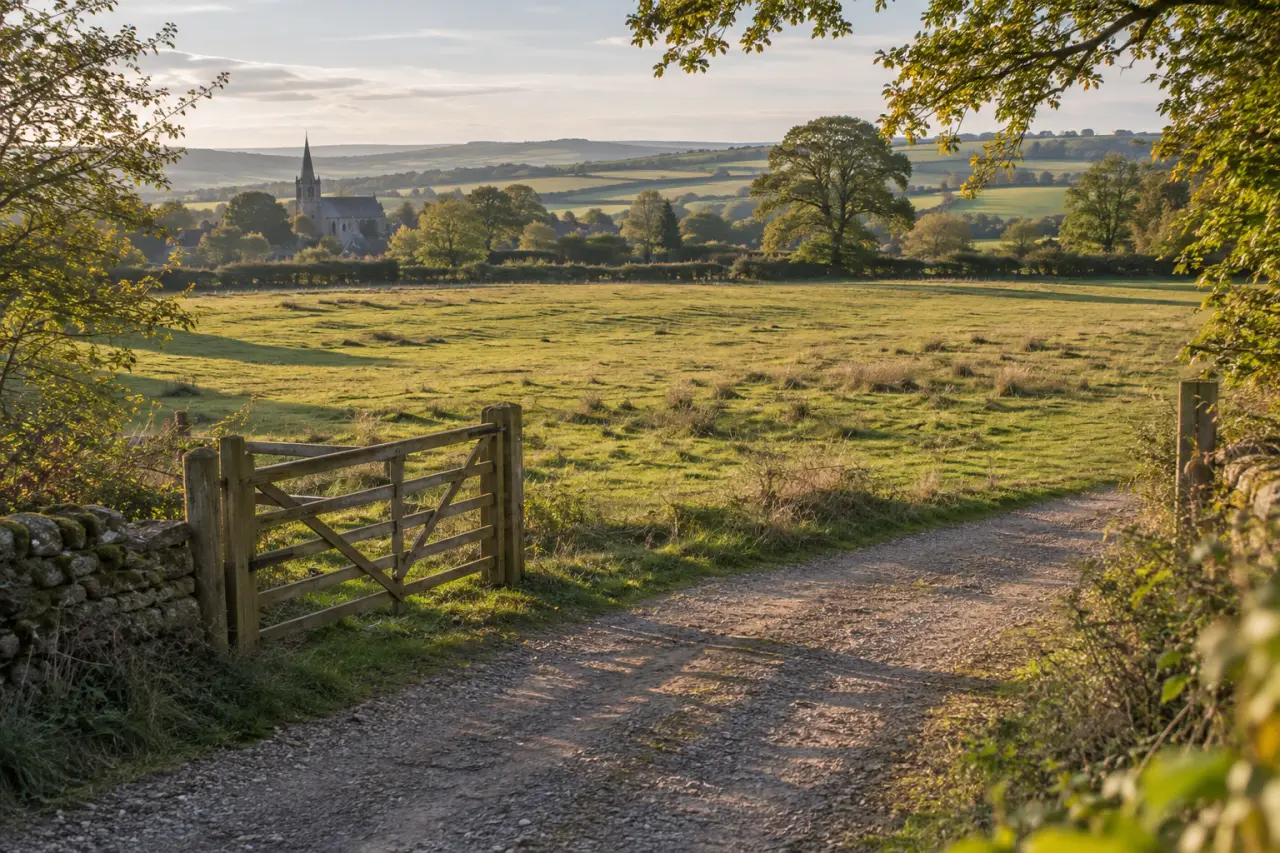
Walk the land. Look for worn paths, dog walkers, goalposts, benches, bonfire sites, play equipment or signs. Talk to neighbours and the parish council. Evidence of regular informal public use is the clearest warning sign of a future village green application.
Village Green Application Land: The Hidden Risk
Common land is mostly a historic designation, and new registrations are rare. Town and village green registration is different, because new greens can still be created.
Under section 15 of the Commons Act 2006, any person can apply to register land as a green if a significant number of inhabitants of a locality, or of a neighbourhood within a locality, have used it for lawful sports and pastimes "as of right" for at least 20 years.
"As of right" means without force, without secrecy and without permission. If the owner has openly tolerated dog walking for two decades without objecting, that use can qualify. If the owner granted permission, it does not.
The application can be made while the use continues, or within one year after it stops. The courts have looked at this test closely. In Oxfordshire County Council v Oxford City Council (2006), the House of Lords confirmed that scrubby, partly inaccessible land could be registered. In R (Barkas) v North Yorkshire County Council (2014), the Supreme Court held that land held under a statutory power for public recreation was used "by right", not "as of right", so could not be registered.
For a buyer, the danger is that registration can happen after completion, based on use that took place under the previous owner.
Trigger Events and Exclusions
The Growth and Infrastructure Act 2013 inserted section 15C and Schedule 1A into the Commons Act 2006. These say that the right to apply is suspended once certain "trigger events" have occurred, such as:
- Publication of a planning application for development of the land
- Publication of a draft development plan identifying the land for development
- Adoption of a local or neighbourhood plan allocating the land
The right revives only if a matching "terminating event" occurs, for example the application being withdrawn or refused with appeal rights exhausted. If you are buying land with development potential, find out whether a trigger event has already happened. Our guide to planning permission explained covers how planning applications and local plan allocations work.
Landowner Statements Under Section 15A
An owner can bring "as of right" use to an end by depositing a statement and map with the commons registration authority under section 15A. In England this is done on form CA16. From the date of deposit, any use of the land is treated as no longer being as of right, and the one-year period for applications begins to run.
Ask the seller whether a statement has been deposited. If not, consider depositing one yourself immediately after completion. It costs far less than defending a contested application. Owners often combine it with a highways statement under section 31(6) of the Highways Act 1980 to protect against new public rights of way.
Registered Common Land Restrictions
If your searches confirm the land is registered common land, these are the main restrictions you will inherit.
Section 38 Consent for Works
Under section 38 of the Commons Act 2006, you need consent from the Secretary of State, handled by the Planning Inspectorate, before carrying out "restricted works" on registered common land. These include:
- Fencing or any work that prevents or impedes access
- New buildings or structures
- Digging ditches, trenches or embankments
- Resurfacing, other than repairs to existing surfaces
Planning permission does not replace section 38 consent. You may need both. Unauthorised works can be the subject of enforcement action by the local authority or any interested person.
Public Access and Common Rights
Most registered common land is access land under the Countryside and Rights of Way Act 2000. The public has a right to walk across it. Commoners can exercise their registered rights, and you cannot extinguish those rights by fencing them out.
Village Green Protections
Once land is registered as a green, section 12 of the Inclosure Act 1857 and section 29 of the Commons Act 1876 make it an offence to damage the green, encroach on it or interfere with its use as a place of recreation. Development is effectively blocked.
Deregistration and Exchange
You can apply under section 16 of the Commons Act 2006 to deregister common land or a green. Where the area is more than 200 square metres, you must offer suitable replacement land of equal value to the public. The Secretary of State weighs the interests of local people, the public and the commoners. Applications are often opposed, and success is far from certain. Do not buy on the assumption that deregistration will be granted.
The Supreme Court decision in R (Lancashire County Council) v Secretary of State (2019) also confirmed that land held by public bodies for statutory purposes may be incompatible with green registration. That helps some public sellers, but rarely helps private buyers.
Buying Common Land in England: Valuation Effects
Registered status has a heavy effect on value. Registered common land with active grazing rights often sells for a small fraction of comparable unrestricted farmland. Prices of £1,000 to £3,000 per acre are typical for upland commons, against £8,000 to £12,000 per acre for unrestricted pasture in many parts of England. Ownership of a common may still carry value through sporting rights, mineral rights or environmental scheme income.
If you are offered land at a price that seems too good, common or green status is one of the first things to rule out. A professional land valuation should reflect any registration, pending application or realistic risk of one.
Regional Differences Across the UK
This guide focuses on England. The rules elsewhere differ:
- Wales: The Commons Act 2006 applies, but with Welsh regulations and forms, and decisions go to Welsh Ministers. Trigger events and landowner statements also apply, with some differences in detail. Wales has a high proportion of common land, about 8% of its area.
- Scotland: There is no commons register or village green system. Buyers should instead consider common good land held by councils, crofting law and the right of responsible access under the Land Reform (Scotland) Act 2003.
- Northern Ireland: There is no equivalent commons registration regime.
A Pre-Purchase Checklist
Before you exchange, make sure you have:
- Checked the MAGIC map for registered common land and access land
- Obtained official copies of the title register and plan, plus an index map search for any unregistered parts
- Requested an official search of the commons register from the county or unitary authority
- Included CON29O question 22 in your local search
- Asked the registration authority about pending applications, trigger events and landowner statements
- Inspected the land for signs of public recreational use
- Raised specific pre-contract enquiries with the seller about public use and any challenges to it
- Planned to deposit a section 15A landowner statement on completion if the risk is real
For the wider process, read our complete guide to buying land in the UK.
Final Thoughts
Common land and village green status can make an attractive plot almost unusable for the purpose you had in mind. The searches are not expensive, and they take a few weeks at most. Skipping them can leave you with land you cannot fence, build on or sell at the price you paid.
The most important points are to search the commons register formally, add the CON29O common land enquiry to your local search, and assess the risk of a future village green application on any land the public already uses. If you do find registered status, take specialist legal advice before you commit.
Thinking of buying land in England? Get a free land valuation to understand what a plot is really worth, including the effect of any designations.