Many land buyers assume their solicitor will uncover every problem with a plot. They won't. A conveyancer works to a defined retainer. They check title, raise enquiries and order standard searches. They do not walk the site or tell you whether the field floods every February. They will not price a new water connection either.
This guide covers the pre purchase land checks you should carry out yourself, ideally before you make an offer and certainly before instructing a solicitor. Most cost little or nothing. A few hours of work can save you from a plot you cannot reach, build on or sell.
Why Your Solicitor Leaves Gaps
Conveyancing is a legal process, not a survey. Your solicitor's job is to confirm the seller owns what they are selling and that you receive good title. They will flag legal issues in the documents they review. They are not paid to assess the physical land or its development potential, and most engagement letters say so expressly.
Standard searches are also desktop exercises. An environmental search reads databases. A local authority search answers set questions about a specific address or plan. Neither tells you what is happening on the ground today.
There is a practical reason to do your own checks early too. By the time your solicitor reports, you have usually paid for searches and legal time. Finding a deal-breaker at that point costs money. Finding it before your offer costs nothing.
For the wider buying process, see our complete guide to buying land in the UK.
Land Checks Before Offer: Start With the Title
You do not need a solicitor to look at the register. In England and Wales, anyone can download title documents from HM Land Registry.
- Property summary: free through GOV.UK's "search for land and property information" service. It confirms whether the land is registered and gives the title number.
- Official copy of the register: £7 online.
- Official copy of the title plan: £7 online, or £14 for register and plan together.
- Documents referred to in the register: £7 each online. These are the conveyances and transfers that often contain covenants and easements.
- Search of the index map: £8. Useful when you are not sure whether a field is registered or which title covers it.
Read the register for restrictive covenants, rights granted to neighbours and any charges. Look out for entries such as "no buildings other than agricultural buildings" or a covenant requiring a third party's consent to build. These can kill a development plan outright.
Compare the title plan with what the agent is marketing. Sales particulars sometimes include strips the seller does not own. Our guide to understanding Land Registry explains how to read these documents.
In Scotland, title sits with Registers of Scotland. In Northern Ireland, use Land & Property Services. Fees and procedures differ, so check the relevant service.
The General Boundaries Rule
Under section 60 of the Land Registration Act 2002, title plans show general boundaries only. The red line does not fix the exact legal boundary. If a precise line matters, for example on a narrow building plot, walk it with the plan and look for older deeds that describe it in detail.
Walk the Land Yourself
No search replaces a site visit. Go more than once if you can, and ideally after heavy rain.
When you visit, look for:
- Physical boundaries that do not match the plan. Fences move over decades. A neighbour may have enclosed part of the land, which can raise an adverse possession claim.
- Signs of occupation. Grazing animals, parked caravans, stored materials or a lock on the gate all suggest someone else uses the land. Ask the seller who and on what terms.
- Worn paths and stiles. These point to public rights of way or informal use.
- Overhead lines and poles. These usually mean a wayleave or easement with a network operator. They can restrict where you build.
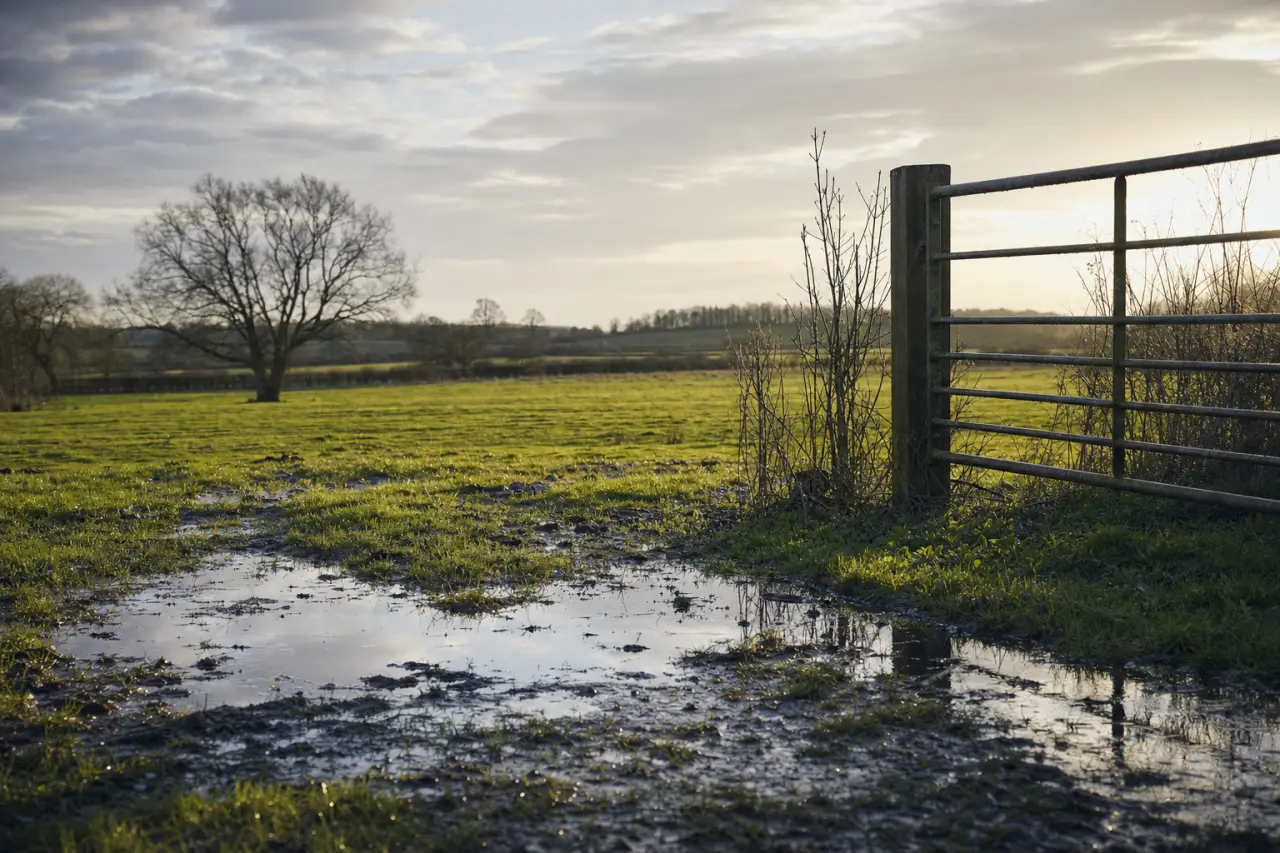
- Standing water, rushes or reeds. A clear sign of poor drainage.
- Invasive plants. Japanese knotweed, Himalayan balsam and giant hogweed are all expensive to treat. Knotweed can affect mortgage lending on any future home.
Take dated photographs. They become useful evidence if a dispute about boundaries or occupation arises later.
Access: The Most Common Deal-Breaker
A plot without lawful access has little value. Your solicitor will check the title for rights of way, but they will not confirm that the access works in practice.
Adopted Highway
Check that the land abuts an adopted highway along its whole frontage. A thin strip of land between the road and the plot, often called a ransom strip, can be owned by someone else. The highway authority at your county or unitary council can provide a highway extent plan. Fees vary, so check with the council.
Private Rights of Way
If access is over a private track, read the deed that grants the right. A right of way "for agricultural purposes" will not cover traffic to a new house. A right "on foot only" will not let you drive a tractor in.
Visibility Splays
For any development, the highway authority will want safe visibility at the entrance. If hedges on neighbouring land block the view, you may not achieve the splay without third-party consent.
Public Rights of Way
Check the definitive map held by the county or unitary council. A footpath or bridleway across the middle of a field is not necessarily a problem for grazing, but it will shape any building layout. Diverting it requires a formal order.
Planning History and Policy
Your solicitor's local authority search will list some planning decisions. It will not tell you whether your intended use is realistic. That judgement is yours, or your planning consultant's.
Before making an offer:
- Search the council's planning portal for applications on the site and neighbouring land. Read refusal notices and officer reports. They show exactly what the council objected to.
- Read the local plan. Check whether the land sits inside or outside a settlement boundary and whether it is allocated for any use.
- Check designations. Green Belt, National Landscapes (formerly AONBs), National Parks, conservation areas and Sites of Special Scientific Interest all restrict development.
- Look for Tree Preservation Orders. The council keeps a register.
- Check for an Article 4 Direction. This removes permitted development rights, including some agricultural ones.
Under the Town and Country Planning Act 1990, decisions are made in line with the development plan unless material considerations indicate otherwise. If the plan says no, you are buying on hope. Price the land accordingly. Our article on planning permission explained covers the process in detail.
Biodiversity Net Gain
In England, most new planning permissions must deliver a 10% biodiversity net gain under the Environment Act 2021. This has applied to major developments since February 2024 and small sites since April 2024. A field rich in hedgerows or wildflowers can carry a high baseline value. That makes the gain harder and more expensive to deliver on site. An ecologist's preliminary appraisal before you commit is money well spent.
Flood Risk and Ground Conditions
Flood Risk
Check the official flood maps yourself. They are free.
- England: Environment Agency flood map for planning and long-term flood risk service.
- Wales: Natural Resources Wales flood risk maps.
- Scotland: SEPA flood maps.
- Northern Ireland: DfI Rivers flood maps.
Land in Flood Zone 3 faces a sequential test for most development. Surface water flooding is shown separately and is often overlooked. Ask neighbours too. Local knowledge is often more accurate than any model.
Mining and Ground Stability
In former coalfield areas, including parts of the Midlands, South Wales, Yorkshire, the North East and Central Scotland, order a Coal Authority report. Old shafts can sterilise part of a plot. Cornwall and parts of Devon have their own metal mining history and need separate checks.
Contamination
A desktop environmental search flags past uses such as landfill, fuel storage or industry. If the land was a farmyard, expect buried waste, old fuel tanks or asbestos sheeting. For development land with any doubtful history, budget for a Phase 1 site investigation.
Radon
In high radon areas, new homes need protective measures. UKHSA radon maps show the risk by area. It is a modest build cost, but you should know about it.
Services and Utilities
No standard search tells you what it will cost to connect electricity, water and drainage. On a rural plot, connection costs can run into tens of thousands of pounds and occasionally more than the land itself.
- Electricity: request a budget estimate from the local distribution network operator. Distance to the nearest suitable supply drives the cost.
- Water: contact the water company. Ask where the nearest main is and whether it has capacity.
- Drainage: if there is no public sewer within reach, you will need a package treatment plant. In England, the General Binding Rules control discharges. Discharge to a watercourse may need a suitable ditch with year-round flow. Check whether one exists.
- Broadband: check coverage if you plan to build a home or run a business.
Get these estimates before you negotiate. They are a legitimate reason to adjust your offer.
Tenancies, Agreements and Hidden Obligations
Agricultural Tenancies
Ask directly whether anyone farms the land. A tenancy under the Agricultural Holdings Act 1986 can carry lifetime security and, in some cases, succession rights. A Farm Business Tenancy under the Agricultural Tenancies Act 1995 is easier to end, but still requires proper notice. Informal grazing arrangements can sometimes be argued into tenancies.
Environmental Schemes
If the land is in a Countryside Stewardship or Sustainable Farming Incentive agreement, ask for the paperwork. Breaching or ending an agreement early can trigger repayment. Find out whether the seller expects you to take it on.
Overage and Clawback
Land sold by councils, developers or previous owners often carries overage. This entitles the earlier seller to a share of any uplift in value if planning is granted. It may appear as a restriction on the register or only in an old contract. Ask the agent at the outset.
Chancel Repair Liability
Some land in England and Wales remains liable to contribute to repairs of a parish church chancel. Insurance is usually inexpensive, but raise it early.
Tax and Valuation Checks
VAT
Commercial land may be subject to an option to tax. If so, VAT at 20% applies on top of the price. That changes the economics for buyers who cannot recover it. Ask the agent whether the seller has opted.
Stamp Duty and Its Equivalents
Bare land is usually non-residential for SDLT in England and Northern Ireland. Rates are 0% up to £150,000, 2% from £150,001 to £250,000 and 5% above that. Scotland charges Land and Buildings Transaction Tax and Wales charges Land Transaction Tax, each with its own bands. Mixed-use purchases need careful thought. Take tax advice before you agree a structure.
Is the Price Right?
Agricultural land in England has typically traded somewhere between £8,000 and £12,000 per acre in recent years. Small paddocks and amenity plots near villages can fetch far more per acre. Land with real development prospects sits in another bracket entirely. Compare recent sales in the same area, for example through our Somerset land listings, and consider an independent land valuation before you commit.
Your Checklist Before Instructing a Solicitor
Work through these steps in order:
- Download the free property summary and confirm the title number.
- Buy the register and title plan for £14 online and read both.
- Order key filed deeds referenced in the register at £7 each.
- Visit the site at least twice and photograph boundaries, access and any occupation.
- Confirm the access route against the highway extent and any private rights.
- Check the definitive map for public rights of way.
- Review planning history, local plan policy and designations.
- Check flood maps and any mining or contamination history.
- Obtain utility connection estimates.
- Ask the seller in writing about tenancies, schemes, overage and VAT.
When you then instruct a solicitor, hand over your findings. Ask them to address specific concerns. A focused instruction often leads to a faster and cheaper transaction.
Final Thoughts
Your solicitor protects your legal position. Protecting the practical and commercial value of the land is your responsibility. Carry out these land checks before your offer and you negotiate from knowledge rather than hope. Problems you find early become bargaining points. Problems you find late become costs.
Knowing what the land is worth is a good place to start. Get a free land valuation before you make your offer.