Land for Sale in Cornwall
South West · ENGLAND
Key Facts
Avg. Price/Acre
£9,500
area
1,376 sq miles
major Towns
Truro, Falmouth, Penzance, Newquay, St Austell
population
570,000
Local Planning Authority: View planning portal →
# Land for Sale in Cornwall
Cornwall represents one of England's most distinctive land markets, combining agricultural heritage with exceptional natural beauty and a thriving tourism economy. Stretching from the dramatic north coast to the sheltered harbours of the south, Cornwall offers diverse opportunities for land buyers—from productive agricultural holdings to development plots in sought-after coastal locations. The county's unique peninsular geography, protected landscapes, and strong local character make it an increasingly attractive proposition for those seeking land with genuine long-term potential.
The Cornish land market has experienced sustained growth over recent years, driven by lifestyle migration, remote working trends, and Cornwall's enduring appeal as a holiday destination. Land values vary considerably across the county, with coastal proximity, planning status, and accessibility being key determinants. Agricultural land prices in Cornwall typically range from £7,000 to £12,000 per acre, though premium coastal holdings and plots with development potential command significantly higher values. The strong demand for residential development land, particularly in areas like Truro, Falmouth, and Newquay, has created opportunities for investors willing to navigate Cornwall's distinctive planning landscape.
Types of Land Available in Cornwall
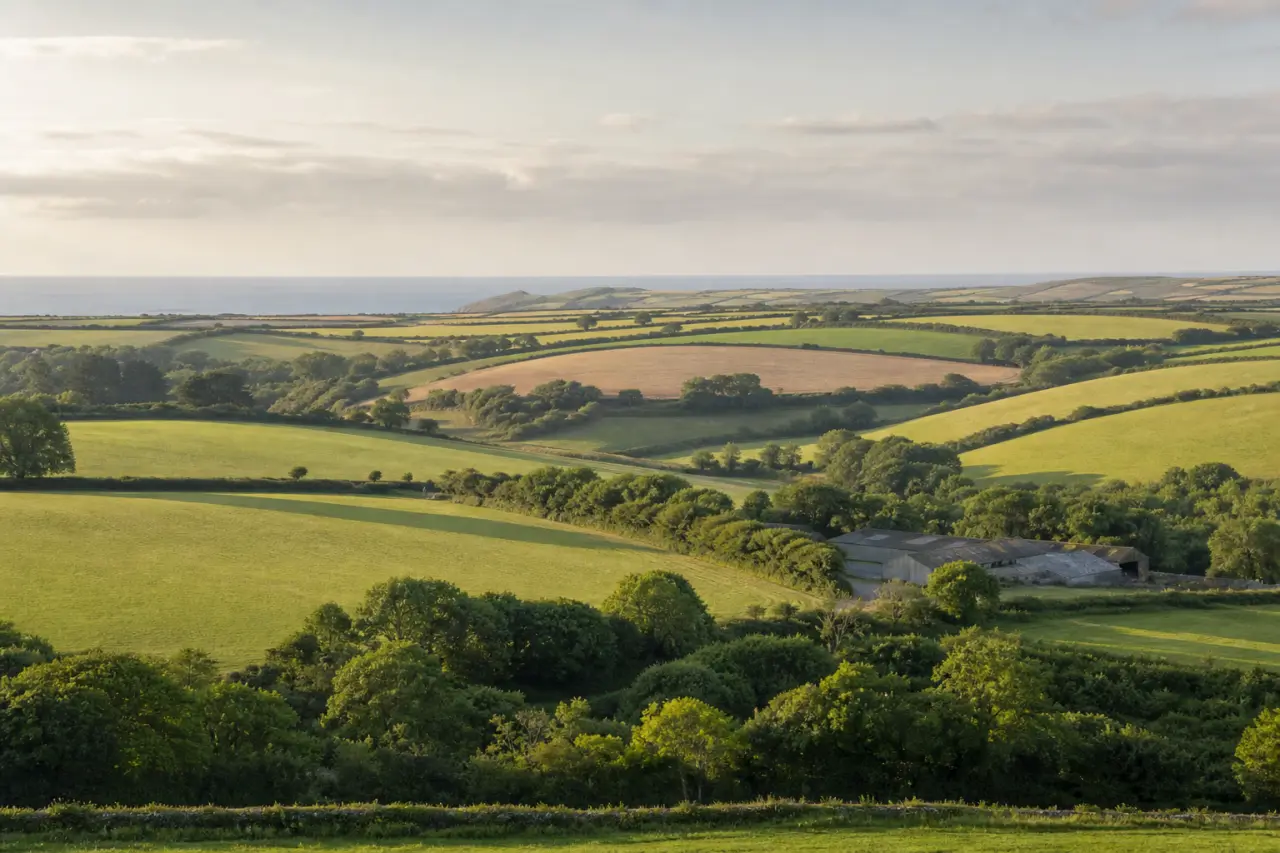
Agricultural Land dominates Cornwall's rural landscape, with dairy farming traditionally forming the backbone of the county's agricultural economy. Rolling pastureland suitable for livestock grazing is the most common land type, particularly in central and southern areas. Many holdings comprise productive grassland with existing farm buildings, water supplies, and established field patterns. Smaller agricultural parcels between 5-20 acres are frequently marketed, appealing to smallholders, equestrian buyers, and those seeking lifestyle farms. The mild maritime climate allows for year-round grazing in many locations, making Cornish agricultural land particularly valuable for livestock enterprises.
Woodland and Conservation Land has grown in importance as buyers seek natural capital and biodiversity investment opportunities. Ancient woodland parcels appear regularly on the market, particularly in the Tamar Valley and around Bodmin Moor. These holdings often qualify for Countryside Stewardship schemes and woodland grants, providing income streams whilst contributing to Cornwall's ecological recovery. Many buyers are attracted to woodland ownership for carbon sequestration, rewilding projects, or simply private natural retreats with minimal management requirements.
Development Land and Building Plots command premium prices across Cornwall, particularly in coastal settlements and major towns like Truro, Falmouth, Penzance, St Austell, and Newquay. Individual building plots with planning permission are highly sought-after, often selling for £150,000-£400,000 depending on location and approved dwelling size. Larger development sites appear less frequently but attract considerable interest from regional developers. Cornwall Council's housing targets and the pressure to deliver affordable housing create ongoing opportunities, though the planning process requires patience and local expertise.
Equestrian Property forms a significant segment of Cornwall's land market. Paddocks with stables, arenas, and residential elements are consistently popular, particularly within reasonable distance of Truro, Bodmin, or the north coast towns. The county's established equestrian community and numerous events support strong demand for well-maintained equestrian facilities.
Commercial and Tourism Land reflects Cornwall's position as Britain's premier holiday destination. Plots suitable for holiday accommodation, camping, or glamping operations attract investors seeking income-generating assets. Existing tourism businesses with land are particularly valuable, offering established operations in prime locations with proven trading histories.
Notable Features and Landscape Designations
Cornwall contains some of England's most protected and dramatic landscapes. The Cornwall Area of Outstanding Natural Beauty encompasses substantial coastal sections, including much of the north coast between Bude and St Ives, and significant stretches of the south coast and Tamar Valley. These designations bring enhanced landscape protection, affecting what development can be undertaken and requiring particularly sensitive proposals for any building work.
Bodmin Moor, whilst not a National Park, holds similar protected status and covers approximately 80 square miles of upland landscape in central Cornwall. Land within or adjacent to the Moor faces stringent planning restrictions but offers exceptional natural beauty and seclusion. The moorland's distinctive granite tors, archaeological heritage, and open access land make surrounding parcels particularly attractive to conservation-minded buyers.
Cornwall's UNESCO World Mining Landscape designation (Cornwall and West Devon Mining Landscape) recognises the county's industrial heritage and affects certain areas where historic mining remains exist. This can influence both the development potential and environmental considerations for land purchases, particularly regarding ground stability and contamination.
Transport connectivity has improved significantly with ongoing investment in the A30 dual carriageway, now providing faster access from the M5 corridor to Truro and beyond. The Great Western Railway mainline serves Bodmin Parkway, St Austell, Truro, Redruth, Camborne, Hayle, St Erth, and Penzance, with the branch line to Falmouth providing another important connection. Newquay Airport offers regional flights and increasing connectivity, enhancing accessibility for both permanent residents and visitors. These transport improvements have had measurable impacts on land values, particularly in previously more remote areas.
Planning and Development Considerations
Planning permission in Cornwall operates under Cornwall Council as the unitary authority, streamlining what would previously have involved multiple district councils. However, Cornwall's planning landscape presents unique challenges that land buyers must understand thoroughly.
The Cornwall Local Plan (2010-2030) identifies strategic growth areas, particularly around Truro, Camborne-Pool-Redruth, and Newquay. These locations receive more favourable consideration for development proposals, whilst rural and coastal areas face greater restrictions. Second home ownership and holiday lets have become politically contentious issues, with Cornwall Council implementing policies requiring new housing developments to include affordable housing provisions, typically 30-50% of units on larger sites.
Principal Residence Policies are increasingly common in certain parishes, restricting new dwellings to full-time residents rather than second homes or holiday lets. Prospective developers must verify whether such restrictions apply to land they're considering, as they fundamentally affect development viability and exit strategies.
Agricultural buildings and changes of use follow national permitted development rights, but Cornwall Council takes a particularly active approach to monitoring agricultural ties and enforcement. Converting agricultural buildings to residential use has become an established route to creating value, though Class Q permitted development rules require careful navigation, particularly regarding curtilage and residential amenity.
Flooding and coastal erosion present genuine risks in Cornwall, with numerous communities identified as vulnerable to climate change impacts. The Environment Agency's flood maps should be consulted for any coastal or riverside land, and coastal erosion zones are designated along significant stretches of coastline. These considerations affect not only planning prospects but also insurance costs and long-term asset value.
Contaminated land historically associated with Cornwall's mining heritage can affect development potential and costs. Phase 1 environmental surveys are advisable for any land with industrial or mining history, as remediation requirements can be substantial. Cornwall Council maintains a contaminated land register that prospective buyers should consult.
Investment Potential and Market Trends
Cornwall's land market has demonstrated remarkable resilience and growth, outperforming many UK regions over the past decade. Several factors underpin continued investment interest:
The lifestyle migration trend accelerated dramatically during and after the pandemic, with Cornwall experiencing unprecedented demand from remote workers and business relocators. This has sustained land values and created strong competition for parcels with residential potential. Many buyers now view Cornish land as offering quality of life returns alongside financial appreciation.
Tourism economy strength continues driving demand for land suitable for holiday accommodation. Cornwall welcomes over 5 million visitors annually, generating substantial economic activity. Land that can accommodate tourism uses—whether camping, glamping, holiday cottages, or commercial leisure facilities—benefits from multiple value creation pathways. The shift toward sustainable and experiential tourism favours landowners who can offer authentic Cornish experiences.
Agricultural diversification opportunities abound in Cornwall, with many farms successfully developing complementary income streams. The county's brand strength for food and drink, coupled with growing consumer interest in provenance and sustainability, supports farm shops, direct sales, and agri-tourism ventures. Land buyers with entrepreneurial vision can build profitable enterprises beyond traditional farming.
Renewable energy potential makes Cornwall attractive for solar, wind, and increasingly, battery storage projects. The county's solar irradiance levels are among England's highest, making photovoltaic installations particularly viable. Many agricultural landowners now incorporate solar or wind generation, providing secure rental income from relatively small land areas. This trend appears likely to continue as the UK pursues net-zero targets.
Environmental land markets are emerging strongly, with biodiversity net gain requirements creating demand for habitat creation and enhancement projects. Cornwall's recovering otter, dormouse, and bat populations, along with important bird areas, make ecological land management increasingly valuable. Woodland carbon projects and peatland restoration on Bodmin Moor represent growing investment sectors.
Potential buyers should approach Cornwall's land market with realistic expectations about planning prospects, particularly in protected landscapes and coastal areas. The county's popularity brings competitive bidding, and land rarely sells below guide prices in desirable locations. However, for those willing to research thoroughly, Cornwall offers diverse land buying opportunities that combine lifestyle benefits with genuine investment potential.
Getting Started with Your Cornwall Land Purchase
Whether you're seeking a smallholding in the Tamar Valley, a coastal building plot near Newquay, or agricultural land in Cornwall's productive heartland, understanding local market conditions and planning constraints is essential. Cornwall's unique character, protected landscapes, and strong economic fundamentals continue attracting land buyers seeking both lifestyle and investment returns.
For an accurate assessment of land value in your chosen Cornwall location, consider obtaining a professional valuation that accounts for local market conditions, planning prospects, and site-specific characteristics. With careful due diligence and realistic planning expectations, Cornwall's land market offers opportunities across multiple price points and land uses, from conservation and agriculture to residential development and tourism enterprises.
Looking for Land in Cornwall?
Tell us what you're looking for and we'll help you find the right plot.