Planning Permission Explained: Everything You Need to Know
Planning permission is the gateway between owning a plot of land and actually building on it. Whether you're looking to construct a new home, develop commercial premises, or convert an existing building, understanding the UK planning system is essential for any prospective land buyer.
In this comprehensive guide, we'll demystify the planning permission process, explain when you need it, how to apply, and crucially — how to improve your chances of success.
What Is Planning Permission?
Planning permission is formal approval from your local planning authority that allows you to carry out specific development or change the use of land or buildings. It's governed primarily by the Town and Country Planning Act 1990 and subsequent amendments.
The planning system exists to regulate development in the public interest, balancing the needs of individuals with those of the wider community and environment. Local authorities assess applications against their Local Development Plan and national planning policy frameworks.
When Do You Need Planning Permission?
You generally need planning permission for:
- Building new structures — homes, commercial buildings, agricultural buildings (over certain sizes)
- Major alterations to existing buildings that affect external appearance
- Changes of use — converting agricultural land to residential, for example
- Extensions beyond certain size thresholds
- Significant engineering operations — creating new accesses, altering ground levels
However, not all development requires permission. Some works fall under Permitted Development Rights, which we'll explore shortly.
Understanding Permitted Development Rights
Permitted Development Rights allow certain building works and changes of use to be carried out without needing to apply for full planning permission. These rights are set out in the Town and Country Planning (General Permitted Development) (England) Order 2015 (and equivalent legislation in Scotland, Wales, and Northern Ireland).
Common Permitted Development Examples
For residential properties:
- Small extensions up to certain sizes (typically 4 metres for detached houses, 3 metres for others)
- Conservatories and porches within size limits
- Outbuildings like sheds and garages under 4 metres high
- Roof alterations that don't significantly change the roof shape
For agricultural land:
- Agricultural buildings under 465 square metres
- Temporary structures for agricultural purposes
For commercial properties:
- Certain changes of use between Use Classes
- Minor external alterations
When Permitted Development Rights Don't Apply
Permitted Development Rights can be restricted or removed in:
- Conservation Areas — stricter controls apply
- Listed Buildings — almost all works require consent
- Areas of Outstanding Natural Beauty (AONB) and National Parks
- Sites of Special Scientific Interest (SSSI)
- Properties where an Article 4 Direction has been placed
If you're considering buying land in a specific location, always check whether any restrictions apply before proceeding.
Types of Planning Applications
The UK planning system offers several types of applications, each suited to different circumstances:
1. Outline Planning Permission
Outline permission establishes whether the principle of development is acceptable before you invest in detailed designs. You submit basic information about:
- The proposed use
- Approximate scale and layout
- Access arrangements
This is particularly valuable when purchasing land for development, as it reduces financial risk. Once granted, you have three years to submit reserved matters.
Reserved Matters include:
- Access (vehicular and pedestrian)
- Appearance (visual aspects)
- Landscaping (treatment of spaces)
- Layout (building positions)
- Scale (height, width, length)
2. Full Planning Permission
Full permission requires detailed plans showing exactly what you intend to build. This includes:
- Detailed architectural drawings
- Floor plans and elevations
- Materials specifications
- Landscaping plans
- Supporting documents (Design and Access Statement, etc.)
Full permission is valid for three years from the date of approval.
3. Reserved Matters Approval
Following outline permission, you submit reserved matters applications to address the details. You have three years from the outline permission date to submit, and two years from reserved matters approval to commence development.
4. Lawful Development Certificate
This confirms whether proposed or existing development is lawful without granting new permission. Useful for:
- Confirming Permitted Development Rights
- Establishing existing use rights
- Regularising unauthorised development after the time limit for enforcement has passed
5. Listed Building Consent and Conservation Area Consent
Separate consent required for works affecting listed buildings or certain demolitions in conservation areas, regardless of planning permission status.
The Planning Application Process: Step-by-Step
Step 1: Pre-Application Research (1-3 months)
Before submitting your application:
Review the Local Development Plan Every local authority maintains a Local Plan outlining where development is encouraged or restricted. Check:
- Housing allocation sites
- Green Belt boundaries
- Conservation Areas
- Local planning policies
Examine National Planning Policy Framework (NPPF) The NPPF sets out government planning policies for England. Equivalent frameworks exist for Scotland (SPP), Wales (PPW), and Northern Ireland (SPPS).
Study similar applications Search your local authority's planning portal for recent applications in your area. This reveals:
- What gets approved
- Common objection reasons
- Design preferences
- Typical conditions applied
Assess site constraints Identify potential issues:
- Contaminated land
- Flood risk (check Environment Agency maps)
- Protected species or habitats
- Archaeological significance
- Highway access concerns
- Utilities availability
Step 2: Pre-Application Consultation (Optional but Recommended)
Most local authorities offer pre-application advice services (usually £100-£500+ depending on complexity). Benefits include:
- Early identification of potential problems
- Guidance on policy compliance
- Opportunity to modify proposals before formal submission
- Relationship building with planning officers
- Potential for faster determination
For major developments, pre-application consultation is highly advisable and often expected.
Step 3: Prepare Your Application (1-3 months)
Engage professionals
- Planning consultant or architect
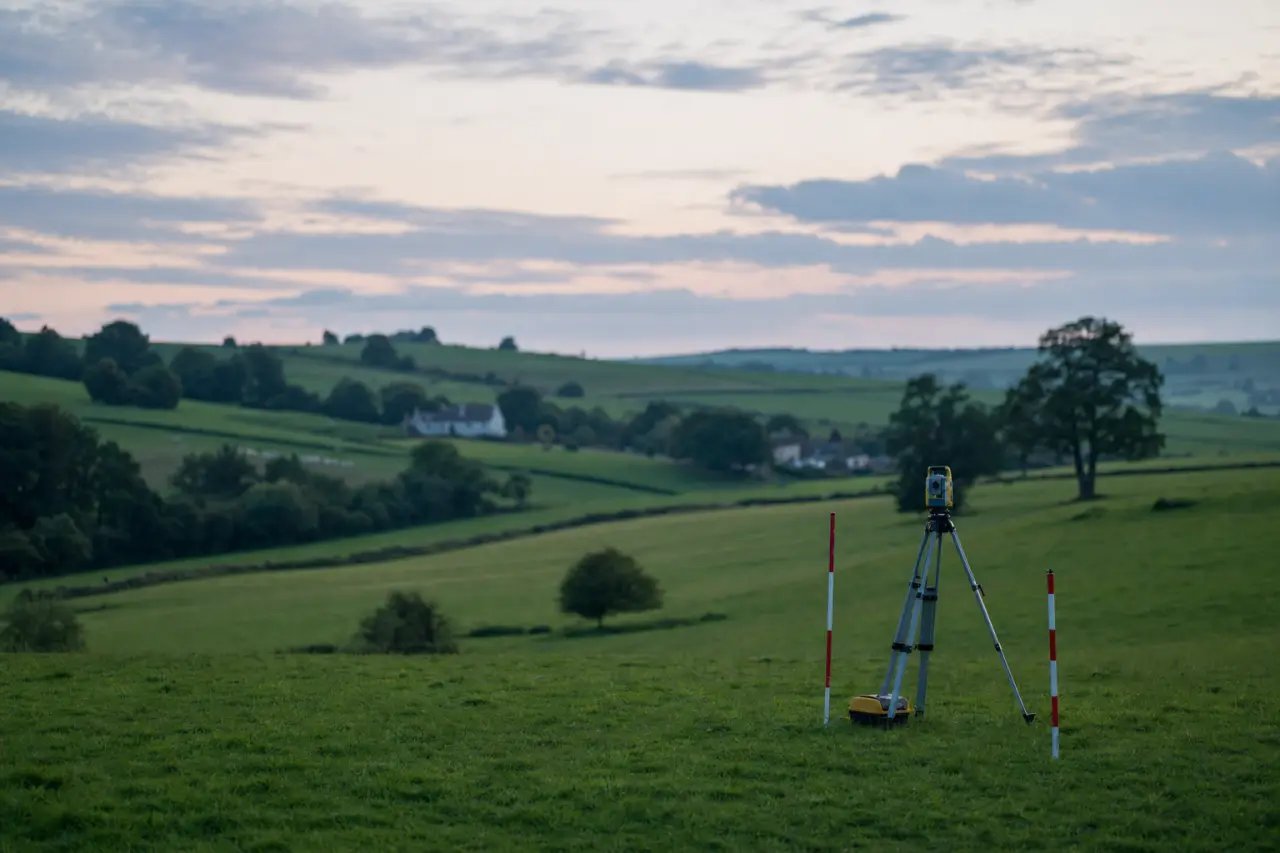
- Surveyors for site surveys
- Specialist consultants (ecology, highways, drainage as needed)
Required documents typically include:
- Completed application forms
- Site location plan (1:1250 or 1:2500 scale)
- Block/site plan (1:500 or 1:200 scale)
- Existing and proposed elevations and floor plans
- Design and Access Statement (required for most applications)
- Planning Statement explaining policy compliance
- Supporting studies (as required):
- Transport Assessment/Statement
- Flood Risk Assessment
- Ecological surveys
- Heritage Statement
- Noise Assessment
- Contaminated Land Assessment
Application fees Fees vary by development type and scale:
- Outline application for up to 2.5 hectares: £462 per 0.1 hectare
- Full application for new dwelling: £462 per dwelling
- Householder application: £206
- Change of use: £462
(Fees correct as of 2026 and subject to change)
Step 4: Submit Your Application
Applications are now submitted through the Planning Portal (www.planningportal.co.uk) in most cases. Some authorities maintain their own systems.
Upon submission:
- You receive an application reference number
- The application is validated (typically within 5 working days)
- Invalid applications are returned with reasons
Step 5: Consultation Period (21 days minimum)
Once validated, your application enters the consultation phase:
Statutory consultees are notified (depending on proposal):
- Environment Agency (flood risk)
- Natural England (protected species/sites)
- Historic England (heritage assets)
- Highways Authority (access issues)
- Local Wildlife Trust
- Parish/Community Councils
Public consultation occurs through:
- Site notice displayed near the property
- Notification letters to neighbouring properties
- Publication in local newspapers (major applications)
- Details on the council's website
Neighbours and interested parties have 21 days to submit comments, though late representations may be considered.
Step 6: Planning Officer Assessment (8-13 weeks)
The assigned planning officer evaluates your application against:
Material planning considerations:
- Compliance with the Development Plan
- National planning policy
- Design quality and local character
- Residential amenity impacts
- Highway safety
- Environmental impacts
- Economic benefits
Non-material considerations (which officers must ignore):
- Loss of private views
- Property value impacts
- Competition with existing businesses
- Applicant's personal circumstances (usually)
- Boundary disputes
Determination timeframes:
- Householder applications: 8 weeks
- Minor applications: 8 weeks
- Major applications: 13 weeks
- Applications with Environmental Impact Assessment: 16 weeks
Many applications take longer, especially complex cases requiring additional information or amended plans.
Step 7: Decision
Applications are determined either by:
Delegated decision — Planning officer decides (most applications)
Planning Committee — Elected councillors decide, typically when:
- The application is controversial with significant objections
- The officer recommendation conflicts with policy
- A councillor has called it in
- The council is the applicant
- Major applications of significant local interest
Possible outcomes:
Approval — with conditions attached (almost always) Common conditions include:
- Materials to be approved
- Landscaping details
- Construction management plan
- Highway improvements
- Contamination remediation
- Ecology mitigation measures
Refusal — with stated reasons Common refusal reasons:
- Conflict with Local Plan policies
- Inappropriate design/scale/appearance
- Harm to residential amenity
- Highway safety concerns
- Insufficient information provided
- Environmental harm
Deferred — for more information or amendments
Step 8: Post-Decision Options
If approved:
- Ensure you understand all conditions
- Discharge pre-commencement conditions before starting work
- Begin development within the validity period
- Submit any non-material amendments if needed
If refused:
- Review the refusal reasons carefully
- Consider amending and resubmitting (no additional fee if within 12 months)
- Appeal to the Planning Inspectorate (6 months for most applications)
How to Improve Your Chances of Planning Approval
1. Do Your Homework
Applications that demonstrate thorough understanding of local policy and context are more likely to succeed. Study:
- The Local Plan allocation and policies
- Recent appeal decisions in your area
- Design guidance and supplementary planning documents
- Neighbourhood Plans where adopted
2. Engage Early with the Community
For larger schemes, community engagement before submission can:
- Identify concerns early
- Allow design amendments pre-submission
- Demonstrate responsiveness in your application
- Reduce objections during formal consultation
3. Prioritise Design Quality
Poor design is a leading refusal reason. Ensure your proposal:
- Respects local character and distinctiveness
- Uses appropriate materials and detailing
- Creates positive frontages and public spaces
- Provides appropriate landscaping
- Achieves good sustainability standards
4. Address Constraints Head-On
Don't ignore site constraints hoping they'll be overlooked. Instead:
- Commission appropriate technical studies
- Demonstrate how impacts will be mitigated
- Show compliance with relevant standards
- Provide expert evidence where needed
5. Be Realistic About Viability
Local authorities may require affordable housing contributions, Section 106 agreements, or Community Infrastructure Levy payments. Consider these when assessing land value and ensure your scheme remains viable.
6. Provide Clear, Professional Submissions
Applications with clear, professional drawings and well-written supporting statements are easier for officers to assess and recommend favourably.
7. Respond Promptly to Information Requests
Delays in providing additional information extend determination times and may frustrate officers. Respond quickly and comprehensively.
Planning Permission and Land Values
Planning permission dramatically affects land values. Agricultural land might be worth £8,000-£15,000 per acre, while the same land with residential planning permission could be worth £500,000-£2,000,000+ per acre, depending on location.
This "hope value" explains why:
- Land with planning permission commands premium prices
- Outline permission is less valuable than full permission
- Land without permission but with development potential still exceeds agricultural value
- Developers often option land conditionally on obtaining permission
When buying land for development, consider:
- The likelihood of obtaining permission
- Whether you'll purchase conditionally or at risk
- The cost and time involved in the planning process
- Alternative uses if planning is refused
Regional Variations Across the UK
England
Planning law is set nationally but applied locally through Local Plans. The National Planning Policy Framework (NPPF) emphasises sustainable development and a presumption in favour where development plans are absent, silent or out-of-date.
Scotland
Scottish planning law differs in important ways:
- The planning system is "plan-led" with stronger emphasis on the Development Plan
- Scottish Planning Policy (SPP) replaces the NPPF
- Different permitted development rights apply
- Two-tier system (National and Local Development Plans)
Wales
Wales has its own planning framework:
- Planning Policy Wales (PPW) sets national policy
- Technical Advice Notes (TANs) provide detailed guidance
- Welsh language considerations may be material
- Different permitted development rights
Northern Ireland
Northern Ireland's planning system:
- Administered by the Department for Infrastructure
- Operates under different legislation
- Has a two-tier development plan system
- Different permitted development provisions
Common Planning Mistakes to Avoid
1. Starting Work Without Permission
Unauthorised development can result in:
- Enforcement notices requiring removal
- Prosecution and fines up to £20,000
- Difficulty selling the property
- Injunctions preventing further work
2. Ignoring Planning Conditions
Conditions are legally binding. Breach can lead to enforcement action. Common mistakes:
- Starting work before discharging pre-commencement conditions
- Using different materials than approved
- Failing to implement landscaping
- Not adhering to approved drawings
3. Poor Neighbourly Relations
Objections from neighbours don't automatically doom applications, but multiple well-founded objections on planning grounds can be influential. Consider:
- Discussing proposals with neighbours before submitting
- Addressing concerns where reasonable
- Providing clear information about impacts
4. Inadequate Site Investigation
Failing to identify site constraints early leads to:
- Abortive design costs
- Delayed applications
- Refusals or onerous conditions
- Unexpected costs
Invest in proper surveys before purchasing land or designing in detail.
5. Unrealistic Proposals
Applications that fundamentally conflict with planning policy rarely succeed, regardless of quality. Be realistic about:
- Green Belt development (generally resisted)
- Countryside protection policies
- Density requirements
- Affordable housing obligations
Understanding Planning Appeals
If your application is refused, you can appeal to the Planning Inspectorate (England and Wales), DPEA (Scotland), or Planning Appeals Commission (Northern Ireland).
Appeal Procedures
Written Representations (70% of appeals)
- Both parties submit written statements
- Site visit by inspector
- Decision typically within 8-12 weeks
- Lowest cost option
Hearings (20% of appeals)
- Informal discussion led by inspector
- All parties attend
- Typically half to full day
- Decision within 10-14 weeks
Public Inquiry (10% of appeals)
- Formal, quasi-legal proceedings
- Legal representation common
- Can last days or weeks
- Decision within 12-16 weeks
- Most expensive option
Appeal Success Rates
Historically, around 33% of planning appeals in England succeed, though rates vary significantly by development type and region.
Costs
Each party normally bears their own costs, but unreasonable behaviour can result in costs awards. Examples include:
- Refusing applications contrary to clear policy
- Failing to determine applications in reasonable time
- Inadequate or inconsistent reasons for refusal
- Preventing or delaying development without good planning reasons
Planning Permission and Land Registry
Planning permission doesn't automatically appear on Land Registry records. However:
- Restrictions may be noted requiring compliance with planning obligations
- Section 106 agreements are registered as local land charges
- Building regulation completion certificates should be lodged
- When selling, you'll need to provide planning documentation
Always obtain copies of planning permissions and building control approvals when purchasing land with existing consent.
Section 106 Agreements and CIL
Section 106 Agreements
Under Section 106 of the Town and Country Planning Act 1990, local authorities can require developers to:
- Provide affordable housing (typically 20-40% of schemes)
- Fund infrastructure improvements
- Contribute to education provision
- Provide public open space
- Restrict future use or occupation
These obligations are negotiated case-by-case and can significantly affect development viability.
Community Infrastructure Levy (CIL)
CIL is a standard charge on development based on floor area. Not all authorities have adopted CIL, but where they have:
- Rates vary by development type and location
- Charges can be substantial (£0-£350+ per square metre)
- Payments are usually due on commencement
- Some exemptions apply (self-build, affordable housing)
Check whether your local authority has adopted CIL and at what rate before purchasing land.
Looking Ahead: Changes to the Planning System
The UK planning system continues to evolve. Recent and proposed changes include:
- Extension of Permitted Development Rights for home extensions and changes of use
- First Homes requirement — affordable homeownership product
- Biodiversity Net Gain — mandatory 10% increase from 2026
- Digitisation of the planning system
- Planning reform proposals — ongoing consultations about potential major changes
Stay informed about changes that might affect your development plans.
Getting Professional Help
While householder applications can often be handled personally, most land development benefits from professional assistance:
Planning Consultants provide:
- Expert policy advice
- Application preparation
- Negotiation with planning officers
- Appeal representation
Architects offer:
- Design services
- Technical drawings
- Building Regulations compliance
- Contract administration
Solicitors specialising in planning can:
- Draft Section 106 agreements
- Advise on legal aspects
- Represent at public inquiries
- Challenge decisions through judicial review
Fees vary considerably:
- Planning consultants: £1,500-£10,000+ depending on complexity
- Architects: 5-15% of build costs typically
- Planning solicitors: £200-400+ per hour
Conclusion
Planning permission is rarely straightforward, but understanding the system significantly improves your chances of success. The key principles are:
- Research thoroughly before purchasing land or submitting applications
- Ensure your proposal aligns with local and national policy
- Engage professionally with the planning authority
- Provide clear, comprehensive information
- Be prepared to amend proposals in response to concerns
- Consider professional assistance for anything beyond simple householder applications
Whether you're planning a self-build home, residential development, or commercial project, investing time in understanding planning permission pays dividends in terms of success rates, timescales, and ultimately, the quality of what gets built.
Remember that planning permission adds substantial value to land — often transforming agricultural value into development value worth many times more. This makes understanding and navigating the system successfully one of the most important skills for anyone involved in land purchase and development.
Ready to Start Your Land Search?
Now that you understand the planning permission process, you're better equipped to assess potential land purchases. Browse our available plots across the UK, or get a free valuation of land you're considering purchasing.
For location-specific advice and available land in your target area, explore our regional guides covering every county across England, Scotland, Wales, and Northern Ireland.
If you're ready to take the next step in your land buying journey, our complete guide to buying land in the UK provides everything you need to know from initial search through to completion.
Get a Free Land Valuation
Use our calculator to get an instant estimate of land value in your area.
Free Valuation