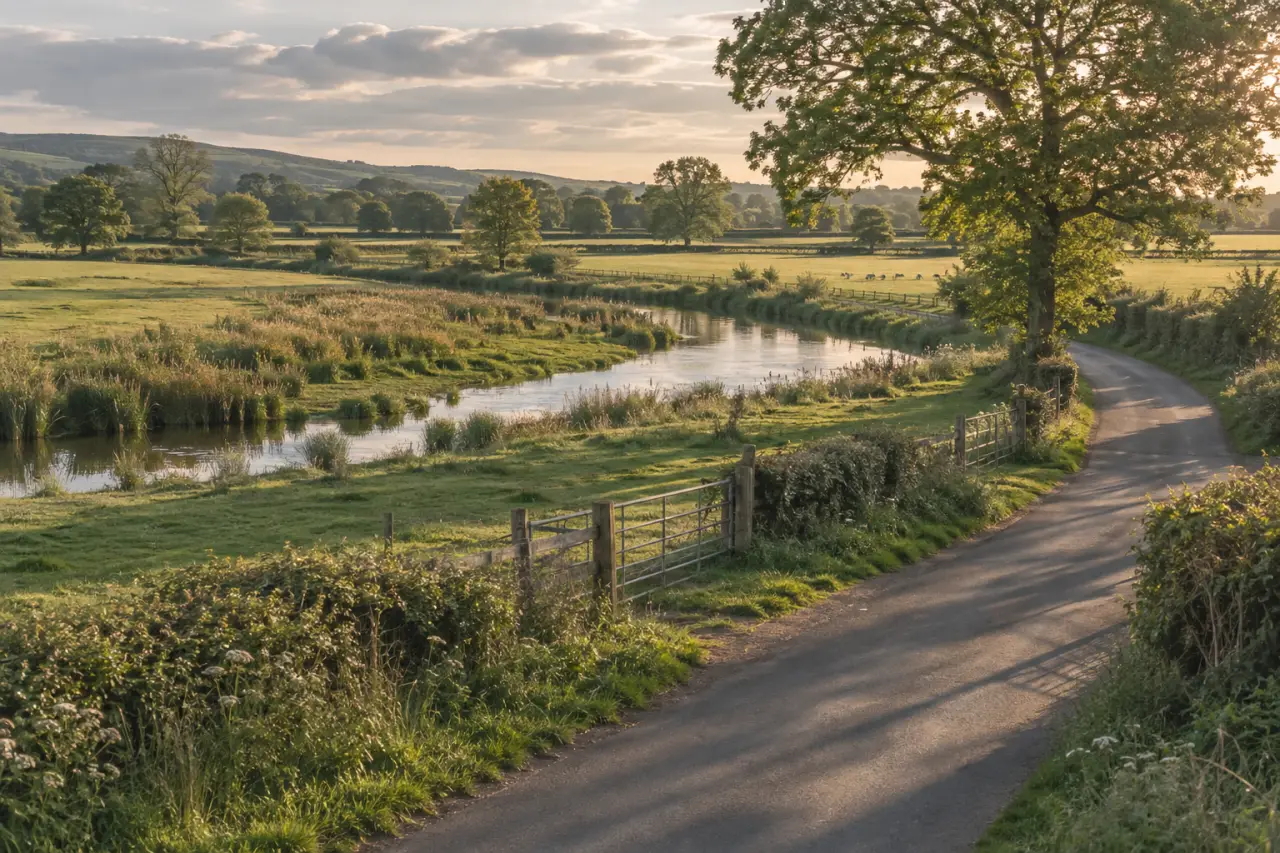
A plot of land is only as good as the route into it. Many buyers check the price, the soil and the planning history. Fewer confirm that the road outside is a public highway, or that their land actually meets it. That gap causes more failed developments and disputed sales than almost any other issue.
This guide explains how to check if a road is adopted in England, how to confirm the highway boundary, and what an unadopted road means for a land purchase in 2026. It covers the searches to order, the documents to read and the questions to put to the seller before you exchange.
What "Adopted" Actually Means
An adopted road is a highway maintainable at public expense. The local highway authority repairs it, lights it, drains it and is responsible for its condition. In most of England, that authority is the county council or unitary authority. Motorways and most trunk roads sit with National Highways. In London, Transport for London manages the main red routes and the boroughs handle the rest.
An unadopted road is any road the highway authority does not maintain. That covers two very different situations:
- A highway not maintainable at public expense. The public has a right to pass along it, but nobody at the council repairs it. Liability for upkeep usually falls on the frontagers.
- A purely private road. There is no public right of way at all. Anyone using it needs a private right, usually an easement granted in the title deeds or acquired by long use.
The distinction matters. A road can be a public right of way without being adopted. A road can also look exactly like an adopted street, with tarmac and kerbs, while being entirely private. You cannot tell by looking.
Why Adoption Status Matters When Buying Land
If your land fronts an adopted highway, you generally have a legal right to access it, subject to planning control over new or altered accesses. If the road is private, your access depends on rights someone has granted, and those rights may be limited.
The common problems are:
- No right of way for vehicles. An old grant may cover "on foot only" or agricultural use. A residential scheme could exceed it.
- Excessive user. A right granted to serve one farmhouse may not stretch to ten new homes.
- Maintenance costs. Frontagers on a private street can face bills for resurfacing, drainage and lighting.
- Ransom strips. A narrow strip of land between your plot and the highway, owned by someone else, can block access entirely.
- Planning refusals. The highway authority is a statutory consultee on many applications. It will object if visibility or road standards are inadequate.
Each of these affects value. Land with a clear connection to an adopted highway is usually worth considerably more than the same land relying on a disputed private track. If you are weighing up a price, a professional land valuation should reflect the access position.
How to Check if a Road Is Adopted: Step by Step
Step 1: Check the List of Streets
Under section 36(6) of the Highways Act 1980, every highway authority in England must keep a list of streets in its area that are highways maintainable at public expense. Section 36(7) requires the list to be available for public inspection free of charge.
Most councils publish this online, either as a searchable list or as an interactive map. Search the council website for "adopted roads map" or "list of streets". If it is not online, email the highways department and ask whether a named road is on the list.
Treat the result as a starting point. The list records adoption status. It does not usually show the precise width or boundary of the highway, and some lists contain errors or gaps.
Step 2: Order an Adopted Highway Search Through CON29
Your solicitor will normally order local authority searches. The CON29 form includes enquiry 2.1, which asks which roads, footways and footpaths named in the search are highways maintainable at public expense. Enquiry 2.2 and related questions cover public rights of way and pending adoptions.
The CON29 is sent with the LLC1 local land charges search. Where HM Land Registry handles the LLC1 for your area, the official search costs £15. CON29 fees are set by each council and vary, so check with your solicitor or the council directly.
Make sure the search names every road you intend to use, not only the one in the postal address. Rural plots often front one lane but are reached by another.
Step 3: Request a Highway Extent Plan
This is the step most buyers miss. Knowing a road is adopted does not tell you where the adopted highway ends. The highway might stop at the edge of the tarmac, or it might include the verge, the ditch and the hedge.
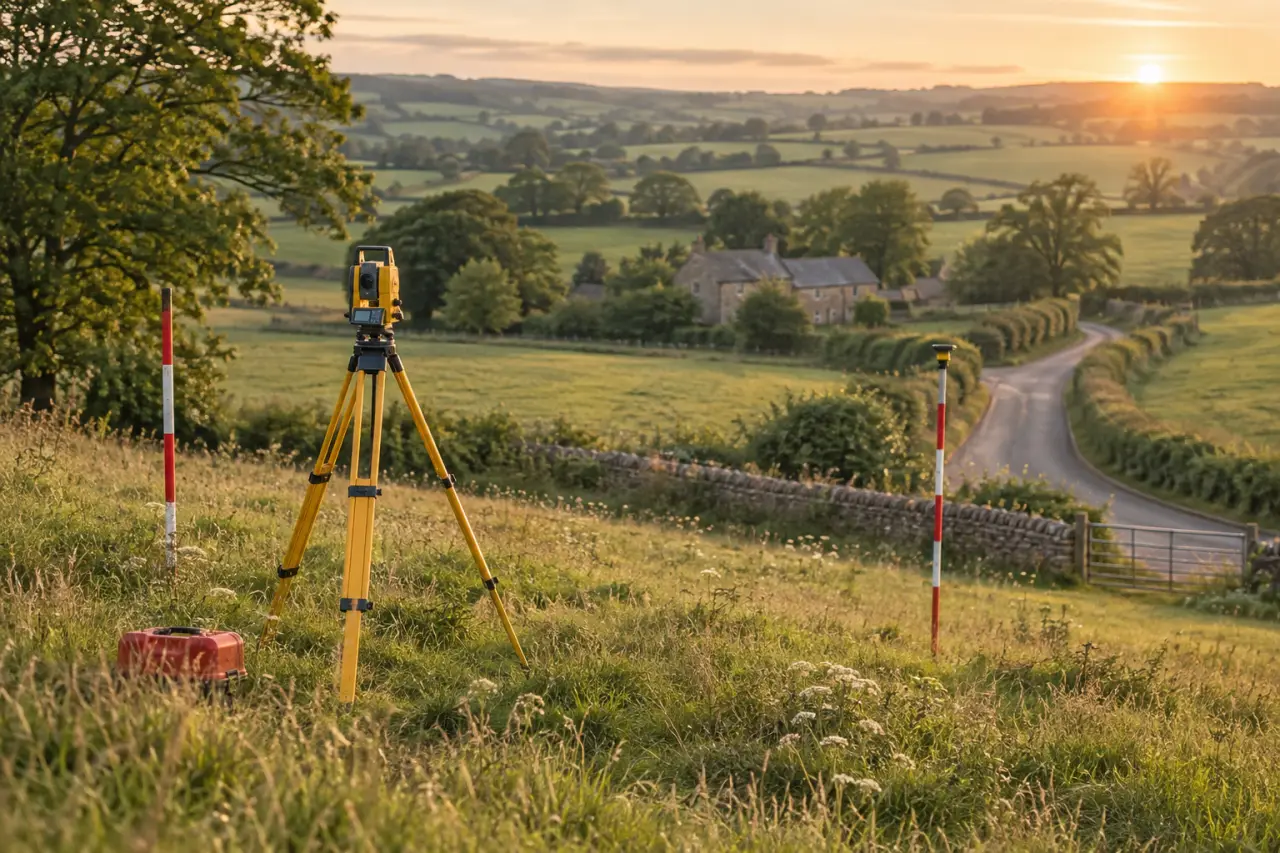
A highway boundary check confirms whether your land physically touches the public highway. Ask the highway authority for a highway extent plan or highway boundary search. Most councils charge for this and the fee varies widely, so check the current figure with the council. Turnaround can take several weeks.
If there is a gap between the highway extent and your title boundary, a third party may own that strip. That is a potential ransom strip.
Step 4: Read the Title Register and Title Plan
Download official copies of the register and title plan for your plot from HM Land Registry. Each costs £7 online, or £14 for both together. Look in the property register for rights of way granted to the land, and in the charges register for rights others hold over it.
If an easement refers to an older deed, order a copy of that document. Official copies of documents referred to in the register cost £7 each online.
Remember that title plans show general boundaries only, under section 60 of the Land Registration Act 2002. They do not fix the precise line, which is why the highway extent plan matters. Our guide to understanding Land Registry explains how to read these documents.
Step 5: Identify the Owner of the Road or Any Gap
If the road is private, or there is a strip between your plot and the highway, find out who owns it. A search of the index map costs £8 and will show whether the land is registered and under which title number. Unregistered land is harder to trace and may need enquiries with neighbours, old conveyances or the council.
Step 6: Inspect the Site
Walk the route. Note gates, signs saying "Private Road", bollards, potholes and drainage problems. Check whether the access has visibility in both directions. Photograph everything and compare it with the plans. Ask neighbours who maintains the road and whether there have been disputes.
Unadopted Road Land Purchase: What to Look For
An unadopted road land purchase is not automatically a bad idea. Many attractive rural plots sit on private lanes. The aim is to understand the rights and liabilities before you commit.
Confirm Your Rights of Way
Check that your access right:
- covers vehicles, not just pedestrians
- covers the use you intend, such as residential or commercial
- runs over the whole route to the public highway
- is not subject to conditions you cannot meet
If the right was acquired by long use rather than by deed, it may rest on prescription under the Prescription Act 1832 or the doctrine of lost modern grant. These usually need 20 years of use without force, secrecy or permission. Prescriptive rights can be registered, but evidence is often patchy. Ask the seller for statutory declarations from long-standing users.
Watch for Public Footpaths and Bridleways
Some tracks are public rights of way recorded on the definitive map, but only for walkers or riders. Driving a motor vehicle on a footpath or bridleway without lawful authority is an offence under section 34 of the Road Traffic Act 1988. A public footpath does not give you vehicular access to your land.
Check Maintenance Obligations
Ask whether there is a road maintenance agreement, a management company or an informal arrangement between frontagers. Find out what has been spent recently and what is planned.
Under the private street works code in sections 205 to 218 of the Highways Act 1980, a council can carry out works to bring a private street up to standard and recover the cost from frontagers. It can then adopt the road under section 228. This is rare in practice, but the cost per frontage can be substantial.
Consider Indemnity Insurance Carefully
Where a right of way is uncertain, a lack of access or right of way indemnity policy may be available. These policies are usually void if you or your solicitor have already contacted the landowner or council about the specific issue. Talk to your solicitor before making enquiries if insurance might be needed.
Section 38 Adoption Agreements on New Developments
If you are buying a plot on a new estate, or a serviced plot from a developer, the road may not yet be adopted. Developers often enter a section 38 adoption agreement under the Highways Act 1980. The developer builds the road to the council's specification. The council inspects it and, after a maintenance period, adopts it.
The agreement is normally backed by a bond, so the council can finish the work if the developer fails. The maintenance period is often around 12 months after completion, though it varies.
When buying, ask for:
- a copy of the signed section 38 agreement
- confirmation that a bond is in place and its value
- the current stage, such as provisional or final certificate
- the plan showing which roads and footways will be adopted
If there is no agreement, check whether the advance payments code under sections 219 to 225 applies. This can require a developer to deposit or secure the cost of street works before building starts.
A section 278 agreement is different. It covers works to an existing public highway, such as a new junction or visibility splay. Do not confuse the two.
Land Access to Public Highway and Planning
Even a clear legal right of land access to public highway does not guarantee planning permission. The local highway authority comments on applications involving new or intensified accesses. It looks at visibility splays, gradients, road width and safety. Manual for Streets is the usual guidance for residential roads.
Creating a new access onto a classified road normally needs planning permission. Works within the highway, such as a dropped kerb or bellmouth, also need consent from the highway authority. For more on the process, see planning permission explained.
If you need land from a neighbour for visibility, the cost can be high. Courts and valuers often refer to Stokes v Cambridge Corporation (1961), where the ransom value was assessed at about one third of the development uplift. Negotiations frequently land somewhere around that figure, though every case differs.
Regional Variations
This guide focuses on England, but the picture differs across the UK.
- Wales. The Highways Act 1980 also applies. Welsh councils keep their own lists of streets and you can search them in the same way.
- Scotland. Under section 1 of the Roads (Scotland) Act 1984, each roads authority keeps a list of public roads. The terms "public road" and "private road" replace "adopted" and "unadopted". Searches are made through the property enquiry certificate.
- Northern Ireland. The Department for Infrastructure (DfI Roads) is the roads authority. New estate roads are adopted under the Private Streets (Northern Ireland) Order 1980.
Within England, the problem is more common in some areas than others. Rural counties such as Devon and Cumbria have many private lanes and farm tracks. Older suburban areas can also contain unmade roads that were never adopted.
A Quick Pre-Purchase Checklist
Before you exchange contracts, you should have:
- Confirmed adoption status from the council's list of streets.
- Received CON29 replies covering every access road.
- Obtained a highway extent plan showing where the highway ends.
- Compared that plan with the title plan for any gap.
- Read the rights of way in the title register and referred deeds.
- Identified the owner of any private road or intervening strip.
- Checked maintenance arrangements and liabilities.
- Reviewed any section 38 agreement and bond on new developments.
- Taken advice on whether the access will satisfy the highway authority at planning stage.
For wider due diligence, our complete guide to buying land in the UK covers surveys, contracts and finance.
Final Thoughts
Knowing how to check if a road is adopted is one of the most useful skills a land buyer can have. The checks are not expensive compared with the risk. A free look at the list of streets, a CON29, a highway extent plan and a few Land Registry downloads will reveal most problems before they become yours.
If the access is private or uncertain, that does not end the deal. It changes the price and the legal work. Get the facts first, then negotiate.
Unsure what your plot is worth given its access position? Get a free land valuation and find out where you stand.