The honest answer
At a traditional land auction, the moment the hammer falls you exchange contracts, pay a 10% deposit on the spot, and commit to completing the purchase (typically within 28 days). There is no cooling-off period, no survey contingency, and no chance to renegotiate when you discover a problem after the fact. If the land is landlocked, if planning permission was refused twice before, if half the plot sits in Flood Zone 3, or if the title you're buying doesn't match the fence line on the ground—you own it anyway. Pulling out forfeits your deposit and can bring further liability.
That means land auction due diligence isn't something you tidy up after winning. It's the entire game. Every substantive check—planning status and history, green belt and environmental designations, flood risk, lawful access and rights of way, title boundaries against what's physically there, existing structures, utilities—needs to happen before you raise your paddle. The auction legal pack gives you some of this information, but it won't tell you the planning history, won't flag if the site sits in an Area of Outstanding Natural Beauty, and won't confirm that the track marked on the title plan is actually passable twelve months a year.
This guide walks through what to check, why each check matters, and how to do it before bid day—so the price you pay reflects the reality you're buying, not a nasty surprise you inherit.
Frequently asked questions
Bid day is a deadline, not a starting point
Enter the plot's postcode and we'll check planning status, green belt, Article 4, flood risk and lawful access, in plain English.
£34, results in minutes, no account needed. Or see a sample report first.
What should I check before buying land at auction?
Do I need a solicitor for land auction due diligence?
How long before the auction should I start due diligence?
Can I pull out after winning a land auction if I find a problem?
What is a land auction Plot Report and do I need one?
Are guide prices accurate at land auctions?
Why land auction due diligence is non-negotiable
People new to land auctions sometimes think of them like eBay: you bid, you win, and if it's not as described you complain. Land auctions don't work that way.
When the auctioneer's hammer falls at a traditional auction, you have exchanged contracts under English law. You are the buyer. You owe the purchase price. You will typically pay 10% immediately as a deposit, sign the memorandum of sale, and complete within 28 days (sometimes 20, occasionally longer—check the legal pack's special conditions). If you fail to complete, you lose your deposit and the seller can sue you for any shortfall if they resell at a lower price.
The modern method of auction works differently—there's usually a 56-day reservation period and a non-refundable reservation fee (often around 4–5% of the price, paid on top)—but the principle is the same: once you commit, you're committed. You can read more about how land auctions work in the UK and the modern method of auction for land in our other guides.
Either way, the auction contract is unconditional. The seller makes no promises about planning prospects, about access, about flood risk, or about what you'll be allowed to do with the land. That responsibility sits entirely with you. Cheap land is usually correctly priced: the low guide price reflects known or suspected problems. Your job is to find those problems before you bid, not after.
What the auction legal pack tells you (and what it doesn't)
Every auction lot comes with a legal pack, usually available to download two to three weeks before the sale. A good solicitor experienced in auction purchases will review it for you and should be instructed early—before you commit to bidding, not the day before the auction.
The legal pack typically includes:
- Title documents (official copies from the Land Registry)
- Special conditions of sale (completion date, deposit, any unusual terms)
- Searches the seller has chosen to provide (local authority search, drainage and water search, sometimes environmental)
- Evidence of title for unregistered land
- Copies of any leases, easements, or restrictive covenants
- Replies to pre-contract enquiries, if the seller has volunteered them (many don't)
This is essential reading. Your solicitor will check the title is good and marketable, that there are no unexpected charges or restrictions, and that the special conditions don't contain anything punitive.
But the legal pack won't tell you:
- Planning history: which applications were submitted, which were refused, and why.
- Designations: whether the land sits in green belt, an Area of Outstanding Natural Beauty, a conservation area, or a Site of Special Scientific Interest.
- Flood risk: whether the site is in Flood Zone 2 or 3, or has a history of surface-water flooding.
- Physical access: whether the right of way on the title plan is actually usable, or whether the track is impassable in winter or blocked by a neighbour.
- Ground conditions: contamination, former use, stability.
- What's physically there versus what's on the title plan: fences, structures, encroachments.
These gaps are not oversights. The seller's legal pack discloses what the seller chooses to disclose. The rest is on you. For a detailed breakdown of what the legal pack covers and what it leaves out, see our guide on the land auction legal pack.
Core due diligence checks before bidding on land
Here's what you need to verify, and how, before you commit.
Planning status and planning history
If you're buying land with a view to building, planting, changing use, or doing anything that needs permission, you need to know two things: what's been granted, and what's been refused.
Check the planning status:
- Does the land have current planning permission? If so, for what, and has it lapsed or been implemented? (Outline permission usually lasts three years from grant; full permission five years, or two from approval of reserved matters.)
- Are there any conditions attached to historic grants that affect future use?
Check the planning history:
- Use the local planning authority's online portal to search by address or approximate location (you may need the title plan to help pinpoint it).
- Look for refused applications. If three attempts at residential development have been refused on grounds of access, landscape impact, or green belt policy, that tells you something the legal pack won't.
- Look for enforcement notices or breach-of-condition notices. These can affect value and your ability to do what you're planning.
Planning history is public, free to search, and one of the most important pieces of context you can gather. A plot with no planning history and no designation might be a blank slate. A plot with two refusals for the exact thing you want to do is a red flag that should be priced in—or avoided.
Green belt, AONB, and environmental designations
England's planning system places tight controls on certain types of land. If your plot sits within one of these designations, your ability to build or change use may be severely restricted—or effectively impossible without very special circumstances.
Key designations to check:
- Green Belt: new buildings are generally inappropriate development unless they fall within a narrow set of exceptions (agriculture, forestry, some rural enterprise, replacement dwellings). The National Planning Policy Framework (NPPF) sets a high bar.
- Area of Outstanding Natural Beauty (AONB) or National Park: major weight given to conserving landscape and scenic beauty.
- Conservation Area: affects what you can build and how; often requires additional consent even for minor works.
- Site of Special Scientific Interest (SSSI): ecological or geological importance; very restricted.
- Local Nature Reserves, Tree Preservation Orders, Article 4 Directions (removing permitted development rights).
You can check most designations using the government's MAGIC map or the local authority's constraints map, often linked from their planning portal. Some auction houses note designations in the legal pack or the property particulars, but many don't—and even when they do, it pays to verify independently.
If the land is in green belt and the guide price looks tempting, why is auction land so cheap becomes an easy question to answer: because you probably can't build on it.
Flood risk
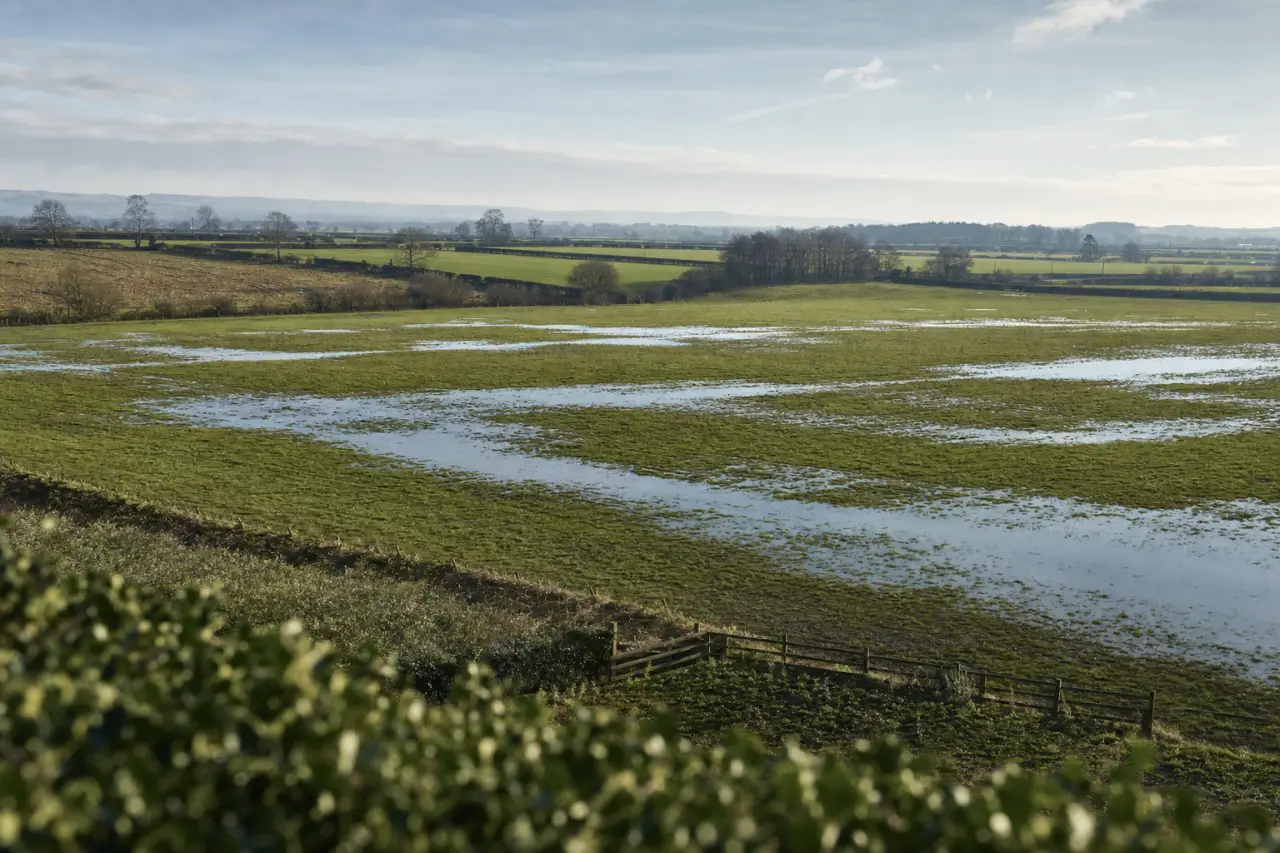
Flood risk affects insurability, mortgage availability, planning policy, and resale value. It's also invisible from a sunny site visit in July.
How to check flood risk:
- Use the Environment Agency's flood map for planning. Enter the postcode or draw around the plot.
- Flood Zone 1 (low risk): annual probability of river/sea flooding less than 0.1%.
- Flood Zone 2 (medium): 0.1%–1% chance.
- Flood Zone 3 (high): greater than 1% chance. Subdivided into 3a and 3b (functional floodplain), where new development is heavily restricted.
- Also check the risk of surface water flooding (previously known as pluvial flooding), which can affect sites even outside river flood zones.
Mortgage lenders are increasingly cautious about Flood Zone 2 and 3. Planning policy (NPPF) applies a sequential test: development should be directed to areas of lowest flood risk. If your land is in Flood Zone 3, your development may be unviable even if everything else stacks up.
Lawful access and rights of way
A plot of land is only as valuable as your ability to reach it lawfully, in all weathers, and in a way that supports your intended use. Access problems are one of the most common traps in auction land, and one of the hardest to fix after the fact.
What to check:
- Does the title grant a right of way? Check the title register and the filed plan. Look for easements or rights noted in the Charges Register or in a separate deed of grant.
- Is the route described? Ideally the route is coloured on a plan and the right of way specifies its width and the purposes allowed (on foot, with vehicles, for all purposes, for agricultural purposes only, etc.).
- Is the physical access usable? Visit the site. Walk or drive the claimed route. Is it gated? Overgrown? Subject to flooding? Is there a neighbour who disputes it?
- Ransom strips: check whether a thin strip of land (sometimes just a few feet) sits between your plot and the public highway, owned by someone else. If you have no right of way over it, you may be landlocked.
- Adoption status: if the access is a track or private road, is it maintained, and by whom? Is there a covenant requiring you to contribute to upkeep?
Access disputes are expensive, slow, and uncertain. If the legal pack is silent on access, or if the plan shows a right of way but the route is blocked on the ground, get specialist advice before bidding. This is not a problem you can negotiate away after the hammer falls.
Title boundaries and what's on the ground
The title plan from the Land Registry shows a general boundary, usually marked with a red line. It is not an exact survey. General boundaries are drawn to the nearest few centimetres on the Ordinal Survey map, and the Land Registry explicitly says they do not determine exact boundary lines.
What to check:
- Do the fences, hedges, walls, or other physical boundaries match the title plan? If the fence is ten feet inside the red line, you may be buying less than you think. If it's ten feet outside, you may not own what you can see.
- Are there any encroachments? A neighbour's shed, a parked caravan, a building that straddles the line.
- Has anyone else been using part of the land? Long, unchallenged use can ripen into adverse possession (squatter's rights), though the rules are stricter for registered land since 2003.
Measure what you're buying. Use the title plan, an OS map, and your own site visit. If there's doubt, instruct a surveyor to establish the boundaries before you bid. Sorting out a boundary dispute after you've bought is painful and expensive.
Existing structures and compliance
If there are buildings, sheds, stables, hardstanding, or any other structures on the land, you need to know:
- Do they have planning permission (if required)? Some agricultural buildings benefit from permitted development rights; many don't.
- Do they have building regulation approval (if required)?
- Are they lawful? If they were built without permission more than four years ago (ten years for change of use), they may be immune from enforcement, but that immunity needs to be evidenced—ideally with a Lawful Development Certificate.
- What condition are they in? A dilapidated barn might be a liability, not an asset, especially if it's listed or in a conservation area.
Check the planning history for any grant or refusal relating to the structures. If you're buying a plot because it has a barn you plan to convert, and the barn was built without consent and is not immune, your plans may unravel before you start.
Utilities and services
Does the plot have mains water, electricity, gas, drainage? If not, what will it cost to connect, and is connection even feasible?
What to check:
- Mains water: contact the local water company or check their infrastructure maps. A connection several hundred metres from the highway can cost tens of thousands.
- Electricity: similar—a remote plot may require a new transformer or overhead line.
- Foul drainage: if there's no mains sewer, you'll need a septic tank, treatment plant, or cesspit. These require space, compliance with environmental permits, and sometimes planning permission. Check the Environment Agency's guidance and whether the site's ground conditions are suitable (clay, high water table, and small plots can all be deal-breakers).
- Surface water: where will it go? Sustainable drainage requirements are increasingly strict.
The legal pack may include drainage and water searches, but these often just confirm the location of the nearest mains—not the cost or practicality of connecting to your plot.
Site visits: what to look for on the ground
No amount of desktop research substitutes for visiting the land in person—ideally more than once, in different weather, and at different times of day.
On your site visit:
- Walk the boundaries. Compare what you see with the title plan. Photograph corners, markers, fences.
- Check access from the public highway. Drive it, walk it. Is it steep, narrow, gated, shared? Does it cross anyone else's land?
- Look for signs of flooding, waterlogging, drainage issues. Ponding, rushes, sedge, water marks on trees or fences.
- Note overhead cables, pylons, substations, sewers, gas mains running across or near the site (these can be subject to easements that restrict what you build and where).
- Observe neighbouring uses. Industrial units, quarries, chicken farms, slurry pits, noisy roads. These affect amenity and sometimes planning prospects.
- Talk to neighbours (diplomatically). They often know the site's history, any disputes, why it's being sold, whether the track floods in winter.
Site visits reveal what documents can't. If the seller or the auctioneer won't let you visit before the sale, ask yourself why—and think twice about bidding blind.
How to check a specific lot before auction day
If you've found a lot you're serious about, here's the checklist in one place:
- Download the legal pack as soon as it's available and instruct a solicitor experienced in auction purchases to review it.
- Search the planning history on the local authority's planning portal—look for grants, refusals, conditions, enforcement.
- Check designations: green belt, AONB, conservation area, SSSI, using MAGIC maps and the local authority's constraints map.
- Check flood risk using the Environment Agency's flood map for planning (river, sea, and surface water).
- Verify lawful access: examine the title for easements, walk the route on the ground, check for ransom strips and gates.
- Compare the title plan to physical boundaries: measure, photograph, and note discrepancies.
- Identify existing structures and verify their planning and building regulation status.
- Check utilities and services: contact the relevant companies or check online maps; price connection if needed.
- Visit the site at least once, ideally twice in different conditions, and walk the boundaries and access.
- Run a due diligence report that pulls all the official data together in one place.
For plots in England, the BuyLand Plot Report compiles planning status and history, designations (including green belt, AONB, conservation areas, TPOs, and more), flood risk, access context, and title boundaries—all layered on maps you can compare to what's on the ground. It's designed specifically for auction buyers who need to move fast and get the facts before bid day. You can see a sample report here to understand exactly what's included.
A Plot Report costs a fraction of what you'll spend on legal fees, and far less than the deposit you'll lose if you win a lot and then discover it's unbuildable or landlocked. It won't replace your solicitor's legal-pack review or your own site visit, but it gives you the planning and physical context the legal pack leaves out—before you commit, not after.
Common due diligence mistakes (and how to avoid them)
Relying on the auctioneer's description. The particulars are marketing, often with explicit disclaimers. "Potential building plot" is an opinion, not a fact. Verify everything independently.
Assuming the legal pack = full disclosure. It doesn't. The seller provides what they choose to provide. Gaps are your responsibility to fill.
Skipping the planning history search. It's free, it's public, and it can save you from bidding on a plot that's been refused permission three times for exactly what you want to do.
Not visiting the site. Photos lie. Weather changes. Access that looks fine on a summer afternoon may be impassable in January.
Leaving due diligence until after you've decided to bid. By then it's too late. Do the checks before you fall in love with the lot or convince yourself the guide price is a bargain.
Underestimating the cost of problems. Connecting utilities, resolving access disputes, applying for (and potentially losing) planning permission—these are five-figure or six-figure problems, not minor inconveniences.
For more on why auction land often looks cheap and what the low price is telling you, read our guide on why is auction land so cheap.
Timescales: when to do your due diligence
Auction timescales are tight. The legal pack is typically published two to three weeks before the sale. That gives you a narrow window to:
- Instruct a solicitor and get their review
- Search planning history
- Check designations and flood risk
- Visit the site (possibly more than once)
- Price any remedial work, connections, or planning applications
- Arrange finance (if you're not a cash buyer—see our guide on financing land bought at auction)
- Decide your maximum bid
If the lot is being sold by modern method of auction, you may have a bit more breathing room before exchange, but the reservation fee is still non-refundable if you pull out, so the same diligence is needed up front.
Start your checks the day the legal pack goes live. Don't wait for the week before the auction. Solicitors, surveyors, and planning consultants all have other clients. If you leave it until two days before the sale, you'll either pay a premium for urgency or go into the auction blind.
What happens if you skip due diligence and win anyway
Let's say you bid, you win, and only afterwards do you discover the land is landlocked, or in Flood Zone 3, or subject to a tree preservation order that makes your plans impossible.
At a traditional auction:
- You exchanged contracts when the hammer fell.
- You owe the deposit immediately (typically 10%).
- You must complete, typically within 28 days.
- If you try to pull out, you lose your deposit and can be sued for any loss the seller suffers on resale.
- There is no cooling-off period, no right to rescind because you didn't do your homework, and no sympathy from the seller, the auctioneer, or the court.
At a modern method auction:
- You've paid a non-refundable reservation fee (often 4–5% of the price, on top of the purchase price).
- You're committed to exchanging within the reservation period (often 56 days).
- Pulling out costs you the reservation fee, and possibly more if the sale falls through due to your breach.
Either way, ignorance is expensive. The auction system is designed for informed buyers who've done their checks in advance. It's not designed to protect people who hope for the best.
Bringing it all together: your pre-auction workflow
Here's a realistic workflow for serious auction due diligence:
- Identify the lot and download the legal pack as soon as it's published.
- Instruct a solicitor experienced in auction land to review the pack. Ask them specifically about title, access, easements, covenants, and any unusual special conditions.
- Run a Plot Report (for plots in England) to get planning, designations, flood risk, and access context in one document.
- Search the planning portal for the full planning history and any enforcement notices.
- Visit the site and walk the boundaries, the access route, and the surrounding area. Photograph everything. Talk to neighbours if appropriate.
- Check utilities and services: phone the relevant companies or use their online checkers to price connections if needed.
- If there are structures, verify their planning and building regulation status, and their condition.
- If there are access concerns, consider instructing a surveyor or rights-of-way specialist before you bid.
- Price your risk and opportunity: if you'll need to apply for planning permission, or install a septic tank, or upgrade a track, get quotes. Add these costs to the purchase price to understand the real all-in figure.
- Set your maximum bid based on facts, not hope, and stick to it on the day.
This process takes time, effort, and money up front. But it's a fraction of what you'll lose if you buy the wrong piece of land at the wrong price with your eyes closed.
Due diligence as insurance, not an obstacle
It's tempting to see due diligence as a bureaucratic hurdle between you and a bargain. In reality, it's the opposite: it's the filter that separates genuine opportunity from expensive mistakes.
Auction land can offer value—but usually only if you understand exactly what you're buying, why it's priced the way it is, and what it will cost to make it work for your purposes. The buyers who succeed at auction are the ones who do more homework than anyone else in the room, not less.
The legal pack, the planning portal, the flood maps, the title register, your own site visits, your solicitor's advice, and a comprehensive due diligence report—these are the tools that turn auction gambling into auction strategy.
At BuyLand, we built the Plot Report for exactly this moment: when you've found a lot, the auction is two weeks away, and you need to know whether to bid or walk away. It won't make the decision for you, but it will give you the facts you need to make it confidently—before the hammer falls, not after.
For a complete overview of the auction process, fees, and timescales, read our complete guide to buying land at auction in the UK. And if you're weighing up a lot that didn't sell on the day, see our guide on buying unsold land auction lots to understand your options and negotiating position.
Do the work. Check everything. Bid with your eyes open. That's how you buy land at auction without regrets.
Get a Free Land Valuation
Use our calculator to get an instant estimate of land value in your area.
Free Valuation