
What a Land Title Number Tells You (and How to Find One)
Every registered piece of land in England and Wales has a unique identifier called a title number. This alphanumeric code unlocks a wealth of information about ownership, boundaries, rights, and restrictions. For anyone buying land in the UK, understanding what a title number tells you is the first step toward making an informed purchase.
This guide explains exactly what information a Land Registry title number provides, how to find one, and why this knowledge matters when you're investing in land.
What Is a Land Registry Title Number?
A title number is a unique reference assigned by HM Land Registry to each registered property or piece of land. It typically consists of letters followed by numbers, such as "DN123456" or "WYK987654".
The letters usually indicate the region where the Land Registry office originally registered the title. For example, "DN" denotes Nottingham, "WYK" refers to York, and "TGL" indicates Telford. However, this regional coding is historical. Since 2011, Land Registry operates as a single organisation, so the prefix no longer determines where files are held.
Once assigned, a title number stays with that land permanently. Even if ownership changes hands dozens of times, the title number remains constant. This makes it an invaluable reference for searches, conveyancing, and property research.
What Information Does a Title Number Give You?
When you use a title number to request official documents from Land Registry, you gain access to three key documents that reveal comprehensive details about the land.
The Register
The register is divided into three parts:
Property Register: This section describes the land itself. It includes the postal address (if applicable), a brief description of the property type (freehold land, leasehold flat, agricultural land, etc.), and crucially, reference to the title plan. For land without a street address, the description might read "land on the north side of Church Lane" or similar.
Proprietorship Register: This shows who owns the land. It lists the registered proprietor's name and address (though under certain circumstances, owners can apply to withhold their address from public view). This section also states whether the title is freehold or leasehold, and the price paid if the land was purchased after April 2000. Restrictions on how the owner can sell or mortgage the land also appear here.
Charges Register: This is where you'll find mortgages, leases, covenants, easements, and other legal interests that affect the land. For example, if the land has a right of way over it allowing neighbouring properties to access their driveways, that easement will be noted here. Restrictive covenants preventing certain types of development appear in this section too.
The Title Plan
The title plan is a map extract showing the approximate position and extent of the property. Land Registry bases these plans on Ordnance Survey maps. The land in question is outlined in red, and any areas excluded from the title (such as the highway) appear in white within the red boundary.
Important: Title plans show general boundaries only. Under the Land Registration Act 2002, exact boundary positions are not guaranteed unless the boundary has been formally determined (which is rare). If precise boundary measurements matter for your intended use, you'll need a surveyor to establish the exact line.
The title plan also uses coloured edgings to indicate rights. For instance, a brown tint might show land over which you have a right of way, while blue edging could indicate your responsibility to maintain a boundary feature like a hedge or fence.
Official Copies vs Title Deeds
When you request documents using a title number, you receive "official copies" of the register and title plan. These are the definitive, legally recognised versions of the information. Traditional paper title deeds are no longer issued for land registered since the Land Registration Act 2002 came into force. The official copies from Land Registry are what matters in 2026.
How to Find a Title Number
If you're considering purchasing a piece of land, you need its title number to access detailed information. There are several ways to find it.
Ask the Seller or Agent
The simplest method is to ask the current owner or their selling agent. Any reputable seller should readily provide the title number. If they're reluctant or claim not to know it, treat this as a red flag. It may indicate the land is unregistered (more on this below) or that the seller isn't fully transparent.
Search by Address or Location
If you don't have the title number, you can search for it using the Land Registry's "Find a Property" service at gov.uk. You'll need either:
- A full postal address
- A map reference or coordinates
- A description and location (for land without an address)
The search costs £3 and returns the title number along with basic information about the property. Once you have the title number, you can order full official copies for £7 per document (the register and the title plan are £7 each, so £14 for both).
This service works well for land with a clear address. For plots without postal addresses, such as agricultural fields or woodland, you may need to use the map-based search. Land Registry's online portal allows you to identify land by clicking on a map, though accuracy varies depending on your ability to pinpoint the exact location.
Check Planning Applications
Planning applications often include the title number in supporting documents. If the land you're interested in has had recent planning applications, check your local authority's planning portal. Application forms, land ownership certificates, and decision notices sometimes reference the title number.
Use a Conveyancer
If you're struggling to identify the correct parcel of land or want professional verification, instruct a conveyancer to carry out the search. They have access to Land Registry's business portal and can quickly identify title numbers, even for complex sites with multiple registered titles.
What If There's No Title Number?
Approximately 13% of land in England and Wales remains unregistered as of 2026. Unregistered land doesn't have a title number because it has never been through the registration process.
Land becomes registered when:
- It's sold
- It's gifted or transferred
- It's mortgaged for the first time
- The owner voluntarily registers it
If the land you want to buy is unregistered, ownership is proven through historical paper deeds rather than a Land Registry entry. Buying unregistered land involves additional due diligence. Your conveyancer must examine a chain of ownership documents (deeds) going back at least 15 years to establish good title. This process takes longer and costs more than buying registered land.
Once you complete the purchase of unregistered land, you must register it with Land Registry. At that point, it receives its title number and enters the modern registration system.
For guidance on checking ownership and other essential steps, read our complete guide to buying land in the UK.
Using Title Numbers for Due Diligence
The title number is your gateway to thorough due diligence. Here's how to use the information it unlocks:
Verify Ownership
Before entering negotiations, confirm the seller is indeed the registered proprietor. Cross-check the name on the register against the person or company you're dealing with. If there's a discrepancy, stop. Either you're talking to the wrong person, or something irregular is happening.
Check for Mortgages and Charges
The Charges Register reveals whether the land is mortgaged. If it is, the mortgage must be discharged (paid off) when you buy. Your conveyancer will ensure this happens, but knowing about existing charges early helps you understand the seller's position and urgency.
Identify Restrictive Covenants
Covenants can significantly limit what you can do with land. Common restrictions include prohibitions on commercial use, limits on building height, or requirements to maintain boundaries. If you're buying land with development in mind, check the Charges Register carefully. Some covenants may be old and unenforceable, but others remain binding. Your conveyancer can advise on whether specific covenants pose problems for your plans.
For development projects, understanding how covenants interact with planning permission is critical. Learn more in our guide to planning permission in the UK.
Confirm Access Rights
Land without proper access is nearly worthless. The register and title plan should show whether the land has a right of way to a public highway. Look for references to easements or rights of access in the Charges Register. If none exist, verify how the current owner accesses the land. Access may be via an informal arrangement or adverse possession, neither of which guarantees your future access.
Understand Boundaries
The title plan gives you a general outline. For land purchases, especially smaller plots or those intended for building, commission a professional boundary survey. This identifies any discrepancies between the registered boundary and physical features on the ground. Boundary disputes are common and expensive. Establishing clarity before you buy saves trouble later.
Title Numbers and Different UK Regions
The system described above applies to England and Wales, where HM Land Registry operates. Scotland and Northern Ireland use different systems.
In Scotland, the Land Register of Scotland manages property registration. Scottish title numbers follow a different format and the information structure varies slightly. Registers of Scotland operates the service, accessible at ros.gov.uk.
In Northern Ireland, Land Registry Northern Ireland handles registrations. The principles are similar, but the administrative process and some legal frameworks differ.
When buying land anywhere in the UK, ensure you're accessing the correct registry for that jurisdiction. For detailed guidance on regional variations, browse our locations guide.
Common Questions About Title Numbers
Can a title number change? No. Once assigned, a title number is permanent. However, titles can be split (creating new title numbers) or merged (consolidating multiple titles under one number) if the land configuration changes.
Is a title number the same as a plot number? No. Plot numbers appear on development site plans and planning applications. They're temporary identifiers for marketing purposes. A title number is the official, permanent Land Registry reference.
Can I search Land Registry for free? A property summary through GOV.UK's search for land and property information service is free; official copies of the register and plan cost £7 each. Official copies cost £7. Some historical data and certain property price information are free on the Land Registry website, but detailed register entries require payment.
How quickly can I get title documents? Land Registry typically delivers digital official copies instantly or within a few hours of payment. During busy periods, searches might take 24 hours.
What to Do Once You Have the Title Number
Once you've found the title number for land you're interested in, take these steps:
Order official copies of the register and title plan from Land Registry. Review them thoroughly or have your conveyancer do so.
Check for red flags such as unusual restrictions, multiple charges, or outdated proprietor information.
Get a professional valuation to ensure the asking price aligns with market value. Our free land valuation service can help you understand what the land is worth.
Instruct a conveyancer who specialises in land transactions. They'll use the title number to conduct comprehensive searches, including local authority searches, environmental checks, and mining reports.
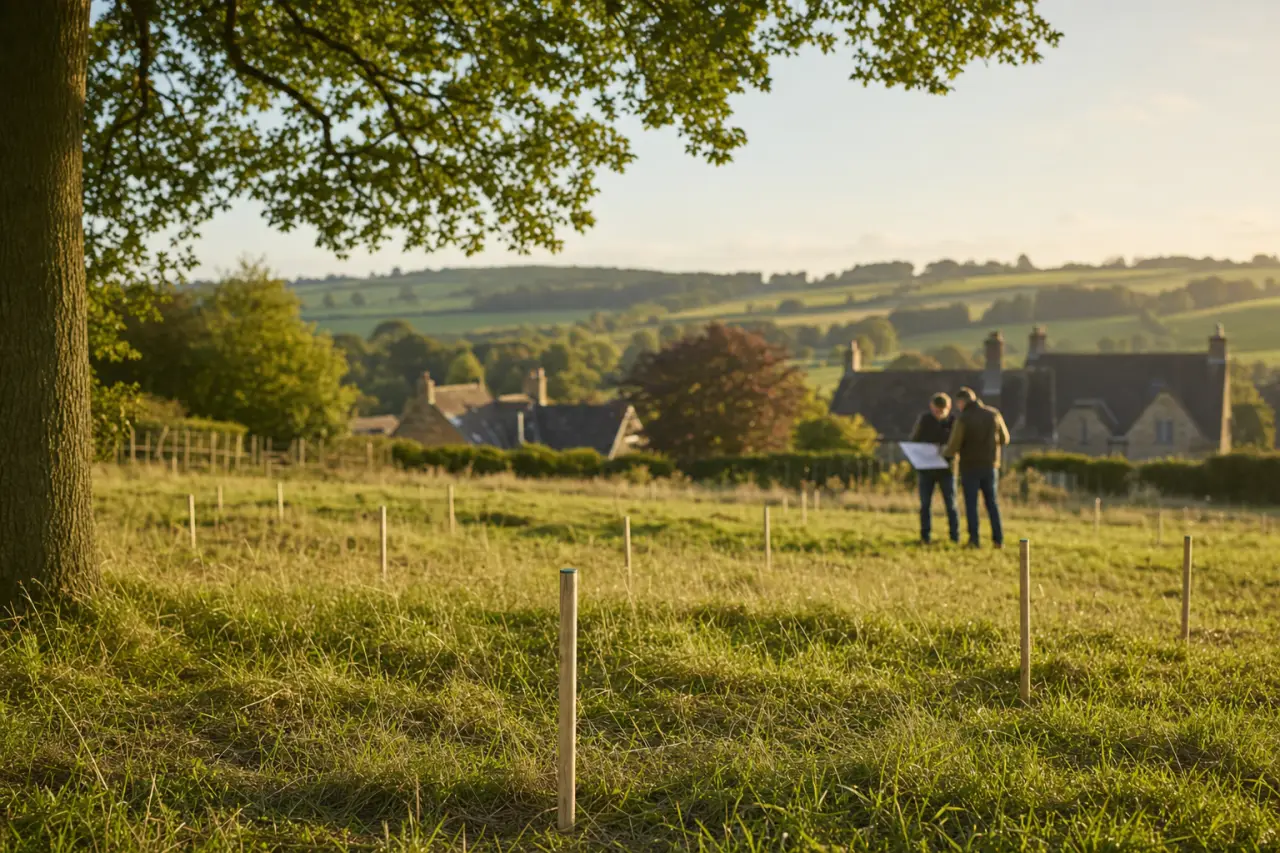
Visit the land with the title plan in hand. Walk the boundaries (as best you can identify them) and look for physical features that might not be obvious from documents, such as informal paths, utility equipment, or neighbouring encroachments.
Consider future plans in light of what the title documents reveal. If covenants or easements conflict with your intended use, seek legal advice before proceeding.
The Title Number as Your Starting Point
The title number is more than an administrative reference. It's the key to understanding what you're actually buying when you purchase land. The documents it unlocks reveal ownership, obligations, rights, and constraints that fundamentally affect the land's value and usability.
Never buy land without first obtaining and reviewing the official copies linked to its title number. The small cost of these searches (£7 in total as of 2026) is insignificant compared to the financial and legal risks of buying blind.
Whether you're purchasing a small plot for a self-build home, a field for equestrian use, or agricultural land for investment, the title number gives you the solid foundation of verified information you need to proceed with confidence.
For comprehensive guidance on navigating Land Registry processes and understanding property titles, explore our detailed resources. And when you're ready to take the next step in your land buying journey, get a free valuation to understand what you should be paying.