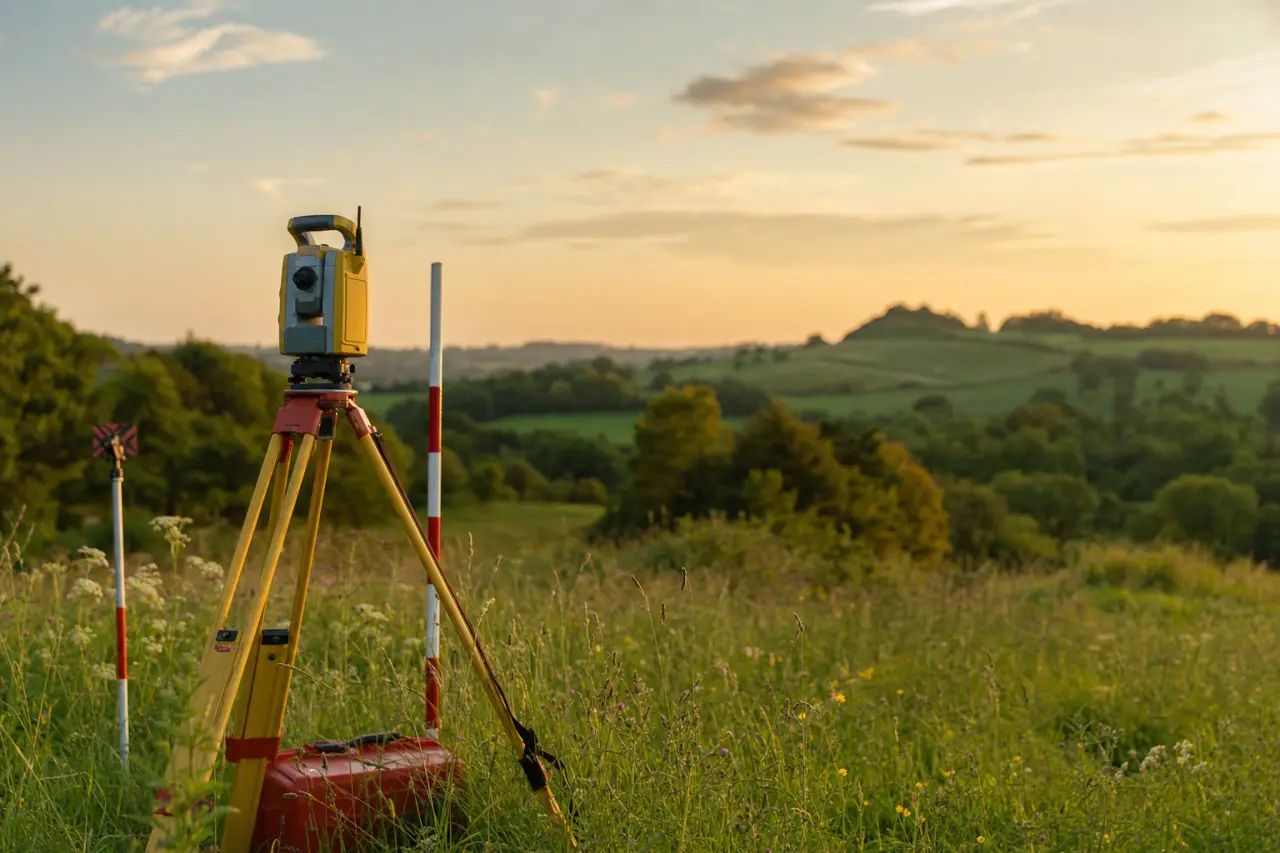
How to Check for Wildlife Protections and Habitats Before Buying Land in the UK
Buying land in the UK comes with environmental responsibilities that many first-time purchasers overlook. Protected species, designated habitats, and conservation areas can significantly impact what you're allowed to do with your land — and discovering these restrictions after purchase can be costly. In 2026, environmental due diligence isn't optional; it's essential for any responsible land buyer.
This comprehensive guide explains how to identify wildlife protections, which surveys you'll need, and what restrictions you might face before making your purchase.
Why Wildlife Protections Matter When Buying Land
The UK has some of Europe's strictest wildlife protection laws, designed to preserve biodiversity and prevent species extinction. These protections can affect everything from simple fencing to major development projects.
Under the Wildlife and Countryside Act 1981 and the Conservation of Habitats and Species Regulations 2017, it's a criminal offence to disturb certain protected species or damage their habitats — even on land you own. Penalties can include unlimited fines and up to six months' imprisonment.
For land buyers, this means:
- Development restrictions: You may need expensive mitigation measures or be unable to build entirely
- Access limitations: Some habitats restrict when and how you can use your land
- Ongoing management obligations: Certain designations require active conservation work
- Reduced land value: Protected land often sells at 20-40% below comparable unprotected parcels
Before you commit to any purchase, understanding these constraints is crucial. The complete guide to buying land in the UK covers due diligence broadly, but wildlife considerations deserve special attention.
Understanding Different Types of Wildlife Protection
Sites of Special Scientific Interest (SSSI)
SSSIs represent the UK's most important wildlife habitats and geological features. Natural England (or equivalent bodies in Scotland, Wales, and Northern Ireland) designates these sites, and they come with significant restrictions.
How to check: Search the Natural England SSSI database or use the Multi-Agency Geographic Information for the Countryside (MAGIC) map. Your solicitor should also conduct this search during conveyancing.
Restrictions on SSSI land:
- Written consent required from Natural England for any operations that might damage the site
- Cultivation, drainage, or construction typically prohibited or heavily restricted
- Grazing, vegetation removal, and pesticide use regulated
- Failure to comply can result in unlimited fines
Approximately 8% of England's land area is designated SSSI, with similar proportions across the UK nations. If you're considering land within an SSSI, budget for significantly restricted use and potentially lengthy approval processes.
Special Areas of Conservation (SAC) and Special Protection Areas (SPA)
These European-derived designations protect habitats and species of international importance. Post-Brexit, they remain protected under UK law with identical force.
SACs and SPAs often overlap with SSSIs but carry additional scrutiny. Any development or activity that might affect these sites requires rigorous assessment, and planning authorities must demonstrate no alternative exists before granting permission.
Local Wildlife Sites and Ancient Woodland
Not all protections are statutory. Local Wildlife Sites (also called Local Nature Reserves or County Wildlife Sites) are identified by local authorities and wildlife trusts. While not legally protected in themselves, planning permission for activities affecting these sites faces additional scrutiny.
Ancient woodland — defined as land that's been continuously wooded since 1600 in England and Wales (1750 in Scotland) — receives strong planning protection. The National Planning Policy Framework states that ancient woodland should be refused unless there are "wholly exceptional reasons" and suitable compensation.
Check the Ancient Woodland Inventory on the MAGIC map before purchasing any wooded land.
Protected Species on Land: What You Need to Know
Bats: The Most Common Complication
All 18 UK bat species are protected under the Conservation of Habitats and Species Regulations 2017. It's illegal to:
- Deliberately capture, injure, or kill bats
- Damage or destroy breeding sites or resting places (roosts)
- Disturb bats in their roosts
Bats roost in buildings, trees, bridges, and underground structures. If your land contains any of these features, you may need a bat survey before development.
When bat surveys are required:
- Converting or demolishing buildings
- Felling or pruning trees older than approximately 80 years
- Major earthworks near known roost sites
- As a planning condition for development
Bat surveys follow a two-stage process:
- Preliminary Roost Assessment: Visual inspection (£300-£800)
- Emergence/Re-entry Surveys: Evening observations between May and September, requiring at least two visits (£1,500-£4,000)
Timing is crucial. Bat surveys must be conducted during the active season (May-September), which can delay projects by months if not planned properly.
If bats are found, you'll need a European Protected Species (EPS) licence from Natural England to proceed with work. This requires demonstrating:
- No alternative to the proposed activity
- The work won't harm the local bat population
- Adequate compensation measures (bat boxes, habitat creation)
EPS licences can take 30 working days to process and cost £1,000-£5,000 in ecological consultancy fees.
Great Crested Newts: The Second Most Expensive Discovery
Great crested newts are found across Britain and receive similar protection to bats. They inhabit ponds but roam up to 500 metres from water during their terrestrial phase.
Why great crested newts matter:
- If your land contains ponds or is within 500m of ponds, newts may be present
- Development affecting newt populations requires an EPS licence
- Surveys cost £800-£3,000 depending on the number of ponds
- Mitigation can involve creating new ponds, fencing, and translocation programmes costing £5,000-£50,000+
The good news: In 2024, Natural England launched district-level licensing schemes that simplify the process and reduce costs in many areas. These schemes allow developers to pay into conservation funds rather than conducting individual surveys and mitigation. Check if your area participates at Natural England's district licensing page.
Other Protected Species to Consider
Birds: All wild birds, their nests, and eggs are protected during breeding season (March-August). Rare species receive year-round protection.
Dormice: Found in hedgerows and woodland in southern England and Wales. Surveys required if suitable habitat exists.
Badgers: Protected under the Protection of Badgers Act 1992. Disturbing setts requires a licence and can seriously delay development.
Reptiles: Slow worms, common lizards, grass snakes, and adders are protected. Sand lizards and smooth snakes receive additional protection.
Water voles: Protected under Schedule 5 of the Wildlife and Countryside Act. Found near waterways.
Otters: Fully protected. Presence near water bodies requires specialist surveys and potential licence applications.
For land near water, woodland, or with established hedgerows, assume multiple species surveys may be necessary.
Essential Wildlife Surveys Before Buying Land
When to Commission Surveys
Ideally, wildlife surveys should be completed before exchange of contracts. However, timing constraints often make this impractical. Instead:
- Pre-offer: Conduct desktop assessments using MAGIC maps and local records centres
- Subject to contract: Include clauses allowing survey access and potential renegotiation based on findings
- Survey season awareness: If buying outside survey season (October-April), factor in potential delays before any work can commence
The Preliminary Ecological Appraisal (PEA)
A Phase 1 habitat survey or Preliminary Ecological Appraisal provides baseline ecological information about your land. An experienced ecologist will:
- Walk the site identifying habitat types
- Assess the potential for protected species
- Review desk study data from local records centres
- Recommend further surveys if needed
Cost: £500-£2,000 depending on site size
Timescale: Can be conducted year-round, though spring/summer provides better information
A PEA is invaluable when getting a land valuation because it identifies constraints early, allowing you to negotiate accordingly.
Species-Specific Surveys
Depending on PEA findings, you may need:
- Bat surveys: May-September, minimum two visits (£1,500-£4,000)
- Great crested newt surveys: March-June or September-October (£800-£3,000)
- Breeding bird surveys: Multiple visits April-July (£1,000-£3,000)
- Badger surveys: Year-round (£400-£1,200)
- Reptile surveys: April-September, minimum seven visits (£2,000-£5,000)
- Botanical surveys: May-August (£500-£2,000)
Who Conducts Wildlife Surveys?
Only use ecologists with appropriate credentials:
- Membership of the Chartered Institute of Ecology and Environmental Management (CIEEM)
- Relevant Natural England bat survey licence (for bat surveys)
- Demonstrated experience with the species in question
- Professional indemnity insurance
Request references and examples of previous reports. A poorly conducted survey can be worthless or, worse, miss critical issues.
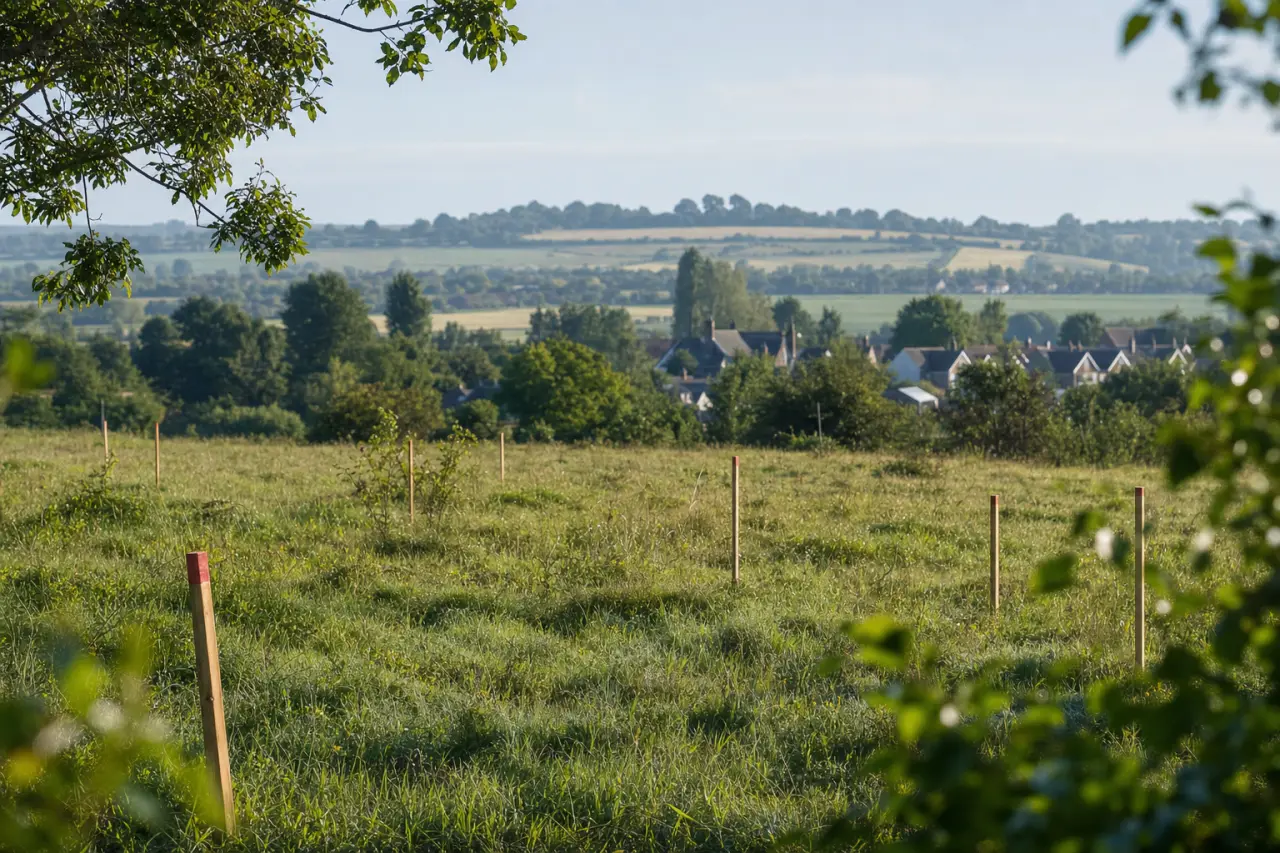
How to Research Wildlife Protections Before Viewing
Online Resources
MAGIC Map (Multi-Agency Geographic Information for the Countryside): The essential free tool showing:
- SSSIs, SACs, SPAs, and Ramsar sites
- Ancient woodland
- Agricultural Land Classification
- National parks and Areas of Outstanding Natural Beauty
- Environmental Stewardship agreements
Local Records Centres: County-based organisations holding wildlife sightings data. Most charge £50-£200 for data searches but provide invaluable species records for specific sites.
National Biodiversity Network Atlas: Free database of wildlife records, though coverage varies by region.
Local authority planning portals: Search for planning applications on neighbouring land. Ecological reports submitted with applications often reveal species in the wider area.
Questions to Ask the Seller
- Are you aware of any protected species on the land?
- Have wildlife surveys been previously conducted? (Request copies)
- Is the land subject to any environmental designations?
- Are there any Environmental Stewardship or Countryside Stewardship agreements?
- Have you needed wildlife licences for any previous work?
Sellers are not legally required to volunteer this information unless specifically asked, so direct questions are essential.
Red Flags to Watch For
- Unusually low price: May indicate known restrictions
- Ponds, mature trees, or undisturbed grassland: High-potential habitats
- Proximity to nature reserves: Increased likelihood of protected species
- Seller reluctance to allow survey access: Possible awareness of issues
- Recent planning refusals: Check for ecological reasons
Regional Variations Across the UK
England
Natural England handles protected sites and species licensing. Marine areas fall under the Marine Management Organisation. England has the most extensive network of SSSIs and the highest development pressure, making thorough checks essential.
Scotland
NatureScot (formerly Scottish Natural Heritage) manages designations. Scotland uses the term "Sites of Special Scientific Interest" identically to England but has additional designations like National Scenic Areas. Scottish planning law gives strong weight to biodiversity, and the Scottish Biodiversity Duty requires all public bodies to further biodiversity conservation.
Wales
Natural Resources Wales combines environmental regulation functions. Wales has proportionally more land under environmental designation than England, with extensive SSSIs, SACs, and National Parks.
Northern Ireland
The Northern Ireland Environment Agency manages Areas of Special Scientific Interest (ASSIs, the NI equivalent of SSSIs). Different legislation applies, including the Wildlife (Northern Ireland) Order 1985 and the Conservation (Natural Habitats, etc.) Regulations (Northern Ireland) 1995.
When buying land in specific regions, consult location-specific guidance for additional considerations.
What to Do If Protected Species Are Found
Renegotiating Price
Discovering protected species doesn't necessarily mean abandoning a purchase, but it should trigger price renegotiation. Consider:
- Cost of required surveys and licences
- Delay to your intended timeline
- Reduced development potential
- Ongoing management requirements
A bat roost requiring mitigation might justify a £10,000-£30,000 price reduction depending on the project scope. A great crested newt population affecting a major development could justify £50,000+ reductions.
Mitigation vs. Avoidance
Sometimes redesigning plans to avoid protected areas is more cost-effective than mitigation:
- Positioning buildings away from bat roosts or newt ponds
- Scheduling works outside sensitive periods
- Retaining habitat areas within your overall plan
- Creating buffer zones around protected features
Working with an ecologist early in your design process can save significant money compared to retrofitting solutions later.
The Licensing Process
If you must proceed with activities affecting protected species:
- Commission detailed surveys
- Develop a mitigation strategy with a licensed ecologist
- Apply for an EPS licence (or district-level licence for newts)
- Wait for determination (30+ working days)
- Implement approved mitigation measures
- Conduct licensed works under ecological supervision
- Complete post-work monitoring as required
Budget 3-6 months minimum for this process, plus £5,000-£20,000 in consultancy costs for complex cases.
Planning Permission and Ecological Considerations
When applying for planning permission, local planning authorities must consider:
- Impact on protected sites and species
- Compliance with local Biodiversity Action Plans
- Opportunities for biodiversity net gain
Since 2024, Biodiversity Net Gain is mandatory for most developments in England, requiring a minimum 10% increase in biodiversity value compared to pre-development conditions. This can be achieved through:
- On-site habitat creation or enhancement
- Off-site habitat provision
- Purchasing statutory biodiversity credits
BNG requirements add another layer of ecological assessment to development projects, typically costing £2,000-£10,000 for smaller schemes.
Environmental Stewardship and Land Management Agreements
Some land is subject to Countryside Stewardship (England), Glastir (Wales), or equivalent agri-environment schemes. These voluntary agreements provide annual payments in exchange for managing land in environmentally beneficial ways.
Before buying land in a stewardship agreement:
- Understand whether the agreement transfers to you
- Review restrictions (some prohibit development or cultivation changes)
- Check payment levels and duration remaining
- Assess whether you can comply with management prescriptions
Some agreements can be beneficial, providing income while land appreciates or awaits planning permission. Others may conflict with your intended use.
Cost Summary: Budgeting for Wildlife Surveys and Mitigation
Initial assessments:
- Desktop study: £200-£500
- Preliminary Ecological Appraisal: £500-£2,000
- Local records centre search: £50-£200
Species surveys (per species group):
- Bats: £1,500-£4,000
- Great crested newts: £800-£3,000
- Badgers: £400-£1,200
- Reptiles: £2,000-£5,000
- Breeding birds: £1,000-£3,000
Licensing and mitigation:
- EPS licence application support: £1,000-£5,000
- Bat mitigation (roost compensation): £2,000-£15,000
- Great crested newt mitigation: £5,000-£50,000+
- Badger sett closure licence and works: £3,000-£10,000
- Ecological supervision during works: £500-£2,000
For a typical small development on potentially sensitive land, budget £5,000-£15,000 for ecological work. Larger projects or confirmed protected species can easily exceed £30,000-£50,000.
Case Study: The Hidden Cost of Overlooked Protections
In 2025, a buyer purchased 2 acres of land in Devon for £80,000 intending to build a single dwelling. Desktop research showed no SSSI designation, and the seller disclosed no known issues.
After securing planning permission, the pre-construction bat survey revealed a maternity roost of rare lesser horseshoe bats in a boundary tree. The discovery required:
- Detailed emergence surveys: £3,500
- EPS licence application: £4,000
- Bat house installation and monitoring: £8,000
- Construction supervision: £2,500
- 14-month delay while surveys completed and licence processed
Total additional cost: £18,000 plus carrying costs on the delayed project.
The lesson: a £1,200 Preliminary Ecological Appraisal before purchase would have identified the bat roost potential, allowing informed negotiation or site redesign before committing.
Conclusion: Wildlife Due Diligence Is Essential
Protected species and habitats are widespread across the UK, affecting everything from small woodland plots to agricultural land near development sites. In 2026, environmental regulations continue strengthening, and enforcement is increasingly rigorous.
Successful land buyers integrate ecological considerations into their due diligence process from the outset:
- Research early: Use MAGIC maps and local records before making offers
- Commission professional surveys: Don't rely on amateur assessments
- Build costs into negotiations: Factor survey costs and potential mitigation into your offer
- Plan for delays: Surveys are seasonal, and licences take time
- Work with specialists: Experienced ecologists save money in the long run
By identifying wildlife protections before purchase, you can make informed decisions, negotiate fair prices, and avoid expensive surprises that derail your land development plans.
Remember that environmental protections exist for good reason — preserving the UK's biodiversity for future generations. Responsible land ownership means balancing your development aspirations with stewardship of the natural environment.
Ready to Find Your Perfect Plot?
Before making any land purchase, understanding the full environmental picture is crucial for accurate valuation. Get a free land valuation that takes ecological constraints into account, or browse land by location to find plots that match your requirements and risk tolerance.
For comprehensive guidance on every aspect of the land buying process, including environmental due diligence, read our complete guide to buying land in the UK.
Get a Free Land Valuation
Use our calculator to get an instant estimate of land value in your area.
Free Valuation