How to Check for Burial Grounds and Cemeteries Before Buying Land in the UK
Discovering that your newly purchased land contains human remains is not just unsettling—it can have serious legal and financial implications. Whether you're planning to build a home, develop a site, or simply invest in land, checking for burial grounds and cemeteries is a critical part of your due diligence process.
In the UK, burial grounds range from ancient pagan sites predating written records to Victorian cemeteries and modern consecrated churchyards. Each type comes with different legal protections and restrictions. This comprehensive guide explains exactly how to check for burial grounds on land before you buy, what to do if you discover graves, and the legal framework governing burials in England, Scotland, Wales, and Northern Ireland.
Why Checking for Burial Grounds Matters
The presence of burial grounds on land can affect your purchase in several ways:
Legal restrictions: Consecrated land (blessed for religious burials) remains consecrated indefinitely unless formally deconsecrated. Even then, graves cannot typically be disturbed without specific legal authority.
Planning permission: Local planning authorities will almost certainly refuse development applications on land containing burials. Planning permission for land with archaeological significance faces additional scrutiny.
Property value: Land with known or suspected burial grounds typically sells at a significant discount—often 30-50% below comparable plots—and may prove difficult to sell in future.
Disturbance offences: Under common law and the Burial Act 1857, disturbing human remains without lawful authority is a criminal offence carrying potential imprisonment.
Insurance issues: Buildings insurance may be refused or loaded with exclusions if built near or on former burial grounds.
Understanding Different Types of Burial Sites in the UK
Consecrated vs Unconsecrated Burial Grounds
Consecrated land has been blessed by a religious authority (typically the Church of England) for burial purposes. This includes:
- Active and closed churchyards
- Sections of municipal cemeteries designated for religious burials
- Private burial grounds consecrated by bishops
Consecrated status continues indefinitely and creates permanent restrictions on land use. The Church of England must be consulted before any works affecting consecrated ground.
Unconsecrated burial grounds include:
- Non-denominational cemetery sections
- Quaker burial grounds
- Jewish cemeteries
- Private family burial plots
- Paupers' graves and mass burial sites
While not religiously consecrated, these sites still fall under burial legislation and require Faculty Jurisdiction or similar authority to disturb.
Ancient Burial Sites and Archaeological Protections
The UK's landscape contains thousands of ancient burial sites including:
- Bronze Age barrows and tumuli
- Iron Age burial mounds
- Roman cemeteries
- Anglo-Saxon burial grounds
- Medieval plague pits
Any burial over 100 years old is protected under the Burial Act 1857. Sites predating 1066 often qualify as Scheduled Monuments under the Ancient Monuments and Archaeological Areas Act 1979, requiring Scheduled Monument Consent for any ground disturbance.
Step-by-Step: How to Check for Burial Grounds Before Buying
1. Review the Title Deeds and Land Registry Documents
Start with the Land Registry records for your prospective purchase. Request official copies of:
- Title register: Look for restrictive covenants mentioning burials, consecration, or religious purposes
- Title plan: Check boundaries against historical cemetery maps
- Filed documents: Review any referenced deeds, particularly for land formerly owned by churches or municipalities
The Land Registry occasionally notes consecration or burial ground status, but records are not comprehensive. Absence of mention doesn't guarantee absence of burials.
2. Search Local Authority Records
Every local council maintains burial ground records. Contact the following departments:
Environmental Health or Bereavement Services:
- Request information on closed cemeteries and burial grounds in the area
- Ask about historical records of burials, particularly pre-1900
- Check whether the land ever formed part of a larger cemetery site
Planning Department:
- Review planning history for archaeological conditions
- Request any archaeological desk-based assessments from previous applications
- Check for Tree Preservation Orders (TPOs) which sometimes mark burial sites
Local Studies Library or Archives:
- Examine historic maps, particularly 1st Edition Ordnance Survey maps (1840s-1890s)
- Review parish records and vestry minutes
- Check local history publications mentioning burial sites
In 2026, many councils provide online cemetery mapping tools. However, records for private or closed burial grounds remain incomplete, making physical searches essential.
3. Consult the Church of England Parish Register
If the land is within or near a parish church:
- Contact the Diocesan Registry to check consecration records
- Review burial registers held at the local County Record Office
- Speak with the parish priest about historical churchyard extensions
- Check whether closed churchyards were transferred to local authority maintenance
Churchyard extensions created during the 19th-century population boom are particularly common and may not appear on modern maps.
4. Search Archaeological and Heritage Databases
Several national databases record known archaeological sites:
Historic Environment Records (HER): Each county maintains an HER (formerly Sites and Monuments Records) documenting known archaeological sites. These are publicly accessible, though detailed information may require payment.
National Heritage List for England (NHLE): Search at historicengland.org.uk for:
- Scheduled Monuments
- Listed Buildings (including tomb structures)
- Registered Parks and Gardens (which may include memorials)
Portable Antiquities Scheme (PAS): Check finds.org.uk for metal detector finds in the area, which can indicate settlement and burial activity.
Royal Commission databases:
- Coflein (Wales): coflein.gov.uk
- Canmore (Scotland): canmore.org.uk
- Northern Ireland Sites and Monuments Record: apps.communities-ni.gov.uk
5. Review Historical Maps and Aerial Photography
Comparing historical and modern maps often reveals former burial grounds:
Ordnance Survey maps: The National Library of Scotland (maps.nls.uk) provides free access to historic OS maps from the 1840s onwards. Look for:
- "Bury" or "Burial Ground" annotations
- Cross symbols indicating consecrated ground
- "Disused Cemetery" or "Closed Churchyard" labels
- Rectangular enclosed areas near churches
Tithe maps (1836-1851): Available at The National Archives and county record offices, these show land use with accompanying apportionment schedules noting owners and land use.
Aerial photography: Historic England's aerial photography collection and wartime reconnaissance photos sometimes reveal crop marks indicating buried structures.
6. Commission a Desk-Based Archaeological Assessment
For higher-value purchases or development sites, commission a professional Heritage Consultant or archaeological practice to conduct a Desk-Based Assessment (DBA) complying with CIfA standards.
A DBA typically costs £800-£2,500 and includes:
- Comprehensive database searches
- Map regression analysis
- Site walkover
- Assessment of archaeological potential
- Recommendations for further investigation
Most importantly, a professional DBA provides due diligence evidence if disputes arise and is usually required for planning applications on sensitive sites.
7. Conduct Physical Site Inspections
Personal inspection can reveal features that databases miss:
Look for:
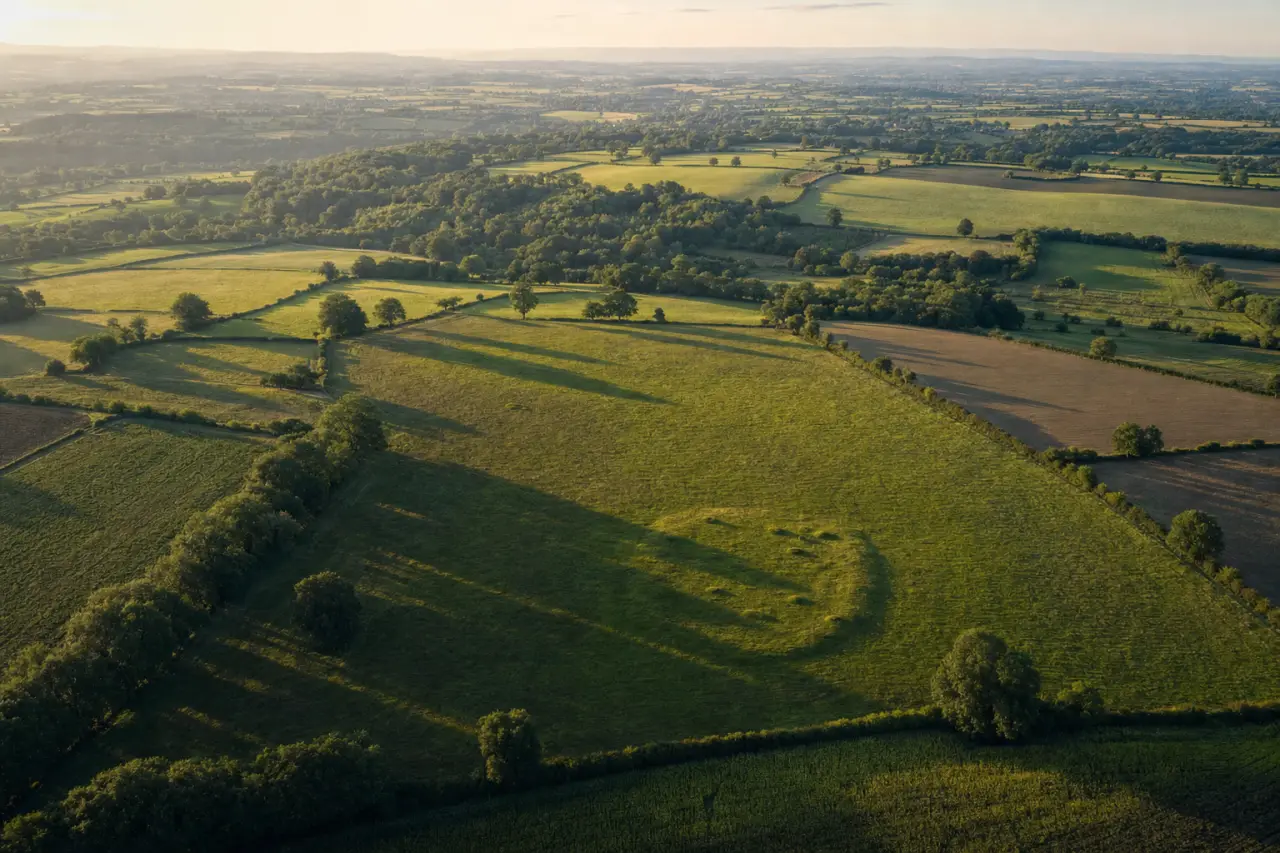
- Depressions or rectangular earthworks indicating grave plots
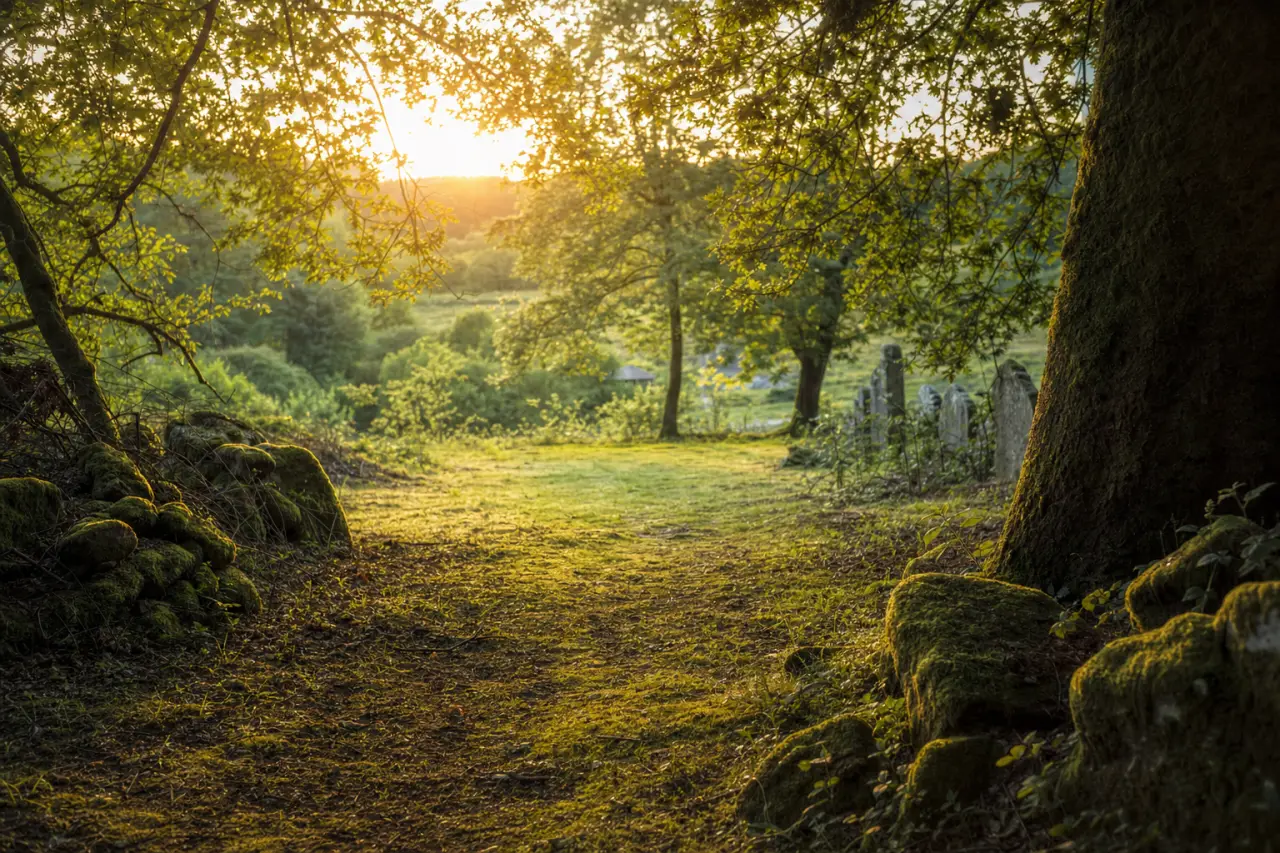
- Stone markers, even if fallen or illegible
- Different vegetation growth patterns (disturbed soil affects plant growth)
- Remnants of boundary walls or railings
- Mature yew trees (traditionally planted in burial grounds)
- Ground level differences suggesting filled structures
Local knowledge: Speak with neighbouring landowners and long-term residents. Oral history often preserves knowledge of burial sites long after official records fade.
8. Question the Vendor Directly
Include specific questions in your preliminary enquiries:
- Is the vendor aware of any burials, graves, or human remains on or removed from the land?
- Has the land ever formed part of a churchyard, cemetery, or consecrated ground?
- Are there any traditions, stories, or local beliefs about the land relating to burials?
- Have any archaeological investigations been conducted?
While vendors must disclose known issues, absence of knowledge doesn't constitute misrepresentation. Independent verification remains essential.
What If You Discover Burial Grounds?
If Burials Are Discovered Before Purchase
Discovering burial grounds during due diligence provides options:
Renegotiate the price: Land values typically drop 30-50% when burial grounds are confirmed. Use your land valuation to establish fair adjusted pricing.
Walk away: If your intended use becomes impossible, most purchase contracts allow withdrawal before exchange with minimal loss (survey costs only).
Adjust your plans: Consider whether less intensive use (agricultural, amenity woodland, wildlife habitat) remains viable and worthwhile.
If Burials Are Discovered During Development
Uncovering human remains during groundworks triggers strict legal requirements:
Immediate actions required:
- Stop all work immediately in the affected area
- Secure the site to prevent further disturbance
- Notify the local police (required by law)
- Contact the local planning authority
- Notify the relevant Diocesan Registry if possibly consecrated
Police involvement: Officers will attend to determine whether remains are recent (potential crime scene) or historical. For burials over 100 years old, they typically release the site to archaeological authorities.
Archaeological investigation: You'll be required to fund:
- Professional excavation by licensed archaeologists
- Osteological analysis of remains
- Reburial in an approved location
- Full recording and reporting
Costs typically range from £5,000 for a single burial to over £100,000 for extensive cemetery sites.
Consecrated Land: The Deconsecration Process
If you've purchased consecrated land and need to change its use, you must apply for deconsecration through the Church of England Diocesan Chancellor. However:
- Deconsecration doesn't permit grave disturbance
- Faculty Jurisdiction still applies to any works
- Applications are frequently refused
- The process takes 6-12 months minimum
- Legal costs typically exceed £10,000
Deconsecration is primarily used when adding closed churchyards to adjacent properties where no development is planned.
Legal Framework: Burial Laws You Need to Know
Several laws govern burial grounds across the UK:
Burial Act 1857: The primary legislation making it an offence to disturb human remains or burial sites without lawful authority. Maximum penalty: two years imprisonment.
Town and Country Planning Act 1990: Requires planning authorities to consider impact on burial grounds. Section 106 agreements often require archaeological conditions.
Human Tissue Act 2004: Regulates removal and retention of human remains under 100 years old, requiring specific licenses.
Consecrated Land Acts: Various acts govern Church of England land, requiring Faculty Jurisdiction for any works affecting consecrated ground.
Ancient Monuments and Archaeological Areas Act 1979: Protects scheduled monuments, including many ancient burial sites.
Scotland-specific: The Burial and Cremation (Scotland) Act 2016 provides updated framework north of the border.
Regional Variations Across the UK
England
The Church of England's historical dominance means extensive consecrated burial grounds. Victorian-era cemetery companies also created numerous private burial grounds, many now forgotten.
Wales
Welsh burial grounds include both Anglican and Non-Conformist chapels. Cadw maintains the Welsh heritage records. Ancient burial sites are particularly common in rural areas.
Scotland
Scottish burial grounds follow different legal frameworks. Many rural churchyards remain in use. The National Records of Scotland maintains burial records, though coverage varies by locality.
Northern Ireland
Sectarian divisions created parallel burial grounds in many communities. Records are less centralized than in Great Britain. The Northern Ireland Environment Agency manages scheduled monuments.
Common Questions About Buying Land With Burial Grounds
Can you build on land with historical burials?
Generally no. Planning permission is almost never granted for development directly on burial grounds. Even adjacent development faces strict conditions and may require archaeological monitoring.
What about very old burials—Bronze Age barrows, for example?
Age doesn't diminish protection. Ancient burial sites often have stronger protections as scheduled monuments. Ploughing depth may be restricted, and metal detecting is typically prohibited.
Can graves be moved or exhumed?
Exhumation requires either:
- A Faculty from the Diocese Consistory Court (consecrated ground)
- A license from the Ministry of Justice (unconsecrated ground)
- Specific statutory authority
Applications are rarely granted except for clear public interest (major infrastructure projects). Family wishes alone don't suffice.
Does homeowner's insurance cover discovering burial grounds?
Standard policies don't cover financial losses from discovering burial grounds, as it's considered a latent defect existing before purchase. Some title insurance policies offer limited protection, but read terms carefully.
What if I want to create a natural burial ground?
Establishing new burial grounds requires:
- Planning permission (change of use)
- Environment Agency permits (groundwater protection)
- Compliance with burial ground regulations
- Consideration of future sale implications
See our guide on buying land for specific purposes for more details.
Red Flags: When to Be Especially Cautious
Certain circumstances should raise immediate concerns:
Land priced significantly below market rate: Burial grounds are a common reason for deep discounts. Always investigate why land seems undervalued.
Overgrown land with old stone structures: Inspect carefully for grave markers hidden by vegetation.
Land adjacent to churches: Churchyard extensions were common in the 19th century. Many were later separated from church ownership but remain consecrated.
Former hospital or workhouse land: Victorian institutions often had dedicated burial grounds for inmates and patients.
Land near medieval settlements: Archaeological potential increases significantly near documented medieval occupation.
Vendor reluctance to discuss land history: Evasive answers to questions about previous use warrant deeper investigation.
Protection Through Your Conveyancing Process
Your solicitor should:
- Raise specific enquiries about burials, consecration, and archaeological findings
- Review planning history for archaeological conditions on neighboring sites
- Check for Church Commission involvement in the title history
- Obtain indemnity insurance if appropriate (though this rarely covers burial-related issues)
- Include appropriate warranties in the contract requiring vendor disclosure
Consider making your offer conditional on satisfactory archaeological assessment for higher-risk purchases.
Regional Buying Considerations
Some areas present higher risk:
Urban areas: Victorian expansion created numerous cemetery extensions and private burial grounds, many now built over or forgotten. London and industrial cities require particular diligence.
Historic market towns: Medieval burgess plots often included burial rights. Ancient town centers warrant careful checking.
Rural churchyard peripheries: Agricultural land surrounding village churches may include former consecrated extensions.
Coastal areas: Historical isolation meant communities created local burial grounds rather than transporting deceased long distances.
Former monastic lands: Dissolved monasteries often had extensive burial grounds. Monastic land passed to private ownership but burials remained.
When browsing land by location, always research the area's history before viewing.
The Bottom Line: Due Diligence Is Essential
Checking for burial grounds is not optional—it's a fundamental part of responsible land purchase due diligence. The costs of investigation (£1,000-£3,000 for comprehensive checks) pale against the financial and legal consequences of buying land with undisclosed burials.
Remember:
- Search multiple sources: No single database is comprehensive
- Commission professional help: Archaeological consultants provide expertise and liability protection
- Document everything: Keep records of all searches and enquiries
- Don't rely solely on vendor disclosure: Innocent non-disclosure is common
- Factor additional costs into your budget: Archaeological assessment should be standard for any development site
The peace of mind from thorough investigation far outweighs the inconvenience and cost.
Getting Expert Help
If you're uncertain about burial ground risks on land you're considering, professional help is available:
For archaeological assessment:
- Chartered Institute for Archaeologists (CIfA) maintains a directory of registered practices
- Local authority archaeological officers can recommend consultants
- Historic England provides guidance and sometimes grant funding
For legal advice:
- Specialist ecclesiastical law solicitors understand consecration issues
- Environmental law firms handle archaeological planning conditions
- Agricultural property solicitors have experience with rural burial grounds
For valuation impact:
- RICS-qualified rural surveyors can assess value implications
- Our free land valuation service provides initial guidance
Conclusion: Knowledge Protects Your Investment
Buying land with unknown or undisclosed burial grounds can transform your investment dream into a legal and financial nightmare. However, systematic checking using the methods outlined in this guide dramatically reduces your risk.
The UK's rich history means burial sites exist in surprising locations, from city centers to remote hillsides. Whether ancient barrows, Victorian cemeteries, or consecrated churchyards, each type brings legal protections that can prevent development and diminish value.
By searching Land Registry records, consulting local authorities, reviewing historical maps, commissioning archaeological assessments, and conducting thorough site inspections, you can identify burial risks before committing to purchase.
Remember: the few weeks and modest costs involved in comprehensive due diligence provide essential protection for what is likely one of your most significant investments.
Ready to Buy Land With Confidence?
Before making any land purchase, ensure you understand all the potential issues beyond burial grounds. Our complete guide to buying land in the UK covers every aspect of due diligence, from planning permission to environmental surveys.
If you're evaluating a specific plot and want professional guidance on its value and potential, get a free land valuation from our experienced team. We'll help you understand what the land is really worth and flag any concerns that warrant further investigation.
Get a Free Land Valuation
Use our calculator to get an instant estimate of land value in your area.
Free Valuation