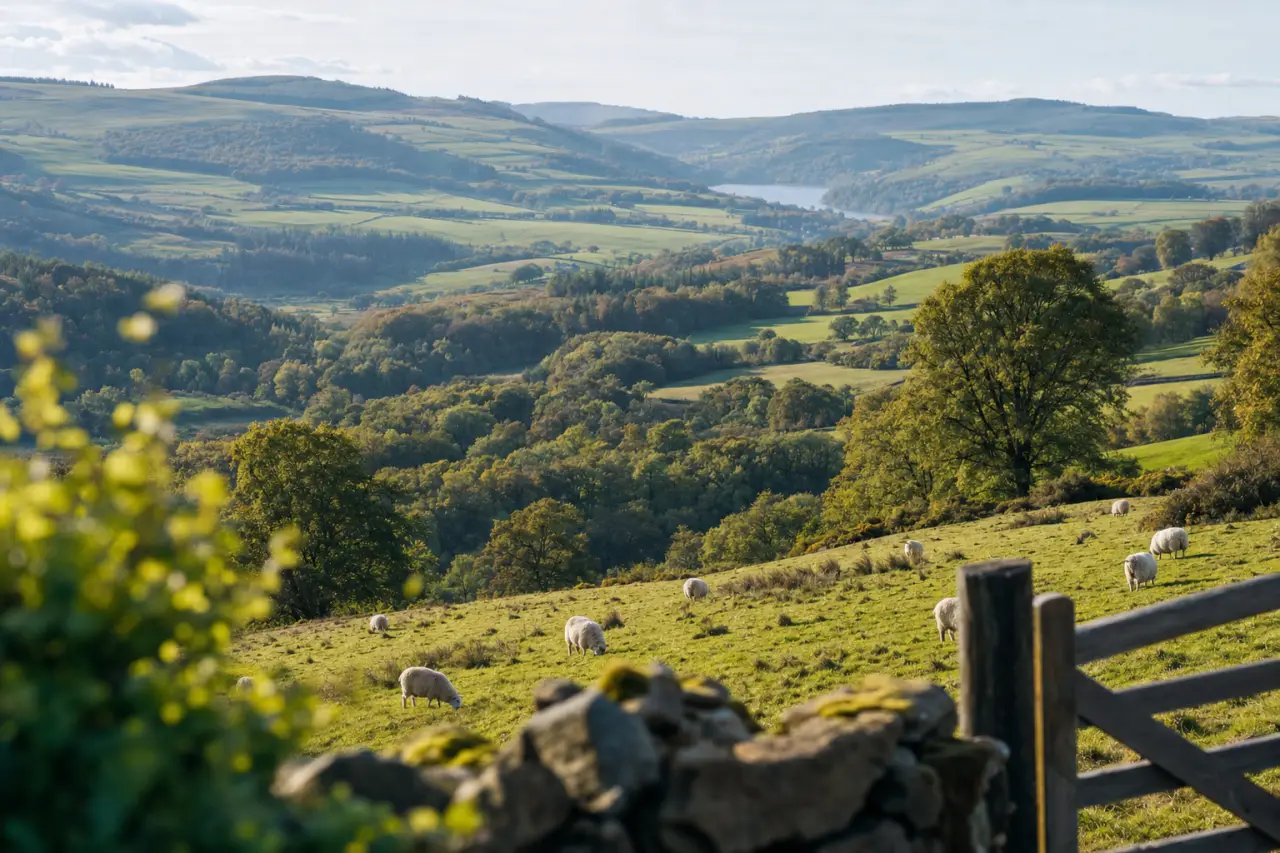
How to Check for Environmental Designations Before Buying Land in the UK: SSSIs, AONBs and More
Buying land without understanding its environmental designations is one of the most expensive mistakes prospective landowners make. A beautiful plot with development potential can quickly become a financial burden if it's designated as a Site of Special Scientific Interest (SSSI) or falls within an Area of Outstanding Natural Beauty (AONB). In 2026, with environmental protections stronger than ever, conducting thorough due diligence on protected land status is essential.
This comprehensive guide explains how to check for environmental designations, what each designation means for your plans, and how to navigate the restrictions that come with buying land subject to conservation protections.
Why Environmental Designations Matter When Buying Land
Environmental designations exist to protect the UK's most valuable natural landscapes, habitats, and species. These protections range from local wildlife corridors to internationally significant conservation areas, and they can significantly restrict what you're allowed to do with your land.
The implications are substantial:
- Development restrictions: Many designations prohibit or severely limit building, even for agricultural structures
- Agricultural limitations: Certain farming practices may be restricted or require special consent
- Access requirements: Some designations grant public access rights, regardless of private ownership
- Financial obligations: Management requirements may impose ongoing costs
- Planning permission challenges: Obtaining consent for any changes becomes considerably more difficult
Understanding these restrictions before you exchange contracts can save you from purchasing land that doesn't suit your intended use. For general guidance on land purchases, see our complete guide to buying land in the UK.
Major Environmental Designations in the UK
Sites of Special Scientific Interest (SSSIs)
SSSIs represent the UK's most important wildlife sites and geological formations. England has over 4,100 SSSIs covering approximately 7% of the country's land area, with similar proportions in Scotland, Wales, and Northern Ireland.
What SSSI designation means:
- Natural England (or equivalent bodies in other UK nations) must be consulted before any potentially damaging operations
- A comprehensive list of "operations requiring consent" applies to each SSSI
- Fines of up to £40,000 or unlimited penalties for intentional damage
- Strict limitations on agricultural intensification, drainage, or tree felling
- Management agreements may be required to maintain or restore habitats
Buying SSSI land: Whilst not impossible, purchasing SSSI land requires careful consideration. The restrictions can make the land unsuitable for development or intensive agriculture, but it may be perfect for conservation-focused buyers or those seeking low-intervention woodland or grazing land.
Areas of Outstanding Natural Beauty (AONBs)
AONBs (known as National Scenic Areas in Scotland) cover approximately 15% of England and Wales. These designations protect landscapes of national significance, including the Cotswolds, Cornwall Coast, and Yorkshire Dales.
AONB land restrictions include:
- Stricter planning controls, with a presumption against major development
- Enhanced scrutiny of building designs, materials, and impact on landscape character
- Limitations on commercial activities that could harm scenic quality
- Potential restrictions on signage, lighting, and infrastructure
AONBs are less restrictive than National Parks but still require careful navigation. Agricultural buildings and dwellings can be permitted, but expect rigorous assessment and potential refusals if your plans conflict with landscape conservation objectives. For more on navigating these restrictions, visit our guide on planning permission.
National Parks
The UK's 15 National Parks (including the Cairngorms, Lake District, and Dartmoor) combine strict planning controls with active landscape management. Approximately 10% of England and Wales falls within National Park boundaries.
Key restrictions:
- Two-stage planning process with National Park Authority involvement
- Strong presumption against development except in exceptional circumstances
- Strict design requirements for permitted buildings
- Enhanced protections for traditional building styles and materials
- Limitations on commercial activities and signage
Special Areas of Conservation (SACs) and Special Protection Areas (SPAs)
These European-derived designations (retained in UK law post-Brexit) protect internationally important habitats and bird species. Together with Ramsar sites (internationally important wetlands), they form the UK's network of protected sites.
Restrictions include:
- Habitat Regulations Assessment required for any plan or project likely to have significant effects
- Very strict controls on activities affecting protected species or habitats
- Significant penalties for damage to protected features
- Potential requirement for mitigation or compensation measures
Ancient Woodland
Ancient woodland (woodland existing since at least 1600 AD in England and Wales, 1750 in Scotland) covers just 2.5% of the UK but receives strong protection under the National Planning Policy Framework.
Protection measures:
- Presumption against development affecting ancient woodland
- Requirement for 50-metre buffer zones from development
- Strict controls on forestry operations
- Protection for ancient and veteran trees
Local Nature Reserves and Wildlife Sites
Local authorities designate these sites for their local conservation importance. Whilst less restrictive than national designations, they still influence planning decisions and may restrict agricultural or forestry operations.
How to Check for Environmental Designations: Step-by-Step
Step 1: Use the Magic Map
The Multi-Agency Geographic Information for the Countryside (MAGIC) map is your essential starting point. This free government tool shows all statutory environmental designations across England.
How to use MAGIC:
- Visit magic.defra.gov.uk
- Enter the postcode or use map navigation to locate your land
- Toggle layers to view different designations (SSSIs, AONBs, ancient woodland, etc.)
- Click on highlighted areas for detailed information
- Download reports showing all designations affecting a specific area
Important: MAGIC covers England only. For other UK nations, see alternative sources below.
Step 2: Check Nation-Specific Resources
Scotland:
- NatureScot's SiteLink for protected areas
- Scotland's Environment Web for spatial data
- Ancient Woodland Inventory for Scotland
Wales:
- Lle Geo-Portal Wales for environmental data
- Natural Resources Wales website for designated sites
- DataMapWales for planning constraints
Northern Ireland:
- DAERA Natural Environment Map Viewer
- Northern Ireland Environment Agency data
Step 3: Request an Environmental Search
Professional environmental searches provide comprehensive reports on all designations, contaminated land risks, flooding, and other environmental factors.
What environmental searches reveal:
- All statutory designations within and near the property
- Proximity to SSSIs, AONBs, and other protected areas
- Ancient woodland locations
- Flood zones and water quality issues
- Historical land uses and contamination risks
- Environmental permits or licences
Expect to pay £60-150 for a comprehensive environmental search. This is money well spent given the potential costs of buying inappropriately designated land.
Step 4: Consult Local Planning Authority Records
Local planning authorities maintain their own records of non-statutory designations and local policies:
- Local Wildlife Sites (LWS)
- County Wildlife Sites (CWS)
- Regionally Important Geological Sites (RIGS)
- Local landscape designations
- Tree Preservation Orders (TPOs)
- Conservation Areas
Request a planning constraints report from the local authority or review their online planning portal.
Step 5: Review the Local Development Plan
Every local authority maintains a development plan setting out planning policies, including environmental protections. Key documents include:
- Local Plan or Local Development Plan
- Supplementary Planning Documents on environmental topics
- Neighbourhood Plans (which may include local environmental designations)
- AONB Management Plans
- National Park Management Plans
These documents explain how environmental designations influence planning decisions in that area.
Step 6: Check Specific Designation Details
Once you've identified relevant designations, investigate the specific restrictions:
For SSSIs:
- Request the SSSI citation from Natural England (or equivalent)
- Review the list of operations requiring consent
- Check the site's condition assessment
- Understand the management requirements
For AONBs and National Parks:
- Review the Management Plan
- Check planning policies specific to the designation
- Understand landscape character assessments
- Identify any special qualities that must be protected
Step 7: Instruct Your Solicitor to Investigate
Your conveyancing solicitor should conduct thorough searches, but explicitly instruct them to investigate environmental designations. Request that they:
- Confirm all designations affecting the land
- Identify any management agreements or obligations
- Review previous planning applications and outcomes
- Check for any enforcement notices related to environmental damage
- Verify access rights and public footpath requirements

Understanding the Practical Impact on Different Land Uses
Residential Development
Environmental designations create substantial barriers to residential development:
- SSSIs: Residential development is typically refused unless no reasonable alternative exists and significant public benefits outweigh harm
- AONBs: Small-scale development may be permitted if sensitively designed and meeting local needs
- National Parks: Development limited to conversions or replacement dwellings except in exceptional circumstances
- SACs/SPAs: Development likely to affect protected habitats or species will be refused unless no alternatives exist
Before purchasing land for residential development, obtain pre-application advice from the planning authority and ecological consultants.
Agricultural Use
Agricultural activities face varying restrictions depending on designation:
- SSSIs: Many traditional farming practices require consent; intensification typically prohibited
- AONBs: Generally more permissive, but large agricultural buildings and intensive operations scrutinised
- SACs/SPAs: Significant restrictions on activities affecting protected species (e.g., ground-nesting birds)
Agri-environment schemes often provide payments for managing designated land sympathetically. Contact Natural England or your nation's equivalent to explore available schemes.
Woodland Management
Forestry operations on designated land require careful planning:
- Ancient woodland: Felling generally prohibited; thinning may require consent
- SSSIs: Woodland management plans must be approved by Natural England
- All designations: Felling licences from the Forestry Commission may have additional conditions
Sustainable woodland management can continue on most designated sites with appropriate consents.
Commercial Activities
Commercial ventures face substantial hurdles on designated land:
- Holiday accommodation, campsites, and visitor facilities require planning permission and face strict design requirements
- Commercial signage and lighting typically restricted
- Change of use applications heavily scrutinised
- Business operations that increase traffic or noise may be refused
However, low-impact enterprises aligned with conservation objectives (e.g., eco-tourism, conservation grazing) may receive support.
What to Do if Your Land Has Environmental Designations
Before Purchasing
- Reassess your objectives: Can you achieve your goals with the restrictions in place?
- Obtain pre-application advice: Contact the planning authority and relevant conservation body
- Factor in additional costs: Professional ecological surveys, enhanced design work, ongoing management
- Review funding opportunities: Agri-environment schemes, woodland grants, conservation payments
- Negotiate the price: Designated land typically has lower market value due to restrictions
For an accurate assessment of land value considering designations, request a free land valuation from our experts.
After Purchasing
- Establish relationships: Contact Natural England (or equivalent) and introduce yourself as the landowner
- Review existing agreements: Understand any management agreements or obligations
- Consider agri-environment schemes: Payments can offset restrictions and maintenance costs
- Obtain necessary consents: Before undertaking any operations, ensure you have appropriate permissions
- Engage ecological consultants: For any development or significant changes, professional advice is essential
Regional Variations Across the UK
England
England has the most extensive network of designations, with Natural England responsible for SSSIs and other national designations. The planning system applies a consistent approach, though individual local authorities interpret policies differently.
Scotland
Scotland's planning system gives particular weight to environmental considerations through NatureScot (formerly Scottish Natural Heritage). National Scenic Areas provide landscape protection equivalent to AONBs, whilst the Land Reform (Scotland) Act 2003 provides extensive access rights regardless of designation.
Wales
Natural Resources Wales manages environmental designations. The Well-being of Future Generations Act 2015 requires public bodies to consider environmental sustainability, potentially affecting planning decisions on designated land more significantly than in England.
Northern Ireland
The Department of Agriculture, Environment and Rural Affairs manages designations through the Northern Ireland Environment Agency. Environmental designations cover approximately 10% of Northern Ireland's land area, with planning controls enforced by local councils.
Common Mistakes to Avoid
- Assuming surveys are unnecessary: Even if you don't plan development, understanding restrictions prevents future issues
- Relying solely on seller information: Vendors may be unaware of designations or their implications
- Ignoring proximity impacts: Land near (but not within) designated sites can still face restrictions
- Overlooking non-statutory designations: Local Wildlife Sites and similar designations influence planning decisions
- Failing to budget for ongoing costs: Management requirements can impose significant annual expenses
- Dismissing opportunities: Designated land unsuitable for development may be perfect for conservation, forestry, or low-impact use
Getting Professional Help
Navigating environmental designations requires specialist knowledge. Consider engaging:
- Environmental consultants: For comprehensive designation reports and impact assessments
- Ecological consultants: For habitat surveys and species assessments
- Planning consultants: To interpret planning policies and designation impacts
- Agricultural consultants: For farming businesses on designated land
- Specialist solicitors: Experienced in environmental and rural property law
These professionals typically charge £500-2,000 for initial assessments, but this investment protects you from purchasing unsuitable land.
Conclusion: Due Diligence is Essential
Environmental designations affect millions of hectares across the UK, making it more likely than not that any rural land purchase will encounter some form of protection. These designations aren't necessarily barriers to land ownership—they simply require informed decision-making and realistic expectations.
By thoroughly investigating environmental designations before purchasing, you'll:
- Avoid buying land unsuitable for your intended use
- Negotiate appropriate purchase prices reflecting restrictions
- Plan realistically for ongoing management requirements
- Identify opportunities for grant funding and environmental payments
- Prevent costly mistakes and legal complications
The time spent researching environmental designations during the due diligence phase pays dividends throughout your land ownership journey. Start with the free online tools, obtain professional searches, and engage specialists where necessary. Your solicitor, planning authority, and conservation bodies are valuable sources of guidance.
For location-specific information about land opportunities and constraints, browse our county-by-county guide or read about the complexities of the Land Registry.
Ready to find land that matches your objectives? Get a free, no-obligation land valuation to understand realistic values for land in your target area, or explore our complete buying guide for comprehensive advice on every stage of the land purchase process.
Get a Free Land Valuation
Use our calculator to get an instant estimate of land value in your area.
Free Valuation