How to Read a Title Register: A Plain-English Guide
Master the art of reading a title register with our comprehensive plain-English guide. Learn to decode each section and spot potential issues before buying land.
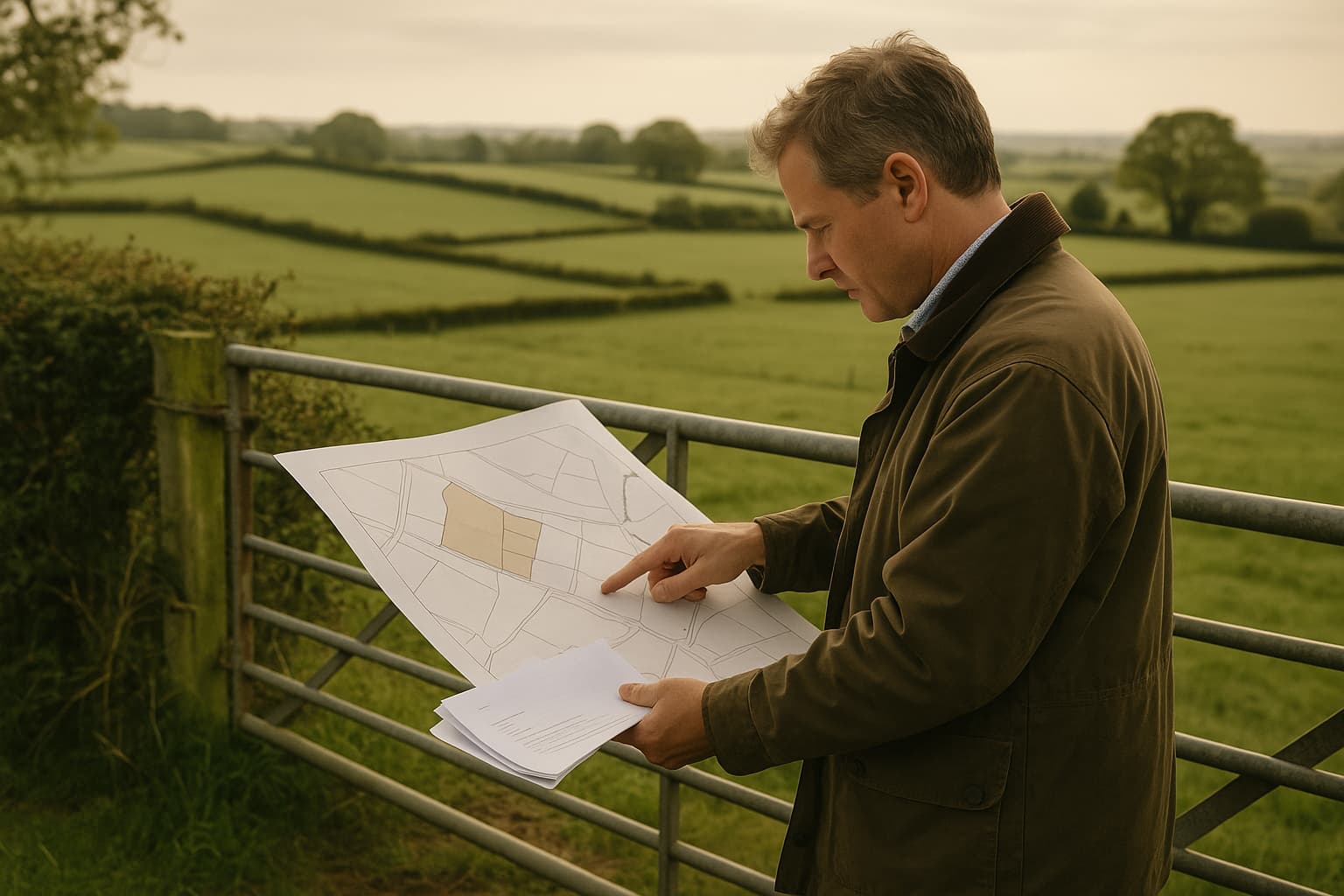
# How to Read a Title Register: A Plain-English Guide
If you're buying land in the UK, the title register is the single most important document you'll encounter. This official Land Registry document tells you everything about who owns the land, what restrictions apply, and whether there are any rights or charges affecting it. Yet many first-time buyers find themselves staring at pages of legal jargon, unsure what it all means.
This guide will walk you through every section of a title register in plain English, helping you spot potential issues before you commit to a purchase.
What Is a Title Register?
A title register—officially called an "official copy of the register of title"—is the definitive record of land ownership in England and Wales maintained by HM Land Registry. It's a legal document that proves who owns a particular piece of land and details any restrictions, rights, or charges that affect it.
Think of it as the land's official biography. While buildings have deeds and certificates, the title register is the authoritative source for registered land ownership in the UK. In Scotland, the equivalent document is held by Registers of Scotland, whilst in Northern Ireland, the Land Registry of Northern Ireland maintains similar records.
Why Reading Your Title Register Matters
Before you complete any land purchase, you need to understand:
- Who legally owns the land and whether they have the right to sell it
- What rights of way cross the land or benefit it
- What restrictions limit how you can use the property
- What charges (mortgages, loans) are registered against it
- What easements or covenants affect development potential
Missing a crucial detail in the title register could cost you thousands—or prevent you from using the land as intended. That's why understanding how to read a title register is essential for any prospective land buyer.
The Three Main Sections of a Title Register
Every official copy of register is divided into three registers, each containing specific information:
1. Property Register — describes the land and rights benefiting it
2. Proprietorship Register — shows who owns it and how
3. Charges Register — lists restrictions, charges, and rights burdening the land
Let's examine each section in detail.
Understanding the Property Register (Section A)
The Property Register appears first and describes what you're actually buying. This section contains vital information about the land itself and any rights that come with it.
Administrative Details
At the top, you'll see:
- Title number — the unique reference for this registered title (e.g., AGL123456)
- Administrative area — the county or local authority where the land is located
- Date of registration — when this land was first registered
The Land Description
This is where the register describes the physical land. You'll typically see:
"The Freehold land shown edged with red on the title plan and being 2.5 acres (1.01 hectares) of agricultural land at Green Lane, Little Wittenham, Oxfordshire."
Key points to check:
- Tenure type — usually "Freehold land" or "Leasehold land"
- The title plan reference — confirms the boundaries (always order the title plan alongside the register)
- Acreage or hectares — the approximate size
- Land description — what type of land it is (agricultural, woodland, building plot, etc.)
Remember that boundaries shown on title plans are general boundaries, not exact measurements. If precise boundaries matter for your purposes, you may need a measured boundary agreement or formal boundary determination.
Rights Benefiting the Land
This subsection lists rights that belong to the land—rights you'll enjoy as the owner. Common examples include:
- Rights of way — "The land has the benefit of a right of way over the track coloured brown on the title plan"
- Drainage rights — permission to use drains or pipes crossing neighbouring land
- Water rights — rights to abstract water from streams or boreholes
- Parking rights — designated parking spaces
These are valuable assets. If you're buying agricultural land that's landlocked, for instance, confirming a proper right of way is crucial. For more on due diligence when purchasing land, see our complete guide to buying land in the UK.
Notes and Exceptions
You may see references to "excepting and reserving" certain rights. This means previous owners retained specific rights when selling. For example:
"Excepting and reserving to the transferor a right of way over the access track shown coloured blue."
This tells you that someone else has reserved the right to use part of your land—important if you were planning to gate that track.
Decoding the Proprietorship Register (Section B)
This section answers the fundamental question: who owns the land and with what rights?
Class of Title
At the top of this section, you'll see the class of title. In England and Wales, the main classes are:
- Absolute freehold — the strongest form of ownership, guaranteeing the owner's title
- Qualified freehold — ownership subject to a specified defect (rare)
- Possessory freehold — granted when original ownership documents are missing
- Good leasehold — for leasehold properties where the landlord's title is registered
- Absolute leasehold — strongest leasehold class
For most land purchases, you want to see "Title absolute." If you encounter possessory or qualified titles, investigate why and seek legal advice.
The Registered Owner(s)
This subsection identifies the current proprietor:
"Proprietor(s): JOHN ANTHONY SMITH of 15 High Street, Oxford OX1 1AB."
Check:
- Names match — ensure the seller's name matches exactly
- Address — the correspondence address for the owner
- Type of ownership — individual, company, or trust
If a company owns the land, you'll see the company name and registration number. Always verify the company is still active at Companies House before proceeding.
Date of Registration
The date the current owner was registered. This helps you understand how long they've owned it and can be useful when investigating planning history or checking for adverse possession claims.
Price Paid (if disclosed)
Since 2000, most property transactions include a price paid statement:
"Price Stated: £150,000"
This shows what the current owner paid and provides a useful comparison for your land valuation. However, many older titles or gifts won't show a price.
Restrictions on Disposal
This critical subsection details any restrictions on selling or mortgaging the land. Common entries include:
"No disposition by a sole proprietor of the registered estate (except a trust corporation) under which capital money arises is to be registered unless authorised by an order of the court."
This standard restriction means the land is held in trust, and you'll need at least two trustees or a trust corporation to give valid receipt for purchase money. It's common but requires careful handling during the conveyancing process.
Other restrictions might require:
- Consent from a third party before sale
- Court orders to remove a caution
- Compliance with right to buy provisions
- Restrictions under the Insolvency Act
If you see restrictions you don't understand, your solicitor must explain their implications before you proceed.
Interpreting the Charges Register (Section C)
The Charges Register is where many buyers discover deal-breaking issues. This section lists everything that burdens or restricts the land—essentially, the problems.
Mortgages and Charges
Any mortgage or charge secured against the land appears here:
"Charge dated 15 March 2020 to secure the moneys including the further advances therein mentioned registered on 20 March 2020 — NATIONWIDE BUILDING SOCIETY."
On completion, the seller must discharge all registered charges unless you're specifically buying subject to them. Your solicitor will obtain a redemption statement and ensure charges are removed from the register after completion.
Restrictive Covenants
Covenants are promises made by previous owners that "run with the land," binding all future owners. They typically restrict how you can use the land:
"The Transferee covenants with the Transferor not to:
- Use the land for any purpose other than agriculture
- Erect any building or structure without prior written consent
- Carry on any trade or business
- Keep more than two horses per acre"
Covenants directly affect what you can do with the land. If you're buying land hoping to obtain planning permission for development, a covenant prohibiting building could be fatal to your plans.
Some covenants can be modified or discharged through the Upper Tribunal (Lands Chamber), but this is expensive and uncertain.
Rights of Way and Easements
Unlike the Property Register (which lists rights benefiting your land), the Charges Register shows rights that burden your land—rights held by others to use your property:
"The land is subject to rights of way granted by a Transfer dated 10 June 1995 in favour of the owners of the adjacent field for agricultural purposes only."
This means your neighbour can legally cross your land. Understand:
- Who holds the right — neighbouring property owners, utility companies, or specific individuals
- The extent of the right — on foot only, with vehicles, for all purposes, or limited uses
- The route — check the title plan for the exact path
Other Entries in the Charges Register
You might also encounter:
- Public rights of way — footpaths, bridleways, or byways crossing the land
- Chancel repair liability — an ancient obligation to contribute to church repairs (rare but serious)
- Access notices — rights for utilities to access underground pipes or cables
- Agricultural tenancies — existing tenants with legal rights to occupy
- Notices or cautions — third-party claims or interests
- Tree preservation orders — restrictions on felling trees
Each entry needs careful consideration. An agricultural tenancy, for instance, could mean you can't take possession for years.
Common Title Register Red Flags
When reviewing an official copy of register, watch for these warning signs:
1. Unclear Boundaries
If the title plan shows boundaries that don't match physical features on the ground, or if there's evidence of boundary disputes, proceed with caution. Consider ordering a measured survey.
2. Missing Access Rights
Landlocked land with no registered right of way is extremely difficult to develop or sell. Always verify legal access before purchasing.
3. Multiple Restrictions and Covenants
Heavily restricted land significantly limits your options. If you count more than five or six restrictive covenants, investigate whether they're enforceable and who could enforce them.
4. Possessory Title
While not necessarily a problem, possessory title indicates the original ownership documents are missing. This can affect your ability to mortgage the land and may indicate adverse possession or boundary uncertainty.
5. Unusual Charges
Charges from individuals (rather than banks) or old charges that should have been discharged may indicate financial disputes or forgotten obligations.
6. Restrictions Requiring Third-Party Consent
If the proprietorship register requires someone else's consent for sale, ensure the seller can obtain it before you commit.
How to Obtain an Official Copy of Register
You can order a title register from HM Land Registry for just £3 per title. You'll need:
1. The title number (if you know it), or
2. The property address or location
Order online at gov.uk/search-property-information-land-registry. The official copy arrives instantly as a PDF.
Always order both the title register and title plan together—you need both documents to understand the full picture. For more on using the Land Registry effectively, see our Understanding Land Registry guide.
What a Title Register Doesn't Tell You
While comprehensive, the title register has limitations. It doesn't show:
- Overriding interests — certain rights that bind the land even though not registered (public rights of way, short leases, actual occupation rights)
- Planning status — whether planning permission exists or might be granted
- Environmental issues — contamination, flooding, protected species
- Utility connections — availability of water, electricity, drainage
- Future development — neighbouring proposals that might affect your land
This is why comprehensive due diligence goes beyond reading the title register. Check planning records, conduct environmental searches, and investigate physical access.
Regional Variations Across the UK
In Scotland, the equivalent document is the Title Sheet from Registers of Scotland. Scottish land registration differs in several ways:
- Uses a different legal framework (Land Registration (Scotland) Act 2012)
- Boundaries are more precisely defined
- Different terminology (e.g., "heritable property" rather than "freehold")
In Northern Ireland, the Land Registry of Northern Ireland maintains similar registers but with distinct procedures and terminology.
Professional Help with Title Registers
Whilst this guide helps you understand title registers, always instruct a qualified solicitor or licensed conveyancer for any land purchase. They will:
- Identify issues you might miss
- Investigate entries requiring further clarification
- Raise enquiries with the seller about restrictions or covenants
- Ensure all charges are properly discharged
- Register your ownership correctly after completion
For complex titles—particularly agricultural land with numerous rights and restrictions—the cost of professional advice is money well spent.
Putting Your Knowledge Into Practice
Understanding how to read a title register transforms you from a passive buyer into an informed decision-maker. When you're viewing land, whether in Oxfordshire, Devon, or anywhere across the UK, you'll know exactly what questions to ask and what documents to request.
Before making any offer:
1. Obtain the official copy — request the title register and plan from the agent or order it yourself
2. Read every section carefully — take notes on entries you don't understand
3. Check the title plan — physically walk the boundaries if possible
4. Research any restrictions — understand exactly what they mean for your intended use
5. Instruct a solicitor — share your findings and ask them to investigate concerns
Taking these steps before committing protects your investment and ensures you understand exactly what you're buying.
Conclusion
The title register is your roadmap to safe land ownership. By understanding each section—the Property Register's description and rights, the Proprietorship Register's ownership details, and the Charges Register's restrictions and burdens—you can spot potential problems before they become expensive mistakes.
In 2026's competitive land market, buyers who do their homework secure the best opportunities. Whether you're purchasing a building plot, agricultural land, or woodland, the ability to read a title register confidently gives you a crucial advantage.
Remember: the £3 cost of an official copy of register is the best investment you'll make in your land-buying journey.
Ready to find your perfect plot? Browse available land by location or get a free land valuation to understand what you can afford. And for step-by-step guidance through the entire purchase process, explore our complete guide to buying land in the UK.