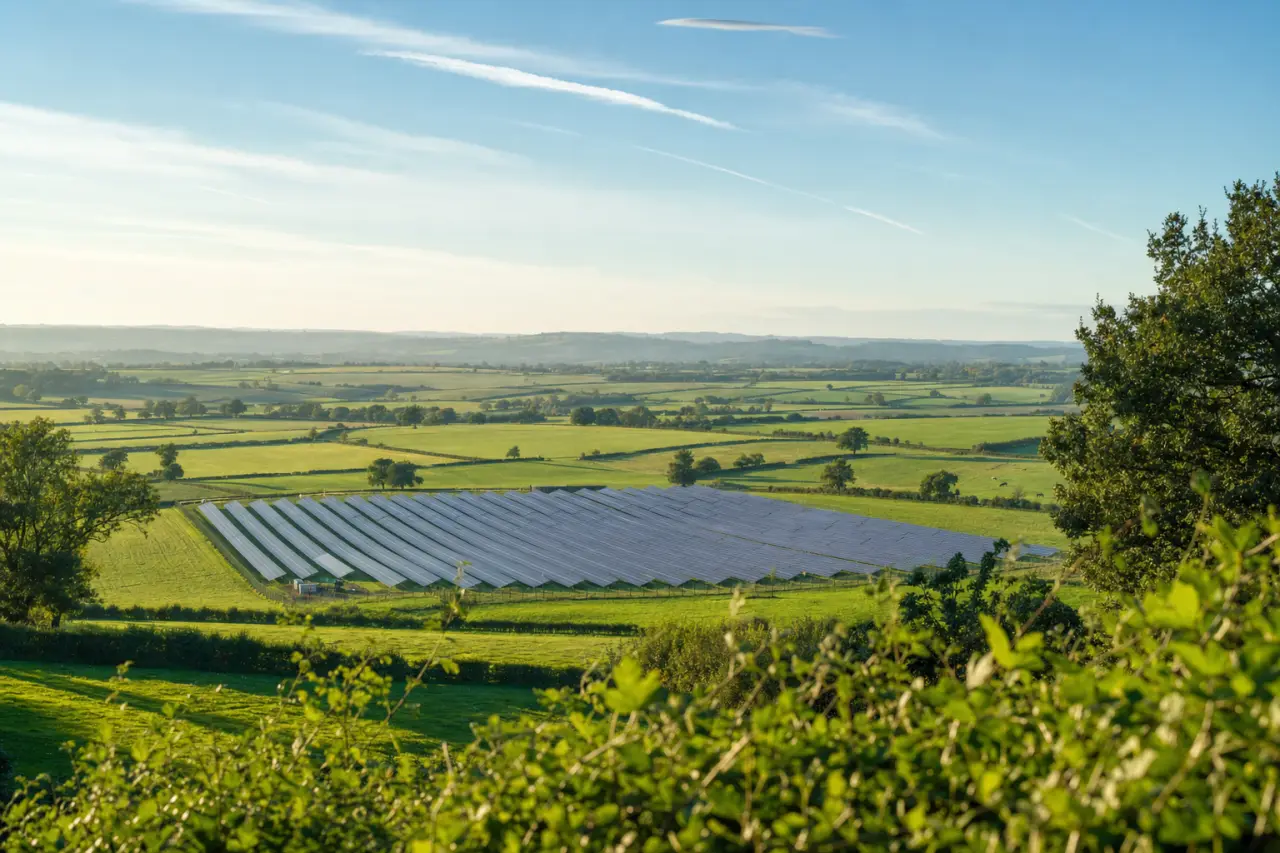
Solar Farm Land: Leasing Your Land for Renewable Energy
With the UK government committed to achieving net zero by 2050, the demand for solar farm land has surged dramatically. For landowners, leasing land for solar energy represents an increasingly attractive alternative to traditional agricultural use, offering guaranteed long-term income with minimal management responsibilities.
In 2026, the UK solar sector is experiencing unprecedented growth, with over 15 gigawatts of installed capacity and ambitious targets to triple this by 2030. This expansion creates substantial opportunities for landowners to lease land for solar farms whilst contributing to the nation's renewable energy transition.
Understanding Solar Farm Land Leases
What Makes Land Suitable for Solar Farms?
Not all land qualifies for solar development. Solar energy companies seek specific characteristics when identifying potential sites:
Physical Requirements:
- Minimum 10-20 acres of relatively flat land (though sites of 50+ acres command premium rates)
- South or south-west facing orientation for optimal sun exposure
- Low gradient (ideally below 15 degrees)
- Accessible via existing roads for construction and maintenance vehicles
- Free from significant shading by trees, buildings, or hills
Technical Requirements:
- Proximity to electricity grid infrastructure (ideally within 2km of substations)
- Sufficient grid capacity for connection (this varies regionally)
- Clear title with no restrictive covenants preventing development
- Low flood risk (zones 1 or 2 preferred)
- Agricultural Land Classification grade 3b-5 (lower quality farmland)
Location Factors:
- Areas with higher solar irradiance (southern England performs best, though all UK regions are viable)
- Regions with supportive local planning authorities
- Distance from residential areas and heritage sites
- Areas outside Green Belt, AONB, or National Park designations
The government's updated National Planning Policy Framework in 2024 relaxed certain restrictions on solar farm development, particularly for Agricultural Land Classification grade 3b and lower, making more sites commercially viable.
Solar Farm Rent: What Landowners Can Expect
Typical Rental Rates in 2026
Solar farm rent varies considerably based on location, land quality, and grid connectivity, but current market rates typically range from:
Standard Rates:
- £800-£1,200 per acre per annum for standard agricultural land
- £1,000-£1,500 per acre for prime locations with excellent grid access
- £600-£900 per acre for more remote sites or those requiring significant grid upgrades
Premium Locations: Sites in the South East, East Anglia, and South West with optimal conditions can command £1,500-£2,000 per acre annually. These premium rates typically apply to land with:
- Immediate grid connectivity
- Existing planning consent
- Excellent solar irradiance levels
- Minimal development constraints
For context, if you own 50 acres suitable for solar development at £1,000 per acre, you could generate £50,000 annually—often significantly exceeding agricultural rental income from the same land.
How Lease Payments Are Structured
Most solar farm land leases follow standardised payment structures:
Initial Development Period:
- Lower rental rates (sometimes 50% of full rate) during planning and construction phases
- Typically 12-24 months before full operation commences
- Some agreements include upfront option fees of £100-£300 per acre
Operational Period:
- Fixed annual rent with index-linked increases (usually RPI or CPI)
- Rent reviews every 5 years
- Payments quarterly or annually, depending on agreement terms
Additional Payments:
- Some contracts offer profit-share arrangements after meeting certain generation thresholds
- Community benefit payments (separate from landowner income)
- Potential uplift payments if energy prices exceed certain levels
When considering whether to lease land for solar, compare these figures against your current agricultural returns. Many farmers find solar leases generate 3-5 times more income than traditional farming on marginal land.
The Solar Farm Planning Permission Process
Navigating the Planning System
Securing planning permission remains the most significant hurdle in solar farm development. The process typically spans 12-18 months and involves multiple stages.
Pre-Application Consultation: Most solar developers conduct extensive pre-application engagement with:
- Local planning authorities
- Parish councils
- Local residents
- Statutory consultees (Natural England, Historic England, etc.)
This stage identifies potential objections early and shapes the final application to address community concerns.
Planning Application Requirements: Applications for solar farms typically require:
- Environmental Impact Assessment (for sites over 50 hectares)
- Landscape and Visual Impact Assessment
- Ecological surveys and biodiversity net gain proposals
- Heritage impact assessments
- Glint and glare studies
- Agricultural Land Classification report
- Grid connection statement
- Flood risk assessment
- Transport assessment
Key Planning Considerations: Local planning authorities assess applications against:
- National Planning Policy Framework guidance on renewable energy
- Local plan policies
- Impact on landscape character
- Agricultural land quality
- Highway safety
- Heritage assets
- Biodiversity impacts
- Community benefits
The 2024 NPPF revisions clarified that the need for renewable energy doesn't automatically override environmental protections, but it carries significant weight in the planning balance.
Success Rates: Currently, around 75-80% of solar farm applications receive approval, though this varies regionally. Applications on lower-grade agricultural land with strong community engagement achieve higher success rates.
For comprehensive guidance on planning matters, review our article on planning permission explained.
Structuring Your Solar Farm Lease Agreement
Essential Lease Terms
Solar farm leases differ substantially from traditional agricultural tenancies. Key terms to negotiate include:
Lease Duration:
- Typical terms of 25-40 years (matching solar panel warranties)
- Option periods for extensions (often 10-25 years)
- Break clauses (though these favour developers and should be carefully considered)
Rent and Reviews:
- Fixed annual rent with clear escalation mechanisms
- Frequency of rent reviews (typically every 5 years)
- Index linking to inflation measures
- Minimum rent guarantees
Permitted Uses:
- Solar energy generation as primary use
- Battery storage systems (increasingly common)
- Ancillary equipment (inverters, substations, access tracks)
- Potential for agricultural grazing between panel rows (sheep grazing is common)
Landowner Rights:
- Reserved rights for specific areas if land isn't fully utilised
- Access rights for ongoing agricultural use where compatible
- Rights to additional income streams (e.g., biodiversity credits)
Developer Obligations:
- Responsibility for obtaining planning permission
- Maintaining comprehensive insurance
- Site maintenance and security
- Decommissioning and site restoration at lease end
- Agricultural Land Classification restoration requirements
Protecting Your Interests
Critical protections to insist upon:
Decommissioning Provisions:
- Detailed decommissioning plan
- Financial security (bond or parent company guarantee)
- Timescales for site restoration
- Soil restoration to original agricultural capability
- Removal of all infrastructure including cabling
Planning Risk:
- Clear terms regarding who bears planning application costs if refused
- Provisions for re-application attempts
- Break clause provisions if planning cannot be secured
Operational Matters:
- Developer's maintenance obligations
- Weed and pest control responsibilities
- Fencing and security requirements
- Your access rights for inspection
Assignment and Subletting:
- Controls on developer's ability to assign the lease
- Rights to approve assignees
- Ensuring financial covenant strength of any assignee
Always instruct experienced solicitors specialising in renewable energy leases. Legal fees of £3,000-£7,000 are standard and represent money well spent protecting long-term interests.
Tax Implications of Solar Farm Income
Understanding Your Tax Position
Solar farm rental income carries several tax considerations:
Income Tax:
- Rental income taxed as property income (not trading income)
- Taxed at your marginal rate (20%, 40%, or 45% in 2026)
- Allowable deductions for professional fees, insurance, and maintenance
VAT:
- Option to Tax election may be beneficial
- Reclaim VAT on professional fees if VAT registered
- Requires careful structuring to optimise position
Capital Gains Tax:
- Potential CGT implications when lease granted (particularly if premium paid)
- Rollover relief may apply in certain circumstances
- Business Asset Disposal Relief considerations
Inheritance Tax:
- Agricultural Property Relief generally not available for solar farm land
- Business Property Relief may apply in limited circumstances
- Consider structures to mitigate IHT exposure
Business Rates:
- Solar installations are rateable
- Developer typically responsible for rates
- Ensure lease clearly allocates this liability
Given the complexity and substantial sums involved, engage qualified tax advisors before signing any agreement. The tax structure can significantly impact net returns.
Combining Solar with Other Land Uses
Agrivoltaics: Dual-Use Approaches
Innovative landowners increasingly combine solar generation with continued agricultural use—a practice known as agrivoltaics or solar farming.
Compatible Agricultural Uses:
- Sheep grazing between panel rows (requires appropriate panel height of 1.2m+)
- Wildflower meadows for biodiversity and honey production
- Shade-tolerant crops in certain configurations
- Poultry ranging (panels provide shelter)
Benefits of Dual Use:
- Additional income streams beyond solar rent
- Enhanced planning prospects by maintaining agricultural character
- Biodiversity improvements
- Soil condition maintenance
- Stronger community acceptance
Negotiating Dual-Use Rights: If pursuing agrivoltaics, ensure your lease:
- Explicitly permits continued agricultural use
- Specifies access arrangements
- Clarifies liability for livestock damage to equipment
- Allocates maintenance responsibilities
- Addresses biosecurity requirements
Biodiversity Net Gain Opportunities
From 2024 onwards, most solar farm developments must deliver 10% biodiversity net gain. This creates additional opportunities:
- Habitat creation (wildflower meadows, hedgerows, ponds)
- Biodiversity unit sales to other developers
- Enhanced rental income for providing BNG habitat
- Potential Countryside Stewardship or Environmental Land Management scheme payments
Negotiate whether BNG credits generated remain your asset or transfer to the solar developer.
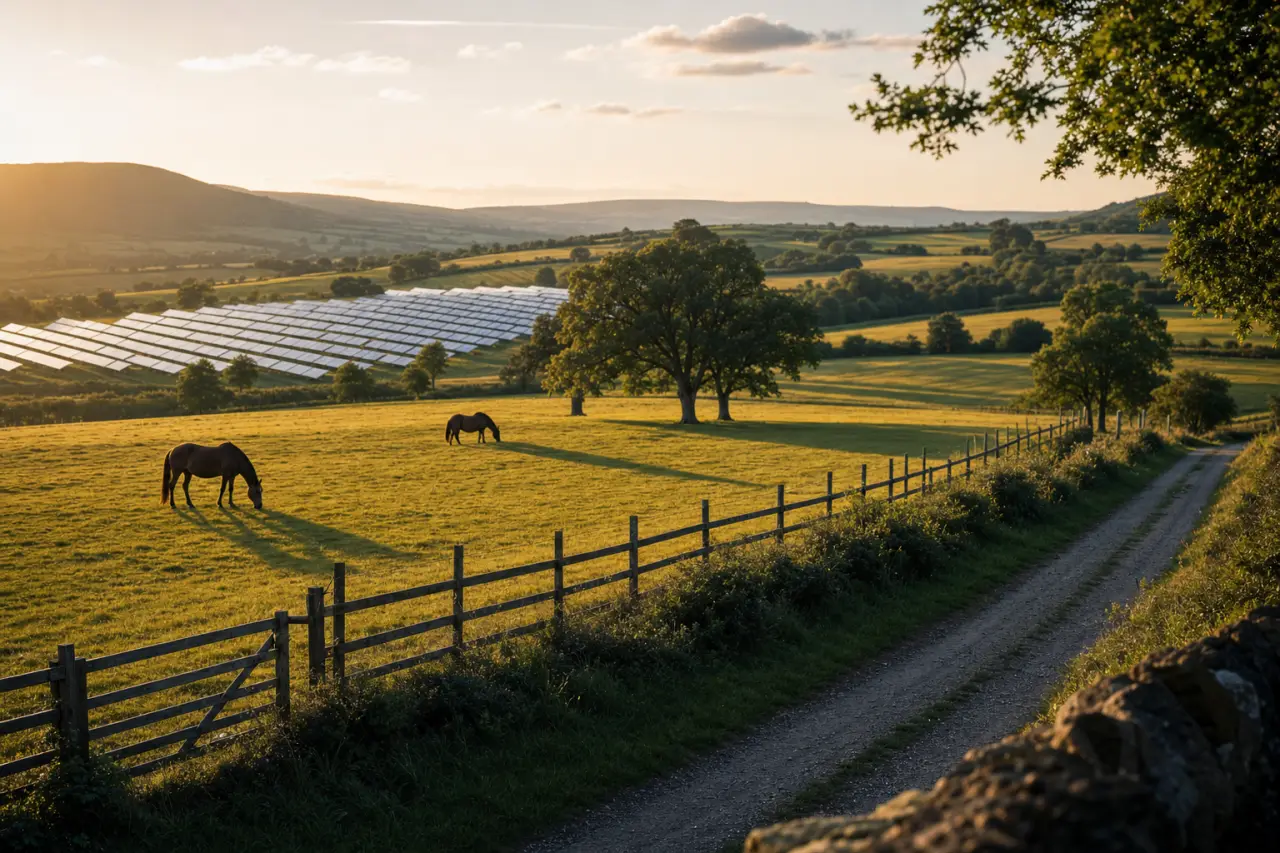
Regional Variations Across the UK
England
England hosts the majority of UK solar capacity, with particular concentrations in:
South West:
- Excellent solar irradiance
- Strong track record of approvals
- Premium rental rates
- Explore opportunities in Cornwall and Devon
East Anglia:
- Flat topography ideal for solar
- Lower-grade agricultural land prevalent
- Excellent grid infrastructure in areas
- Consider sites in Norfolk and Suffolk
South East:
- High energy demand centres
- Grid congestion in some areas
- Higher land values affecting viability
- Opportunities in Kent and East Sussex
Scotland
Scotland's planning system differs from England's, operating under separate legislation:
- Generally supportive policy framework for renewables
- Lower solar irradiance but still commercially viable
- Different grid charging structures
- Rental rates typically £600-£1,000 per acre
Wales
Wales has seen significant solar development growth:
- Future Wales (National Development Framework) supports renewable energy
- Agricultural Land Classification considerations apply
- Welsh language requirements in certain areas
- Typical rates £700-£1,100 per acre
Northern Ireland
Northern Ireland's solar sector is expanding from a smaller base:
- Different planning system and electricity market
- Growing developer interest
- Rental rates generally £600-£900 per acre
- Grid connectivity can be challenging in rural areas
Finding Solar Farm Developers
How to Connect with Developers
Several routes exist for landowners to engage with solar developers:
Direct Approach to Developers: Major UK solar developers include:
- Lightsource BP
- BayWa r.e.
- Gridsource
- Island Green Power
- Low Carbon
- Anesco
Many maintain dedicated landowner pages on their websites with inquiry forms.
Land Agents and Brokers: Specialised renewable energy land agents can:
- Market your land to multiple developers
- Negotiate better terms through competitive tension
- Provide market intelligence
- Manage the process on your behalf
Commissions typically range from 3-10% of the first year's rent or a fixed percentage of total lease value.
Online Platforms: Several digital marketplaces connect landowners with renewable energy developers, though ensure you understand any exclusivity terms before listing.
Professional Advisors: Your existing land agent, solicitor, or surveyor may have renewable energy contacts and can facilitate introductions.
Evaluating Developer Proposals
When comparing offers, consider:
Financial Strength:
- Company track record and financial stability
- Number of operational sites
- Funding arrangements
- Parent company guarantees
Development Capability:
- Planning success rate
- Grid connection expertise
- Community engagement approach
- Construction and operational capability
Terms Offered:
- Rental rates and escalation mechanisms
- Lease duration and break clauses
- Decommissioning provisions
- Flexibility on dual-use arrangements
Timeline:
- Realistic development timeline
- Payment of option fees
- Planning application timing
- Construction schedule
Don't simply accept the highest headline rental rate—lease terms, developer capability, and planning prospects matter enormously.
Common Pitfalls and How to Avoid Them
Mistakes Landowners Make
Insufficient Due Diligence: Many landowners commit to developers without thoroughly investigating their track record, financial stability, or capability to deliver the project. Always verify:
- Company accounts and financial standing
- References from other landowners
- Operational sites you can visit
- Planning application success rates
Inadequate Legal Advice: Solar farm leases are complex, long-term commitments. Never rely on the developer's standard form agreement without independent legal review. Spend £3,000-£7,000 on experienced renewable energy solicitors—it's a fraction of potential lifetime income.
Weak Decommissioning Protection: Some agreements lack robust financial security for decommissioning. Ensure provisions include:
- Bond or parent company guarantee
- Amounts sufficient for complete site restoration (£50,000-£150,000+ per site)
- Regular reviews of security amounts
- First-ranking charge over equipment
Ignoring Tax Planning: Failure to consider tax implications before signing can cost tens of thousands. Engage tax advisors early to structure arrangements optimally.
Overlooking Agricultural Tenancy Issues: If land is subject to existing farm tenancies (particularly Agricultural Holdings Act 1986 tenancies), surrender and re-grant may be necessary—a complex process requiring specialist advice.
Underestimating Community Opposition: Solar farms can face local resistance. Support developers who:
- Conduct thorough community consultation
- Offer community benefit funds
- Design sensitively with appropriate screening
- Choose sites carefully to minimise visual impact
The Future of Solar Farm Land in the UK
Market Outlook for 2026 and Beyond
The solar farm sector shows no signs of slowing, driven by:
Policy Support:
- Net zero commitment requiring massive renewable expansion
- Contracts for Difference allocation rounds favouring solar
- Planning policy reforms reducing barriers
- Recognition of energy security importance post-2022
Economic Factors:
- Falling solar technology costs improving project viability
- Rising electricity prices supporting business cases
- Grid infrastructure investment creating new capacity
- Battery storage integration enhancing project economics
Technological Advances:
- Higher efficiency panels maximising output per acre
- Bifacial panels capturing reflected light
- Agrivoltaic system innovations enabling dual use
- Battery storage co-location becoming standard
Demand Growth:
- Government target of 70GW solar by 2035 (from ~16GW in 2026)
- Corporate renewable energy procurement
- Data centre energy requirements
- Electric vehicle charging infrastructure
For landowners, this translates to:
- Sustained strong demand for suitable sites
- Potential for rental rate growth above inflation
- Opportunities in previously marginal locations as technology improves
- Additional income streams from battery storage and BNG
Those who understand how to value and market their land effectively stand to benefit substantially from this long-term structural trend.
Taking the Next Steps
If you're considering leasing land for solar farm development, follow this roadmap:
1. Initial Assessment (Month 1)
- Review your land against suitability criteria
- Check Agricultural Land Classification
- Research grid infrastructure proximity
- Identify planning constraints
2. Professional Advice (Months 1-2)
- Engage renewable energy specialist land agent
- Instruct experienced solicitors
- Consult tax advisors on optimal structuring
- Consider obtaining independent grid connection assessment
3. Developer Engagement (Months 2-4)
- Market land to multiple developers or via agent
- Request detailed proposals
- Conduct due diligence on interested parties
- Negotiate heads of terms
4. Legal Process (Months 4-8)
- Negotiate lease terms
- Review and finalise documentation
- Execute option agreement or lease
- Register at Land Registry if required
5. Development Phase (12-24 months)
- Support planning application process
- Attend community consultations
- Monitor progress
- Prepare for construction
Remember that solar farm leases represent 25-40 year commitments affecting your land's use for decades. Take time to make informed decisions with quality professional support.
Conclusion: Harnessing the Power of Solar
Leasing land for solar farms offers UK landowners an unprecedented opportunity to generate substantial, long-term income whilst contributing to the nation's renewable energy transition. With rental rates of £800-£1,500+ per acre annually, 25-40 year lease terms, and minimal management responsibilities, solar represents an attractive alternative to traditional agricultural use—particularly for lower-grade farmland.
However, success requires careful site selection, thorough professional advice, robust lease negotiations, and realistic assessment of planning prospects. The developers and terms you choose will impact your family's financial position for decades, making informed decision-making essential.
As the UK accelerates toward its 2050 net zero target, demand for solar farm land will continue growing strongly. Landowners who position themselves strategically, understand the market, and negotiate effectively stand to benefit enormously from this transformation of Britain's energy landscape.
Whether you're considering solar as an alternative to agricultural use, looking to maximise returns from marginal land, or exploring options for long-term passive income, 2026 presents exceptional opportunities in the solar farm land market.
Ready to explore your land's solar potential? Get a free professional valuation to understand what your land could generate from solar development, or browse our comprehensive resources on land buying and selling across the UK to make informed decisions about your property's future.
The renewable energy revolution is creating new possibilities for landowners—ensure you're positioned to capture the opportunities ahead.