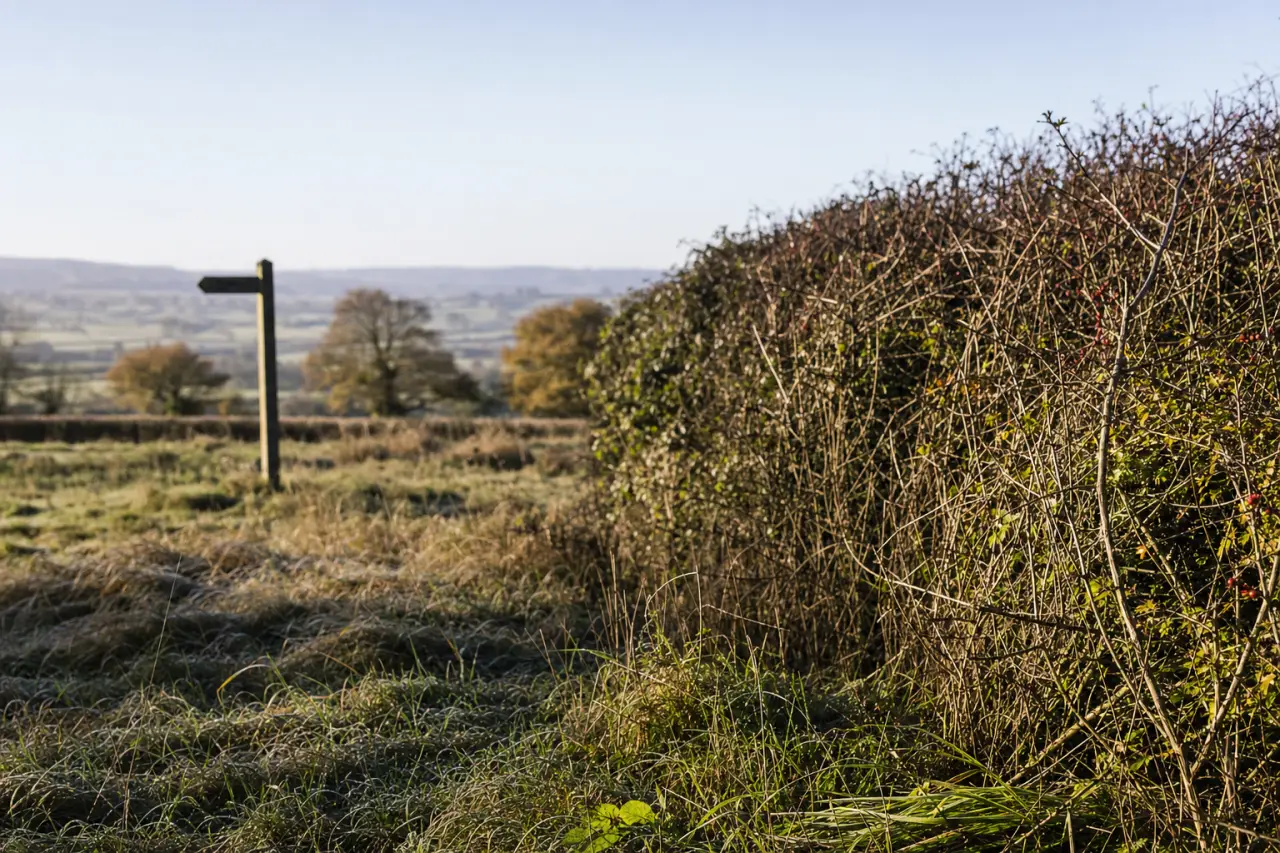
How to Check for Hedgerow Regulations and Protections Before Buying Land in the UK
When purchasing land in the United Kingdom, many buyers focus on planning permission and access rights, but overlook one crucial aspect that could significantly impact their plans: hedgerow regulations. Protected hedgerows can restrict development, prevent removal, and require ongoing maintenance obligations that affect both the land's value and your intended use.
This comprehensive guide explains everything you need to know about hedgerow protection rules in the UK, how to identify protected hedgerows on land you're considering, and what these regulations mean for your purchase.
Understanding Hedgerow Regulations in the UK
The Hedgerows Regulations 1997
The primary legislation governing hedgerow protection in England and Wales is the Hedgerows Regulations 1997, introduced under the Environment Act 1995. These regulations were established to protect "important" hedgerows from removal or destruction, recognising their ecological, historical, and landscape significance.
Under these regulations, it is illegal to remove most countryside hedgerows without permission from your local planning authority. The regulations apply to hedgerows that:
- Are at least 20 metres in length
- Meet another hedgerow at each end (with some exceptions)
- Are on or adjoining land used for agriculture, forestry, or horse breeding
- Are on or adjoining common land, village greens, Sites of Special Scientific Interest (SSSIs), or Local Nature Reserves
The legislation doesn't apply to garden hedges or hedgerows within the curtilage of a dwelling, though other protections may still exist.
What Makes a Hedgerow "Important"?
A hedgerow is deemed "important" if it meets specific criteria relating to:
Archaeological or historical significance: The hedgerow marks a boundary recorded in documents dating back at least 30 years, or is associated with scheduled monuments, archaeological sites, or historic parks.
Wildlife and landscape value: The hedgerow contains certain protected species, particular combinations of woody species, or forms part of a hedge network of ecological significance.
Important hedgerows receive the highest level of protection and typically cannot be removed even with permission, except under exceptional circumstances.
Scotland and Northern Ireland
Scotland doesn't have equivalent standalone hedgerow legislation, though hedgerows may be protected through other environmental designations such as SSSIs or as part of agricultural support schemes. Landowners should check with Scottish Natural Heritage (NatureScot) and local authorities.
Northern Ireland introduced the Wildlife (Northern Ireland) Order 1985, which provides some hedgerow protections, particularly for nesting birds. However, the regulatory framework differs from England and Wales.
Why Hedgerow Regulations Matter When Buying Land
Impact on Development Plans
If you're purchasing land with development intentions, protected hedgerows can significantly constrain your plans. You may be unable to:
- Remove hedgerows to create access points
- Clear hedgerows for building plots
- Alter field boundaries to accommodate development layouts
- Modify hedgerows to improve visibility for access roads
Even if the hedgerow isn't formally protected, planning permission may include conditions requiring hedgerow retention or suitable replacement planting.
Ongoing Maintenance Obligations
Landowners have legal responsibilities regarding hedgerows under various legislation:
Highways Act 1980: Hedgerows adjoining public highways must be maintained so they don't obstruct the road or footpath. Overhanging vegetation causing visibility issues or obstructions can result in enforcement action.
Occupiers' Liability Acts 1957 and 1984: Landowners must ensure hedgerows don't create hazards for lawful visitors or trespassers.
Wildlife and Countryside Act 1981: It's illegal to intentionally damage or destroy bird nests, meaning hedgerow cutting is restricted during nesting season (typically March to August).
These obligations require time and expense, which should factor into your overall land valuation calculations.
Agricultural Land Considerations
For agricultural land purchases, hedgerows may be subject to cross-compliance requirements under agricultural subsidy schemes. The Environmental Land Management schemes (ELMs) in England, introduced in 2024-2025, include hedgerow management standards that landowners must meet to receive payments.
Failure to maintain hedgerows properly could result in subsidy penalties, affecting the financial viability of agricultural operations.
How to Check for Hedgerow Protections: A Step-by-Step Guide
Step 1: Conduct a Site Survey
Before making an offer, thoroughly walk the land boundaries and document all hedgerows:
- Photograph each hedgerow from multiple angles
- Measure approximate lengths
- Note species composition if you can identify trees and shrubs
- Record hedgerow location relative to field boundaries and access points
- Check for any signs of recent cutting, laying, or damage
Create a simple sketch map marking hedgerow locations and numbering them for easy reference in later investigations.
Step 2: Review the Title Deeds and Land Registry Documents
Obtain copies of the Land Registry title documents, which may contain:
- Restrictive covenants protecting hedgerows
- Rights of way that depend on hedgerow boundaries
- Historical boundary information
- Previous hedgerow removal applications
Your solicitor should review these documents as part of standard conveyancing searches, but specifically ask them to flag any hedgerow-related restrictions.
Step 3: Contact the Local Planning Authority
The local planning authority maintains records of hedgerow removal notices and determinations. Contact them to:
Request hedgerow protection records: Ask if any hedgerows on the land are registered as "important" under the Hedgerows Regulations 1997.
Review previous applications: Check whether previous owners have submitted hedgerow removal notices, and if so, what decisions were made.
Obtain guidance: Planning officers can often provide informal advice about whether specific hedgerows are likely to be considered important.
Most local authorities have dedicated conservation or biodiversity officers who handle hedgerow inquiries. In 2026, many councils provide online portals for searching planning records, though you may need to submit a formal information request for comprehensive hedgerow data.
Step 4: Check Environmental Designations
Hedgerows within or adjacent to protected areas receive additional safeguards:
Sites of Special Scientific Interest (SSSIs): Contact Natural England, NatureScot, or Natural Resources Wales to check if the land falls within or borders an SSSI.
Conservation Areas: Local planning authorities can confirm if hedgerows fall within Conservation Areas, where additional planning controls apply.
Areas of Outstanding Natural Beauty (AONBs): Now termed "National Landscapes" in England and Wales, these designations provide heightened landscape protection.
Tree Preservation Orders (TPOs): While primarily for trees, some hedgerows containing significant trees may be protected by TPOs.
The Magic Map website (magic.defra.gov.uk) provides a useful starting point for checking multiple environmental designations simultaneously.
Step 5: Commission an Ecological Survey
For significant land purchases, particularly with development intentions, commission a professional ecological survey that includes:
- Phase 1 Habitat Survey identifying hedgerow types and condition
- Protected species assessments
- Hedgerow importance evaluation using statutory criteria
- Recommendations for retention, management, or mitigation
Ecological consultants typically charge £500-£2,000 depending on land size and survey complexity. This investment can prevent costly surprises after purchase.
Step 6: Review Historical Maps
Historical maps help establish hedgerow age, which determines archaeological and historical importance:
Ordnance Survey maps: First edition maps (1840s-1880s) show whether hedgerows existed over 140 years ago.
Tithe maps: Dating from the 1830s-1850s, these maps often show field boundaries with remarkable accuracy.
Enclosure maps: Where available, these document 18th and 19th-century field boundaries.
The National Library of Scotland, British Library, and local record offices provide access to historical maps. Hedgerows appearing on pre-1850 maps are more likely to be deemed historically important.
Step 7: Consult Agricultural Records
For agricultural land, review:
- Environmental Stewardship or Countryside Stewardship agreements
- Previous Rural Payment Agency inspections
- Good Agricultural and Environmental Condition (GAEC) compliance records
- Any registered hedgerow management plans
The seller should provide these documents during due diligence. Missing or poor-quality records could indicate compliance issues.
What to Do If You Find Protected Hedgerows
Assess the Impact on Your Plans
Once you've identified hedgerows and their protection status, evaluate how this affects your intended use:
- Can development plans be modified to retain hedgerows?
- Would hedgerow removal be necessary for access?
- Are there alternative access routes avoiding protected hedgerows?
- What ongoing maintenance costs and time commitments are realistic?
For many buyers, protected hedgerows enhance rather than diminish land value, providing ecological benefits, privacy screening, and windbreaks. However, if hedgerows fundamentally conflict with your plans, you may need to reconsider the purchase.
Negotiate Based on Findings
Use hedgerow protection information to inform negotiations:
Adjust the purchase price: Restrictions may justify a lower offer, particularly if hedgerows prevent optimal development layout.
Include contingency clauses: Make your offer conditional on obtaining satisfactory hedgerow removal permission if required.
Request management documentation: Ask the seller to provide evidence of proper hedgerow maintenance and compliance with agricultural schemes.
Apply for Hedgerow Removal Notice
If hedgerow removal is essential and the hedgerow is not "important," you can submit a Hedgerow Removal Notice to the local planning authority:
- Complete the standard form with hedgerow details
- Pay the application fee (typically £100-£150 in 2026)
- Provide a site plan showing hedgerow location
- Wait 42 days for the authority's decision
The authority must determine whether the hedgerow is "important" within this period. If deemed important, removal will be refused. Otherwise, permission is granted by default after 42 days.
Note: You cannot submit this application until you own the land or have the owner's written consent.
Common Pitfalls to Avoid
Assuming All Hedgerows Are Protected
Not every hedgerow falls under the Hedgerows Regulations 1997. Garden hedges, hedgerows shorter than 20 metres, and some boundary hedgerows aren't covered. However, other protections may still apply, so don't assume removal is unrestricted.
Overlooking Nesting Bird Restrictions
Even unprotected hedgerows cannot be cut or removed during bird nesting season without checking for active nests. Disturbing nesting birds is a criminal offence under the Wildlife and Countryside Act 1981, with fines up to £5,000 per offence.
Failing to Check for Multiple Protection Layers
Hedgerows may be protected through:
- The Hedgerows Regulations 1997
- Planning conditions on existing permissions
- Conservation Area controls
- Restrictive covenants
- Agricultural subsidy requirements
- Environmental Stewardship agreements
All these protections require separate investigation.
Ignoring Neighbour Boundary Hedgerows
If the hedgerow forms a boundary with neighbouring land, both landowners may have rights and responsibilities. Removal or significant alteration could trigger disputes or require neighbour consent under property law.
Hedgerow Regulations and Future Land Value
The Environmental Net Gain Requirement
Since November 2023, major developments in England must deliver 10% biodiversity net gain. This requirement, which continues to be refined in 2026, means hedgerows are increasingly valuable as biodiversity assets.
Land with well-maintained, species-rich hedgerows may command premium prices from developers needing to meet net gain obligations. Conversely, land where hedgerows have been poorly managed or illegally removed may face scrutiny from planning authorities.
Agricultural Subsidy Evolution
The Environmental Land Management schemes place significant emphasis on hedgerow creation and management. Land with existing hedgerow networks is better positioned to access Sustainable Farming Incentive and Countryside Stewardship payments.
Buyers should consider hedgerows as potential income-generating assets rather than purely restrictive features.
Resources for Further Research
Government guidance: www.gov.uk provides the complete Hedgerows Regulations 1997 and guidance notes.
Local planning authorities: Each council's planning department maintains hedgerow records and provides application forms.
Hedgelink: This UK charity (hedgelink.org.uk) offers practical hedgerow management advice and surveys.
The Tree Council: Provides information on trees within hedgerows and protection measures.
DEFRA: Publishes detailed hedgerow survey handbooks and assessment methodologies.
Conclusion: Due Diligence Is Essential
Hedgerow regulations add an important layer of complexity to UK land purchases that buyers cannot afford to ignore. Protected hedgerows can fundamentally alter development viability, create ongoing obligations, and affect resale value—but they also provide ecological, aesthetic, and financial benefits when properly managed.
Thorough due diligence before purchase is essential. By following the step-by-step process outlined above, you'll gain a clear understanding of hedgerow protections affecting your prospective land, enabling informed decisions about whether and how to proceed.
Remember that hedgerow regulations exist for sound environmental reasons. The UK has lost approximately 50% of its hedgerows since World War II, making remaining hedgerows critically important for wildlife, landscape character, and rural heritage. Working with hedgerows rather than against them often produces the best outcomes for both landowners and the environment.
If you're in the early stages of your land search and want to understand the full picture of what a plot offers—including hedgerow considerations—our expert team can help. Get a free land valuation that takes into account all regulatory factors, or browse available land by location to find plots that match your requirements.
For comprehensive guidance on the entire land buying process, including environmental due diligence beyond hedgerows, read our complete guide to buying land in the UK.