Buying Land Near HS2: Opportunity or Risk?
High Speed 2 (HS2) is reshaping land values across England. This expert guide examines the opportunities and risks of buying land near the HS2 route, with practical advice for 2026 investors.
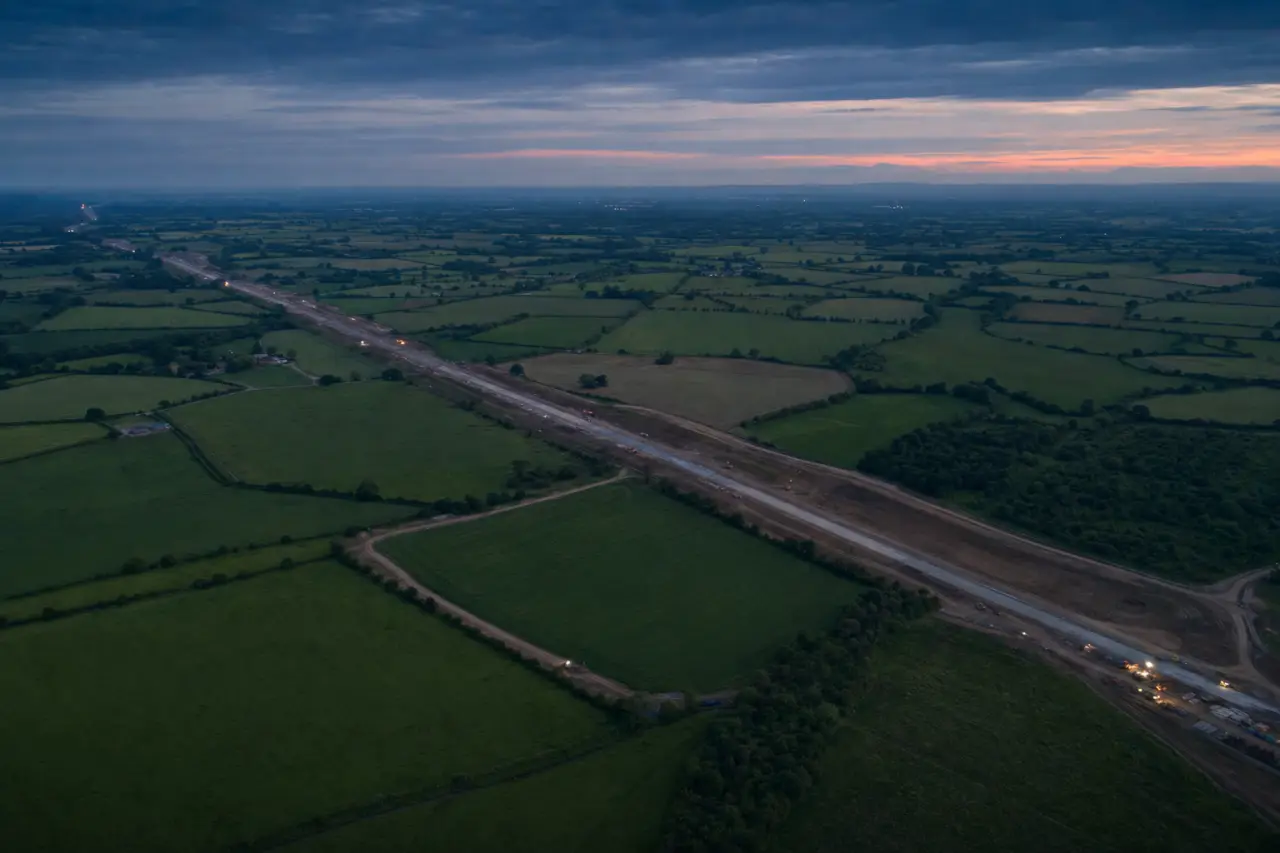
Buying Land Near HS2: Opportunity or Risk?
The High Speed 2 (HS2) railway project represents the most significant infrastructure investment in modern UK history, connecting London with Birmingham, Manchester, and Leeds. As Phase 1 construction progresses and Phase 2a nears completion in 2026, the question on many prospective land buyers' minds is simple: should you buy land near HS2, or is it too risky?
The answer, as with most property investments, isn't straightforward. Buying land near the HS2 route presents both considerable opportunities and notable risks, depending on your location, timing, and investment strategy.
Understanding the HS2 Route and Its Impact
HS2 comprises three main phases:
- Phase 1: London to Birmingham (operational target 2026-2029)
- Phase 2a: Birmingham to Crewe (construction ongoing)
- Phase 2b: Crewe to Manchester and Birmingham to Leeds (subject to government review and budget constraints)
The impact on land values varies significantly depending on your proximity to the actual railway line versus proximity to planned stations. Land directly adjacent to the route may face compulsory purchase, blight, or environmental concerns, whilst land near new stations often sees substantial uplift in value.
The Station Effect vs The Route Effect
Historically, major transport infrastructure creates two distinct zones:
Near stations (within 2-5 miles): Land values typically increase by 20-40% in the five years following station opening. This effect is strongest for developable land with planning permission. Areas around Old Oak Common, Birmingham Curzon Street, and Manchester Airport stations are prime examples where land values have already shown significant growth.
Along the route (but not near stations): Land directly beside the railway line often experiences blight—a decrease in value of 10-30% during construction, with recovery dependent on noise mitigation and local development. Agricultural land may maintain value if not subject to compulsory purchase.
Opportunities for Land Buyers
1. Regeneration Zones
The government has designated several HS2 Growth Areas where planning policies actively encourage development. These include:
- Old Oak Common (West London): Already seeing major residential and commercial development
- Birmingham Curzon Street: Part of the broader Birmingham Eastside regeneration
- Toton (Nottinghamshire): Planned as a major employment hub
Buying land in these designated growth areas offers potential for significant value appreciation, particularly if you secure it before major planning permissions are granted.
2. Improved Connectivity
Land near HS2 stations will benefit from dramatically improved connectivity. Birmingham to London journey times will reduce from 1 hour 21 minutes to just 49 minutes. This compression of time-distance makes previously peripheral land more attractive for residential and commercial development.
Counties like Warwickshire, Buckinghamshire, and Staffordshire along the Phase 1 route are seeing increased interest from developers seeking sites within commuting distance of HS2 stations.
3. Compulsory Purchase Compensation
If your land is required for the HS2 route, you're entitled to compensation at market value plus additional payments:
- Home Loss Payment: 10% of market value (capped at £75,000 for owner-occupiers)
- Disturbance costs: Moving expenses, professional fees, and temporary accommodation
- Severance and injurious affection: Compensation if remaining land is adversely affected
Some landowners have negotiated settlements exceeding market value by 30-50% when land is crucial to the route.
4. Agricultural Land Diversification
Farmers with land near but not on the HS2 route may find opportunities to diversify into:
- Logistics and distribution centres: Improved connectivity makes certain areas attractive for warehousing
- Park and ride facilities: Potential revenue from providing parking near new stations
- Renewable energy projects: HS2-adjacent land may be suitable for solar farms, particularly if existing agricultural use is compromised by noise
Risks and Challenges
1. Construction Disruption
HS2 construction is projected to continue until the early 2030s. During this period, land near active construction faces:
- Noise and dust: Significant disturbance from drilling, excavation, and heavy machinery
- Access restrictions: Road closures and diversions affecting land accessibility
- Decreased demand: Potential buyers may avoid areas with ongoing construction
- Delayed development: Planning authorities may defer decisions until construction completes
Construction-phase blight has already reduced values by 15-25% for land within 500 metres of active works in some Buckinghamshire and Warwickshire locations.
2. Planning Permission Uncertainty
Proximity to HS2 doesn't guarantee planning permission. Key challenges include:
- Noise mitigation requirements: Developments near the line may require expensive sound barriers
- Infrastructure capacity: Local roads, schools, and utilities may be at capacity
- Green Belt restrictions: Much of the HS2 route passes through Green Belt, where development remains tightly controlled
- Local authority resources: Planning departments in HS2 areas are often stretched, leading to longer decision times
Always commission a professional planning assessment before purchasing land you intend to develop.
3. Political and Budgetary Risk
HS2 has faced consistent political controversy and budget escalations. In 2023, the government cancelled Phase 2b to Leeds and scaled back the Manchester leg. Further changes remain possible:
- Route modifications: Stations or sections could be cancelled or relocated
- Completion delays: Phases regularly face timeline extensions
- Reduced investment: Supporting infrastructure (roads, utilities) may be scaled back
Land value projections often assume full project completion. Any reduction in scope could significantly impact anticipated returns.
4. Environmental and Legal Restrictions
HS2 has triggered numerous legal challenges and environmental concerns:
- Safeguarding zones: Land within safeguarding zones faces restrictions on development and alterations
- Biodiversity net gain: New requirements may limit development on ecologically valuable land
- Archaeology: Roman and medieval sites have caused construction delays; similar discoveries could affect adjacent developments
- Groundwater: Tunnel construction has raised concerns about water table impacts on surrounding land
5. Mortgage and Insurance Complications
Lenders and insurers may view HS2-adjacent land as higher risk:
- Reduced mortgage availability: Some lenders restrict loans for properties within 500m of the route
- Higher insurance premiums: Construction risk and future noise/vibration may increase premiums
- Valuation challenges: Chartered surveyors may apply significant discounts during construction phase
Strategic Considerations for HS2 Land Purchases
Distance from the Route
The optimal distance from HS2 infrastructure depends on your investment strategy:
- 0-250m: High risk unless compensated via compulsory purchase or near a station entrance
- 250-500m: Construction blight risk but potential for post-completion recovery
- 500m-2km: Lower construction impact whilst still benefiting from connectivity improvements
- 2-5km from stations: Sweet spot for residential development land
- 5km+ from stations: Limited direct HS2 benefit unless in a designated growth area
Timing Your Purchase
The HS2 property cycle typically follows this pattern:
- Announcement phase: Initial speculation increases prices
- Route confirmation: Uncertainty causes price stagnation or decline
- Construction phase: Values decrease near active works
- Pre-opening (1-2 years): Values begin recovery
- Post-opening: Values increase, particularly near stations
Buying during the construction phase often offers the best value, provided you can manage the short-term challenges.
Development vs Investment Hold
Your strategy should align with your risk tolerance and timeframe:
Active development: Purchase land with existing or achievable planning permission near stations. Higher risk but potential for 100%+ returns within 5-10 years.
Long-term hold: Buy agricultural or amenity land in growth corridors. Lower initial outlay, moderate risk, with returns dependent on future planning policy changes.
Compensation strategy: Acquire land likely to be subject to compulsory purchase, aiming for above-market compensation. Requires legal expertise and involves negotiation uncertainty.
Due Diligence Essentials
Before purchasing any land near HS2, undertake comprehensive due diligence:
1. HS2 Safeguarding Check
Search the Land Registry for HS2 safeguarding notices. These restrict development and trigger disclosure requirements for sellers.
2. Environmental Impact Assessment
Review HS2 Ltd's Environmental Statement for your area. This details anticipated noise, vibration, air quality, and visual impacts.
3. Local Authority Consultation
Contact the planning department to understand:
- Local Plan policies for HS2 corridor
- Infrastructure delivery plans
- Section 106 requirements for new developments
4. Acoustic Survey
Commission an acoustic consultant to project future noise levels. The Department for Transport's 2026 guidance requires mitigation where residential land exceeds 55dB LAeq.
5. Professional Valuation
Obtain a RICS Red Book valuation that explicitly considers HS2 impacts. Request the valuer's experience with infrastructure-affected land.
6. Legal Review
Instruct a solicitor experienced in compulsory purchase and infrastructure projects to review:
- Title restrictions
- Easements or wayleaves affecting the land
- Contamination reports
- Coal mining or other mineral extraction history
Regional Hotspots and Opportunities
Based on 2026 market analysis, these areas present interesting opportunities:
Old Oak Common (London): Despite high entry costs (£1.5m-£3m per acre for development land), the station's status as Britain's busiest interchange promises strong returns.
Birmingham Curzon Street environs: Land in Warwickshire within 5 miles of the station has seen 25% price growth since 2023. Opportunities remain for sites with planning prospects.
Lichfield area: Properties near the Lichfield station could benefit from improved London connectivity whilst maintaining lower price points than Birmingham.
Crewe: Phase 2a completion will make Crewe a major rail hub. Agricultural land on the town's periphery may see planning policy shifts favouring development.
South Northamptonshire: Not on the main route but within the economic catchment area. Land prices remain reasonable whilst connectivity improves.
Tax Implications
HS2 land purchases carry specific tax considerations:
Stamp Duty Land Tax (SDLT): Non-residential rates apply (2026 rates: 0% up to £150,000, 2% on £150,001-£250,000, 5% above £250,000). Multiple dwellings relief may apply for development sites.
Capital Gains Tax (CGT): Compulsory purchase compensation is subject to CGT unless the land was your principal residence. Rollover relief may apply if you reinvest in qualifying replacement property.
Rollover relief for HS2 compensation: Special provisions allow deferral of CGT if you reinvest HS2 compensation in replacement business assets within three years.
Inheritance Tax (IHT): Agricultural Property Relief (APR) at 100% may apply to working farmland, but development land with planning permission won't qualify.
Consult a tax adviser specialising in land transactions before purchasing.
The Verdict: Opportunity or Risk?
Buying land near HS2 is neither a guaranteed opportunity nor an inevitable risk—it's a nuanced investment requiring careful analysis of specific circumstances.
Choose opportunity if you:
- Are buying near confirmed stations in growth areas
- Have a 5-10 year investment timeframe
- Can secure land with planning permission prospects
- Understand and can manage construction-phase challenges
- Have the financial resilience to withstand short-term value fluctuations
Avoid or proceed cautiously if you:
- Need short-term liquidity or returns
- Are purchasing directly adjacent to the route (unless seeking compensation)
- Face significant planning barriers (Green Belt, conservation areas)
- Have limited experience with infrastructure-affected property
- Cannot afford professional due diligence and legal support
For most investors, the optimal strategy is purchasing land 1-3 miles from confirmed stations during the construction phase, when prices reflect disruption but before the full connectivity benefit is priced in.
Taking the Next Step
If you're considering purchasing land near the HS2 route, start with a professional assessment of your specific plot or area of interest. Market conditions vary dramatically even within the same county, and what represents an excellent opportunity in one location may be high-risk in another.
Get a free land valuation to understand current market values in HS2-affected areas, or browse available land by location to explore opportunities near the route. For comprehensive guidance on the purchasing process, read our complete guide to buying land in the UK.
The HS2 project will fundamentally reshape land values across central England for decades to come. With proper research, professional advice, and realistic expectations, it presents genuine opportunities for informed land buyers in 2026 and beyond.