How to Check for Japanese Knotweed Before Buying Land in the UK
Japanese knotweed (Fallopia japonica) is arguably the most problematic invasive plant species in the UK, capable of causing significant structural damage and reducing property values by up to 10-15%. For prospective land buyers, discovering knotweed after completion can mean facing treatment costs of £2,000 to £20,000 or more, depending on the severity of the infestation. This comprehensive guide will help you identify Japanese knotweed, understand your legal position, and make informed decisions when buying land with knotweed present.
Why Japanese Knotweed Matters When Buying Land
Japanese knotweed isn't just a gardening nuisance—it's a serious consideration that can affect your investment in several ways:
Financial Impact: The presence of knotweed can reduce land values substantially. Many mortgage lenders refuse to lend on properties with untreated knotweed within seven metres of habitable structures. Even for undeveloped land, the treatment costs can significantly impact your budget.
Legal Obligations: Under the Wildlife and Countryside Act 1981 and the Environmental Protection Act 1990, it's an offence to cause Japanese knotweed to grow in the wild. If you allow it to spread from your land to neighbouring properties, you could face legal action. In 2026, courts continue to award significant damages in civil cases where knotweed has spread.
Development Constraints: If you're purchasing land for development, knotweed can delay projects and add substantial costs. You'll need a management plan before obtaining planning permission, and building regulations require specific foundation designs in affected areas.
Insurance and Mortgages: The presence of knotweed must be disclosed to insurers and lenders. Failure to do so could invalidate insurance policies or constitute mortgage fraud.
Identifying Japanese Knotweed: A Seasonal Guide
Japanese knotweed changes appearance dramatically throughout the year, making identification challenging for the untrained eye. Here's what to look for in each season:
Spring (March-May)
In early spring, knotweed emerges from underground rhizomes with distinctive red or purple asparagus-like shoots. These can grow up to 2cm per day in optimal conditions. The shoots are fleshy and speckled with purple and red, emerging from reddish-pink crown growth.
Key identifiers:
- Red/purple shoots similar to asparagus
- Rapid growth (visible changes daily)
- Shoots emerging from knotweed crowns
- Pink/red speckled appearance
Summer (June-August)
Summer is when Japanese knotweed is most easily identified and at its most vigorous:
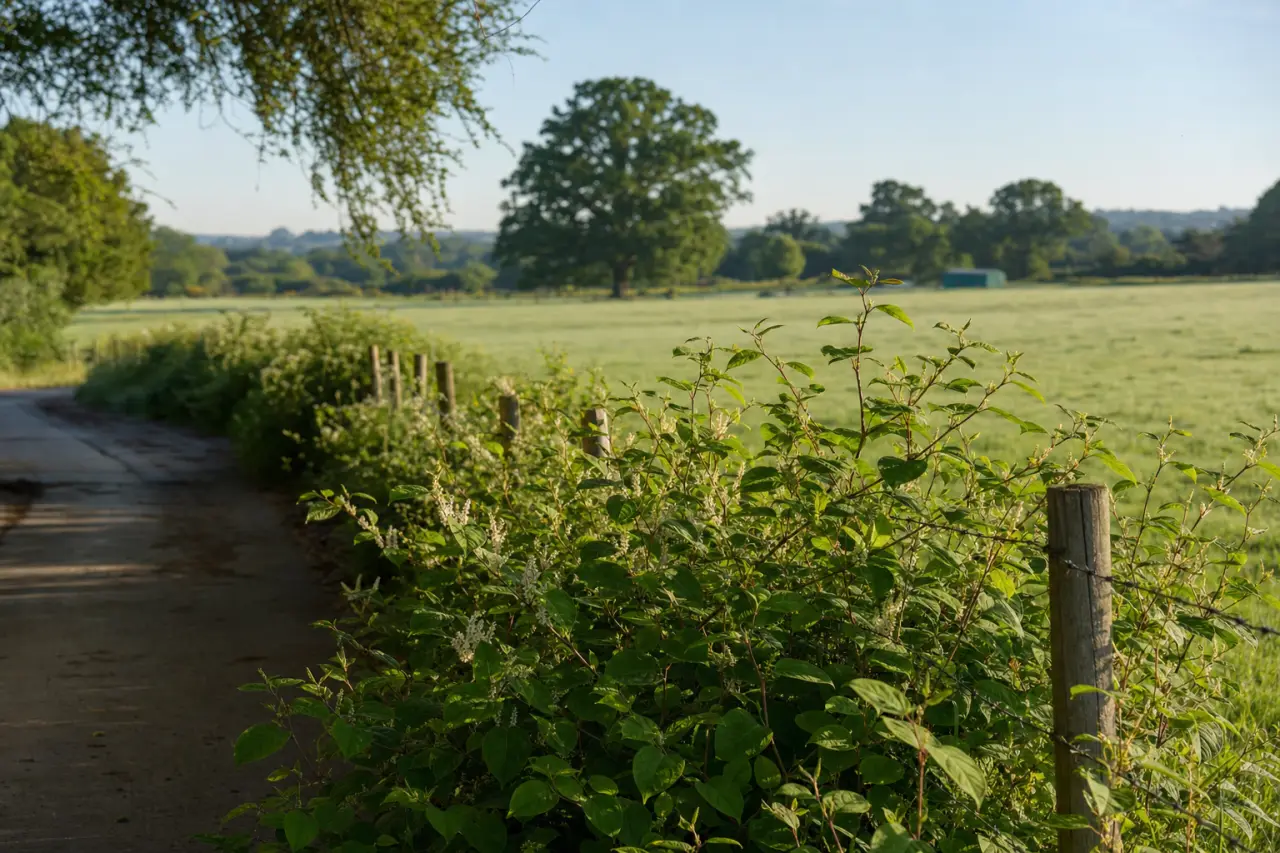
Leaves: Shield or shovel-shaped leaves, 10-15cm long, with a flat base and pointed tip. They grow in a distinctive zig-zag pattern along the stem, alternating from side to side.
Stems: Hollow, bamboo-like stems with purple speckles. Stems are distinctly jointed (resembling bamboo canes) and can reach 2-3 metres in height.
Growth pattern: Forms dense stands that suppress all other vegetation. The canopy creates deep shade that prevents other plants from growing underneath.
Flowers: Clusters of creamy-white flowers appear in late summer (August-September), growing in spikes up to 10cm long from leaf joints.
Autumn (September-November)
As temperatures drop, knotweed begins to die back:
- Leaves turn yellow then brown
- Stems become brittle and turn brown
- Dead canes remain standing through winter
- Plant retreats to underground rhizome system
Winter (December-February)
Above-ground growth dies completely, leaving:
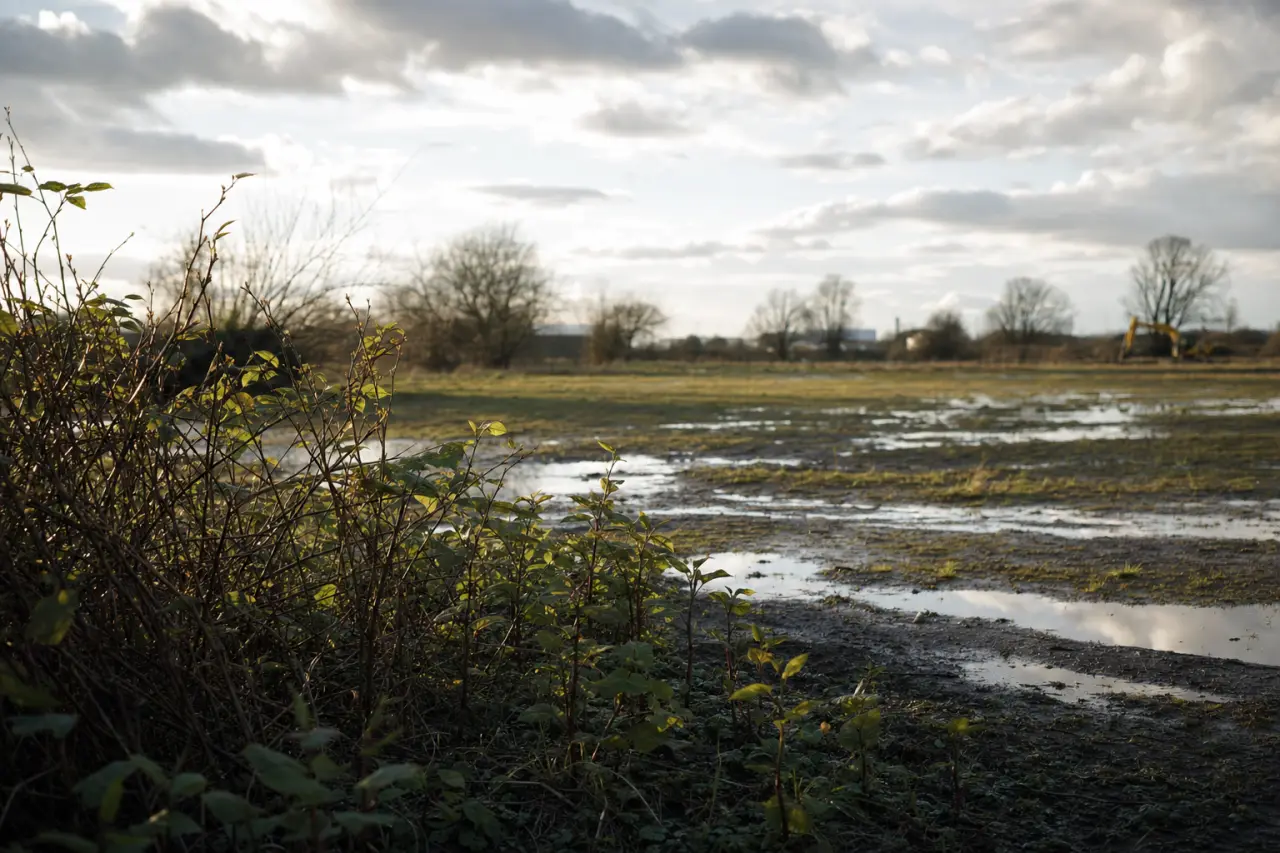
- Brown, dried bamboo-like canes standing up to 2 metres
- Dense network of dead stems
- Distinctive crown structure visible at ground level
- Underground rhizome network (invisible but still viable)
Winter identification is particularly challenging but crucial, as many land transactions occur during these months. Look for the distinctive pattern of dead canes and check for small purple/red shoots emerging from the crown in late winter.
Step-by-Step: Checking Your Land for Knotweed
1. Conduct Initial Visual Surveys
Visit the site multiple times across different seasons if possible. Japanese knotweed often grows:
- Along watercourses and drainage areas
- Near boundaries (where garden waste may have been dumped)
- In disturbed soil areas
- Close to former development or demolition sites
- Along roads and railway lines
Bring photographs of knotweed at different growth stages for comparison. Take your own photographs of any suspicious plants from multiple angles.
2. Check Historical Evidence
Even if you don't see active growth, look for signs of previous infestation:
- Dead cane patterns from previous years
- Areas where no other vegetation grows
- Excavated areas (may indicate previous removal attempts)
- Disturbed soil with unusual texture
Ask the seller directly about any history of knotweed on the land. Their answer should be provided in writing during the conveyancing process.
3. Review the TA6 Property Information Form
When buying land through a formal conveyancing process, sellers must complete a TA6 form (or equivalent in Scotland). Section 7.8 specifically asks about Japanese knotweed:
- Is the property affected by Japanese knotweed?
- Has there been any treatment?
- Are you aware of knotweed on neighbouring land?
A "not known" answer doesn't protect you—it's your responsibility to verify. Consider the seller's response carefully, and don't rely on it alone.
4. Examine Neighbouring Properties
Japanese knotweed can spread from rhizomes up to seven metres laterally. Inspect:
- Adjacent properties and land
- Public spaces bordering your plot
- Drainage ditches and water features nearby
- Railway lines or major roads (common sources)
Knotweed on neighbouring land within seven metres can affect your purchase just as significantly as knotweed on your own plot.
5. Commission a Professional Survey
For any land purchase over £50,000 or where you plan development, invest in a professional Japanese knotweed survey. RICS-qualified surveyors or members of the Property Care Association (PCA) can provide:
- Definitive identification
- Extent mapping using GPS technology
- Risk assessment for structures
- Treatment recommendations
- Management plan costs
- Insurance-backed guarantees where treatment is undertaken
Expect to pay £250-800 for a comprehensive survey, depending on site size. This is worthwhile insurance against future problems.
Understanding Treatment Options and Costs
If Japanese knotweed is present on land you're considering, understanding treatment options helps you negotiate appropriately:
Herbicide Treatment
The most common approach involves professional application of glyphosate-based herbicides:
Timeline: 2-5 years for complete eradication Cost: £2,000-5,000 for typical residential plot Advantages: Less disruptive, no excavation needed Disadvantages: Long treatment period, requires ongoing monitoring
Treatment should follow a structured programme with seasonal applications. Reputable contractors provide insurance-backed guarantees (typically 10 years).
Excavation and Removal
Physical removal of all contaminated soil:
Timeline: Immediate removal, but requires specialist disposal Cost: £5,000-20,000+ depending on infestation size Advantages: Immediate resolution, suitable for development sites Disadvantages: Expensive, highly disruptive, requires licensed disposal
Contaminated soil must be disposed of at licensed facilities. Costs include excavation, transportation, and landfill charges (approximately £100-150 per tonne).
Burial and Encapsulation
Contained on-site with protective barriers:
Timeline: Several weeks for installation Cost: £3,000-8,000 for typical site Advantages: Cheaper than removal, faster than herbicide Disadvantages: Requires space, needs root barrier membrane, ongoing monitoring
This approach suits larger plots where excavation isn't practical.
Legal Considerations and Your Rights
Seller's Disclosure Obligations
Sellers have a legal duty to disclose known Japanese knotweed. Deliberate concealment could constitute:
- Misrepresentation under the Misrepresentation Act 1967
- Breach of contract
- Fraud (in extreme cases)
If you discover undisclosed knotweed after completion, you may have grounds for legal action. However, proving the seller "knew" about the infestation can be challenging.
Your Obligations as a Landowner
Once you own land with knotweed, you must:
- Prevent it from spreading to neighbouring properties
- Not cause it to grow in the wild
- Dispose of contaminated soil legally
- Respond to complaints from neighbours
- Disclose it when you sell
Failure to manage knotweed can result in:
- Community Protection Notices requiring treatment
- Prosecution under environmental legislation
- Civil claims from affected neighbours
- Reduced property value when selling
Insurance Implications
Standard buildings insurance typically doesn't cover Japanese knotweed damage or treatment. Some specialist insurers now offer:
- Japanese knotweed-specific coverage
- Treatment cost coverage (usually with excess)
- Legal expenses insurance for neighbour disputes
Always disclose knotweed presence when obtaining insurance quotes.
Negotiating the Purchase Price
Discovering knotweed doesn't necessarily mean walking away. Many buyers successfully negotiate reduced prices to reflect treatment costs:
Getting Professional Quotes
Obtain at least three written quotes from PCA-registered contractors for:
- Survey and identification
- Treatment programme costs
- Management plan preparation
- Insurance-backed guarantees
Use these to evidence your price reduction request.
Calculating Fair Adjustment
Consider requesting:
- Full treatment costs (including VAT)
- Additional 20-30% for project management and contingency
- Compensation for delayed use (if treatment takes multiple years)
- Reduction in land value reflecting stigma (typically 5-10%)
For example, if treatment quotes average £4,000, consider negotiating a £5,000-6,000 reduction.
Alternative Solutions
Some sellers may prefer to:
- Undertake treatment before completion (with retention held back)
- Provide insurance-backed guarantees
- Pay for initial treatment with buyer overseeing programme
- Enter into indemnity agreements
Ensure any agreement is documented in the contract and provides adequate protection.
Special Considerations for Different Land Types
Agricultural Land
Japanese knotweed on farmland presents unique challenges:
- Can contaminate crops and reduce grazing area
- Spreads rapidly through farm machinery
- May affect Basic Payment Scheme eligibility
- Difficult to treat without affecting crop production
Consider how treatment timelines align with farming operations before purchasing.
Development Land
For plots intended for development:
- Factor treatment into project timelines and budgets
- Building Control may require specialist foundation designs
- Some local authorities require knotweed management plans before granting planning permission
- Contractors may charge premium rates for working near knotweed
Development land with knotweed may see delays of 2-5 years if treatment is required before building.
Woodland and Conservation Land
Herbicide use in environmentally sensitive areas requires:
- Environment Agency consultation
- Careful treatment planning to protect other species
- Possible alternatives to chemical treatment
- Higher costs due to restricted methods
Regional Variations
Japanese knotweed prevalence varies across the UK:
- Wales: Particularly widespread in South Wales valleys
- England: High concentrations in Cornwall, Lancashire, and urban areas
- Scotland: Growing problem in Central Belt and urban centres
- Northern Ireland: Lower prevalence but increasing
Check regional land listings for local market impacts and speak with local surveyors about area-specific issues.
What to Do If You Find Knotweed
Before Exchange of Contracts
- Commission a specialist survey within 48 hours of discovery
- Obtain treatment quotes from multiple PCA-registered contractors
- Notify your solicitor immediately—they may advise contract amendments
- Renegotiate the price based on professional evidence
- Consider walking away if the seller won't negotiate fairly
After Exchange (Before Completion)
If you discover knotweed between exchange and completion:
- Contact your solicitor immediately
- Review the TA6 form for misrepresentation
- Consider whether you want to proceed
- Renegotiate or potentially withdraw (though this may have cost implications)
After Completion
If you discover previously undisclosed knotweed after completion:
- Document everything with photographs and dates
- Commission an immediate professional survey
- Review the seller's TA6 responses with your solicitor
- Consider legal action for misrepresentation
- Begin treatment programme to prevent spreading
Time limits apply to legal claims—typically six years from completion, but seek advice promptly.
Creating Your Knotweed Action Plan
If you decide to proceed with purchasing land affected by Japanese knotweed:
1. Secure Professional Treatment Contracts
- Choose PCA-registered contractors
- Ensure insurance-backed guarantees (minimum 10 years)
- Get written management plans
- Clarify ongoing monitoring requirements
- Understand your obligations during treatment
2. Arrange Appropriate Financing
- Factor treatment costs into your budget
- Consider whether your lender will accept the purchase
- Explore specialist mortgages if necessary
- Set aside contingency funds (minimum 30% above treatment quotes)
3. Establish Monitoring Protocols
- Schedule regular inspections (quarterly recommended)
- Keep photographic records
- Document all treatments applied
- Maintain communication with contractors
- Monitor neighbouring land for spread
4. Plan for the Long Term
- Understand that eradication takes years
- Budget for ongoing treatment costs
- Consider impact on future development plans
- Prepare disclosure documents for eventual sale
- Keep all records and guarantees safe
Common Myths About Japanese Knotweed
Myth: "Japanese knotweed can grow through concrete" Reality: While knotweed exploits existing cracks and weaknesses, it doesn't break through solid concrete. However, it can damage poorly maintained structures.
Myth: "You can't get a mortgage on land with knotweed" Reality: Many lenders will lend if there's an insurance-backed treatment plan in place and knotweed isn't within seven metres of proposed structures.
Myth: "Knotweed dies in winter" Reality: Above-ground growth dies back, but the rhizome system remains viable and will regrow in spring.
Myth: "You can treat it yourself with shop-bought weedkiller" Reality: DIY treatment rarely works and may make the problem worse. Professional treatment is essential for effective eradication.
Myth: "Finding knotweed means you should walk away" Reality: With appropriate price adjustment and professional treatment, buying land with knotweed can still be viable, particularly for larger plots.
Resources and Further Support
Several organisations provide guidance and support:
Property Care Association (PCA): Maintains register of qualified knotweed contractors and provides consumer advice (www.property-care.org)
Royal Institution of Chartered Surveyors (RICS): Offers information paper on Japanese knotweed and its implications (www.rics.org)
Environment Agency: Provides guidance on legal obligations and herbicide use near watercourses
GOV.UK: Official government guidance on preventing the spread of invasive species
For comprehensive guidance on the broader land buying process, including other due diligence checks you should conduct, read our complete guide to buying land in the UK.
Conclusion: Making Informed Decisions About Knotweed-Affected Land
Japanese knotweed is a serious consideration when buying land, but it shouldn't automatically end your purchase plans. By conducting thorough checks, understanding treatment options, and negotiating appropriately, you can make informed decisions that protect your investment.
The key principles to remember:
- Always conduct visual inspections across multiple visits
- Commission professional surveys for definitive identification
- Understand the full cost implications before committing
- Negotiate price reductions based on evidence
- Ensure proper treatment contracts with insurance backing
- Know your legal obligations as a landowner
Whether you're purchasing a small plot for a garden extension or a larger site for development, proper due diligence on Japanese knotweed is as important as checking planning permissions or Land Registry records.
Remember that discovering knotweed early in the buying process gives you negotiating power and time to plan properly. Rushing through checks or ignoring warning signs can lead to expensive problems after completion.
Get Expert Help With Your Land Purchase
Unsure about knotweed or other aspects of buying land? Get a free, no-obligation land valuation that takes all factors—including invasive species—into account. Our experts can help you understand the true value of any land you're considering and guide you through the due diligence process.
Alternatively, browse land by location to explore opportunities across the UK, with full disclosure of any known issues including Japanese knotweed presence.
Making the right decision about buying land with Japanese knotweed starts with having all the facts. Take your time, ask questions, and never be afraid to walk away if the numbers don't work in your favour.