Land for Sale in West Sussex

South East · ENGLAND

Map of West Sussex

Key Facts

Avg. Price/Acre

£10,500

area

768 sq miles

major Towns

Chichester, Crawley, Worthing, Horsham, Bognor Regis

population

866,000

Local Planning Authority: View planning portal →

# Land for Sale in West Sussex

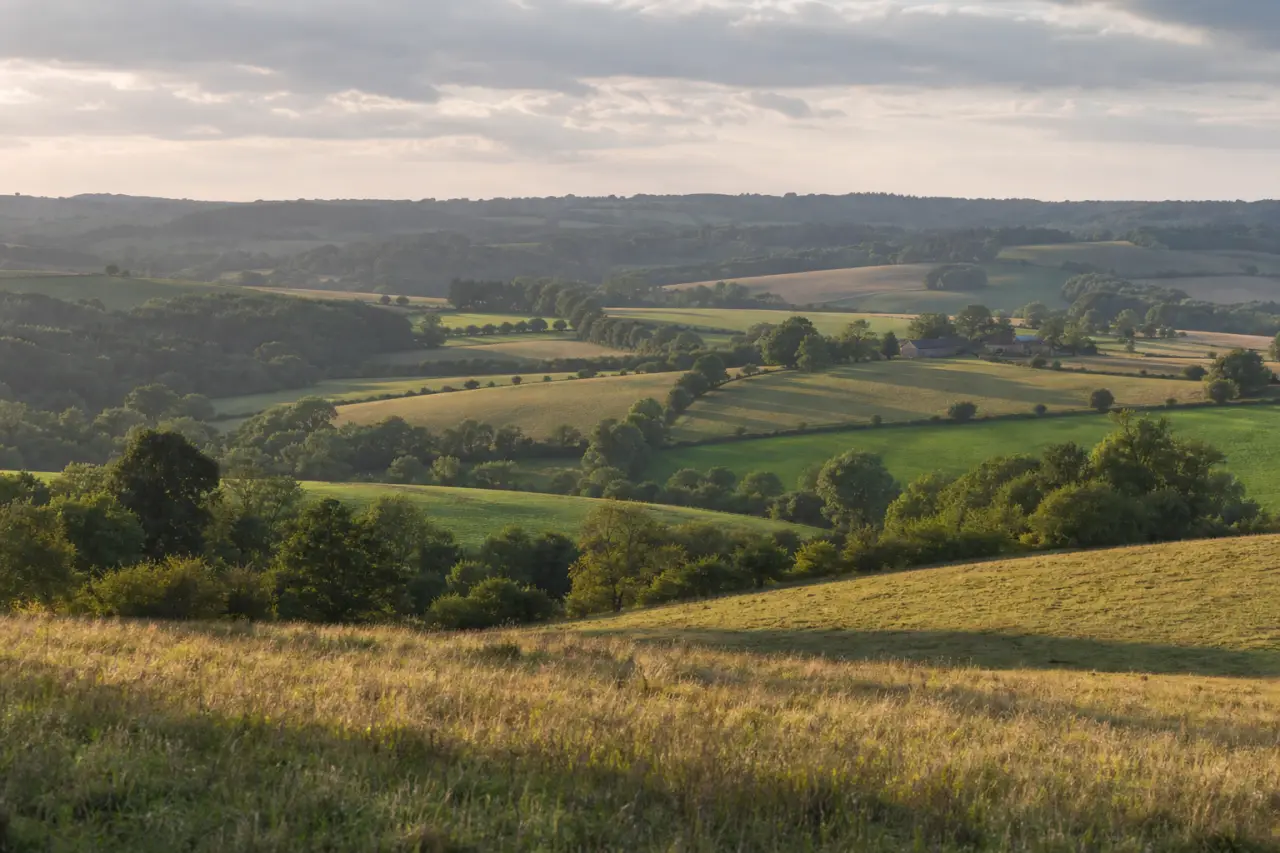
West Sussex offers one of the most diverse and sought-after land markets in the South East of England. Stretching from the South Downs National Park to the Sussex coast, and from the Hampshire border to the edge of Greater London, this county presents opportunities for agricultural investors, developers, and lifestyle buyers alike. With a population of 866,000 spread across 768 square miles, West Sussex maintains a careful balance between rural character and strategic development, making it an increasingly attractive proposition for land investment.

The county's proximity to London—with Crawley just 30 miles from the capital—combined with excellent transport links via the M23, A27, and frequent rail services to London Victoria and London Bridge, has sustained strong demand for development land. However, significant portions of West Sussex fall within protected landscapes, particularly the South Downs National Park, which covers much of the northern part of the county. This creates a distinctive market where available development opportunities command premium prices, whilst agricultural and amenity land remains highly valued for its quality and location.

Types of Land Available in West Sussex

Agricultural Land remains the predominant land type across West Sussex, with the county's fertile soils supporting arable farming, livestock grazing, and increasingly, specialist crops including viticulture. The Weald clay in the north provides excellent pastureland, whilst the chalk downland and coastal plain support cereal production and market gardening. Agricultural land prices in West Sussex typically range from £8,000 to £12,000 per acre, though prime arable land with development potential can exceed £15,000 per acre.

Equestrian Properties and Paddocks are particularly prevalent throughout West Sussex, reflecting the county's strong equestrian culture. Small paddocks (2-5 acres) near villages such as Henfield, Billingshurst, and Pulborough attract significant interest from lifestyle buyers, often achieving £12,000-£18,000 per acre. Larger equestrian facilities with stabling, ménages, and residential planning permission command substantial premiums.

Woodland and Conservation Land features prominently in West Sussex's land market, particularly in the High Weald Area of Outstanding Natural Beauty (AONB) which extends into the northern reaches of the county. Ancient woodland, commercial forestry plantations, and rewilding projects have gained considerable attention from both conservation-minded buyers and investors seeking natural capital opportunities. Woodland typically sells for £4,000-£8,000 per acre depending on access, timber quality, and amenity value.

Development Land opportunities are highly constrained but correspondingly valuable where available. Strategic sites with residential allocation near major towns like Horsham, Crawley, and Chichester can achieve six-figure sums per acre. The West Sussex Structure Plan and individual Local Plans from district councils provide clear guidance on where development might be supported, though competition is intense and planning requirements stringent.

Notable Features and Key Locations

The South Downs National Park represents the defining geographical feature for land buyers in West Sussex, covering approximately 40% of the county. Land within the National Park faces stringent planning restrictions, with development typically limited to agricultural necessity or exceptional circumstances. However, this protection ensures the long-term amenity value and landscape quality that makes West Sussex land particularly desirable.

The A27 coastal corridor connecting Chichester, Worthing, and Littlehampton has seen significant residential and commercial development pressure, with ongoing debates about infrastructure improvements. Land along this corridor with potential for commercial or residential use commands premium prices, though achieving planning permission requires navigation of complex local plan policies and often significant community consultation.

Gatwick Airport, situated on the West Sussex-Surrey border near Crawley, significantly influences the northern land market. The airport's safeguarded land, noise contours, and potential expansion plans affect property values and development potential across a wide area. However, the employment it generates (approximately 24,000 on-site jobs plus wider economic impact) maintains strong residential demand in towns like Crawley and Horsham.

Major Towns each present distinct opportunities: Chichester's cathedral city status and relatively affluent demographic supports demand for lifestyle plots and smallholdings; Crawley's new town designation and proximity to Gatwick creates interest in strategic development sites; Horsham's market town character and excellent rail links (48 minutes to London) drive demand for residential land; whilst the coastal towns of Worthing and Bognor Regis attract interest in regeneration opportunities and leisure-related development.

Transport infrastructure includes the Brighton Main Line (serving Crawley, Horsham, and connecting to the coast) and the West Coastway Line (Chichester to Brighton), providing regular services to London. The M23 motorway terminates at Crawley, connecting to the M25 and providing strategic road access to London and the national network. This connectivity underpins land values throughout the northern part of the county.

Planning and Development Considerations

West Sussex operates a two-tier planning system, with West Sussex County Council (https://www.westsussex.gov.uk/planning) handling strategic planning, minerals, and waste matters, whilst seven district and borough councils determine most planning applications. These district councils—Adur, Arun, Chichester, Crawley, Horsham, Mid Sussex, and Worthing—each maintain their own Local Plans with varying policies on rural development, housing allocation, and design standards.

Agricultural to residential conversions face significant scrutiny throughout West Sussex, particularly within the South Downs National Park and High Weald AONB. Permitted development rights for barn conversions exist but often require prior approval applications demonstrating the building was in agricultural use before March 2013 and meets strict criteria regarding structural soundness and curtilage.

The county's designation as an area with water neutrality requirements affects development across much of West Sussex. Natural England's position statement on the Arun Valley means new developments must demonstrate they will not increase water demand, significantly complicating residential planning applications and increasing costs through mitigation requirements.

Protected species, particularly great crested newts, dormice, and various bat species, are prevalent across West Sussex. Ecological surveys form a critical part of any planning application, and mitigation requirements can substantially impact development timelines and costs. For those considering purchasing land with development aspirations, commissioning preliminary ecological assessments during due diligence is advisable.

Anyone considering land purchases should understand the planning framework, as West Sussex's combination of protective designations and development pressure creates a complex regulatory environment.

Environmental and Physical Considerations

Flood risk affects specific locations in West Sussex, particularly along river valleys such as the Arun, Adur, and Western Rother. The Environment Agency's flood maps identify significant flood zones around Pulborough, Arundel, and parts of Chichester, where development is heavily restricted and insurance costs elevated. Coastal areas also face long-term considerations regarding sea level rise and coastal erosion, particularly relevant for land purchases near Selsey, Bognor Regis, and the Manhood Peninsula.

Soil quality varies considerably across the county. The Agricultural Land Classification identifies substantial areas of Grade 2 and Grade 3a land (the best and most versatile agricultural land) across the coastal plain and parts of the Weald. Planning policy provides strong protection for such land, with development proposals requiring robust justification for the loss of agricultural capability.

Contamination issues occasionally affect former industrial sites, particularly in Crawley and the coastal towns where historical manufacturing and gasworks operations have left legacy contamination. Phase 1 environmental assessments are essential when considering previously developed land, and remediation costs can be substantial.

Investment Potential and Market Trends

West Sussex's land market has demonstrated remarkable resilience over recent decades, with agricultural land values appreciating by approximately 8-12% annually over the past five years in desirable locations. The combination of London accessibility, landscape quality, and restricted supply creates sustained demand pressure.

Agricultural investment remains sound, with tenanted farms achieving yields of 2-3% whilst benefiting from capital appreciation. The growth in England's viticulture sector has particularly impacted West Sussex, with the county's chalk soils and southerly aspect proving ideal for wine production. Several commercial vineyards have established successfully, creating a new land use category that achieves premium prices—often £15,000-£20,000 per acre for suitable sites with planning permission for viticultural infrastructure.

Natural capital and environmental markets are emerging as significant considerations. The government's Environmental Land Management schemes (ELS) and potential for biodiversity net gain banking make land suitable for habitat creation or restoration increasingly valuable. West Sussex's chalk grassland, ancient woodland, and wetland habitats are particularly relevant for such schemes.

Strategic land promotion near settlement boundaries continues to attract speculative investment, despite low success rates. The emerging Local Plans from various district councils (most on 5-year review cycles) periodically identify new housing allocations, potentially transforming land values from agricultural to hope value (£20,000-£50,000+ per acre) or allocation value (£100,000+ per acre).

For those new to land acquisition, understanding the complete process of buying land is essential before committing to what represents a substantial and relatively illiquid investment.

Getting Started with Your Land Search

West Sussex offers opportunities across the spectrum from small amenity plots to substantial agricultural estates. The key to successful land acquisition in this competitive market lies in understanding local planning policy, recognising the constraints imposed by protective designations, and identifying realistic opportunities that align with your objectives—whether agricultural production, capital appreciation, lifestyle enjoyment, or long-term strategic investment.

Given the complexity of West Sussex's land market and the significant sums involved, professional advice from local land agents, planning consultants, and solicitors with specific West Sussex experience is strongly recommended. Market knowledge of individual parishes, understanding of district council planning cultures, and awareness of infrastructure proposals can prove invaluable.

If you're considering selling land in West Sussex or need to understand its current market value, our professional valuation service provides detailed assessments based on current market conditions, local comparables, and development potential specific to your plot's location and characteristics.

Looking for Land in West Sussex?

Tell us what you're looking for and we'll help you find the right plot.