Land for Sale in Shropshire
West Midlands · ENGLAND
Key Facts
Avg. Price/Acre
£8,500
area
1,346 sq miles
major Towns
Shrewsbury, Telford, Oswestry, Bridgnorth, Ludlow
population
498,000
Local Planning Authority: View planning portal →
# Land for Sale in Shropshire
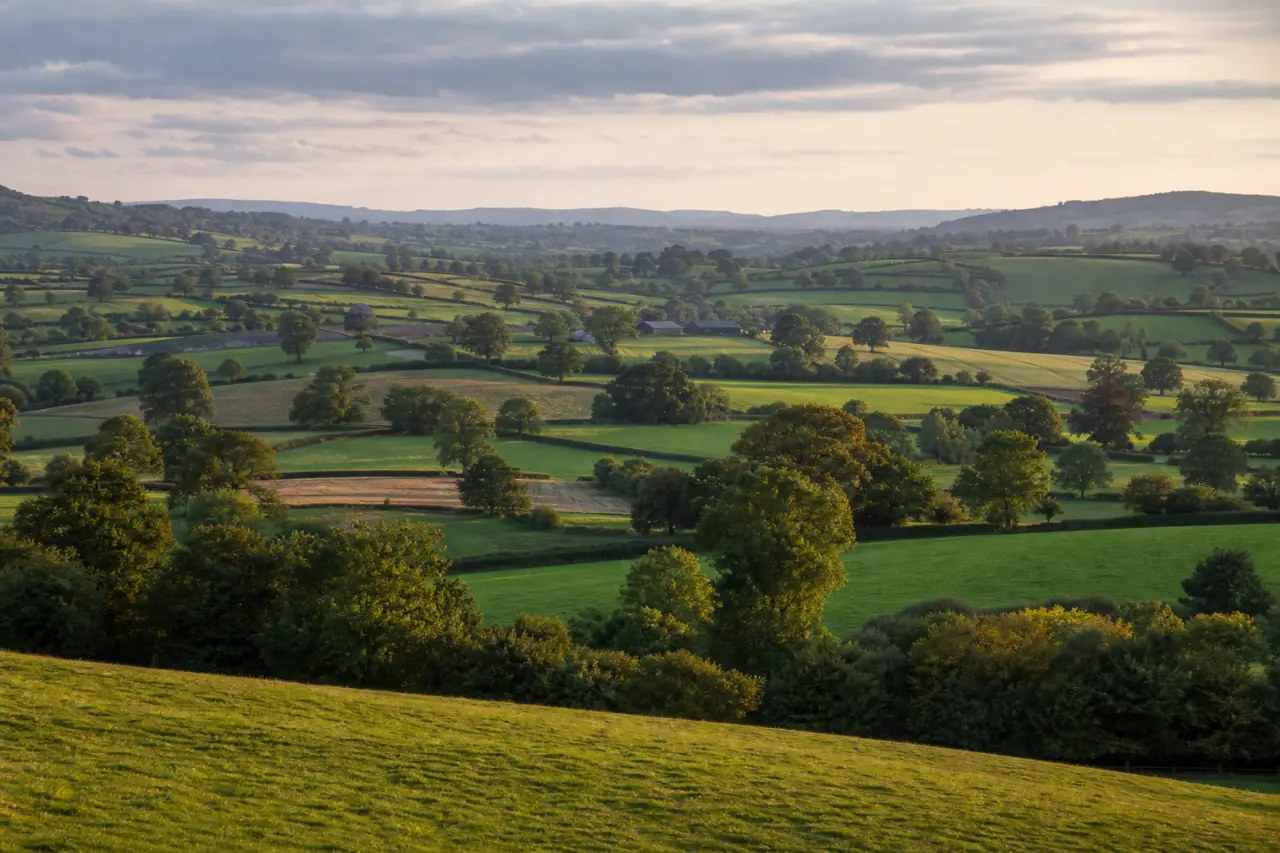
Shropshire represents one of England's most attractive counties for land buyers, offering a diverse landscape that ranges from the dramatic hills of the Shropshire Hills Area of Outstanding Natural Beauty to the fertile agricultural plains of the Severn Valley. With a relatively low population density of approximately 370 people per square mile across its 1,346 square miles, the county provides excellent opportunities for those seeking agricultural land, smallholdings, woodland, or development sites. The land market in Shropshire remains robust, with strong demand from farmers, lifestyle buyers, and investors attracted by the county's rural character, proximity to major conurbations, and improving transport infrastructure.
The county's position straddling the border with Wales gives Shropshire a unique character, with diverse geology creating varied soil types and land classifications. From the ancient landscapes around Ludlow and the Clee Hills to the more intensively farmed areas around Shrewsbury and Newport, land buyers will find opportunities ranging from Grade 2 agricultural land suitable for arable farming to upland grazing, amenity woodland, and equestrian properties. The market has seen sustained interest from buyers seeking to diversify away from urban investments, with smallholdings and lifestyle plots particularly sought after.
Types of Land Available in Shropshire
Shropshire's land market offers exceptional variety. Agricultural land dominates, with dairy and livestock farming traditionally strong across the county, particularly in the north around Market Drayton and Whitchurch. Arable farming is concentrated on the better-drained land in central and eastern areas. Average land prices for agricultural holdings typically range from £7,000 to £10,000 per acre for Grade 3 land, with premium Grade 2 land commanding higher prices, especially in areas with good access and infrastructure.
Woodland represents another significant category, with both commercial conifer plantations and ancient deciduous woodland available. The Mortimer Forest near Ludlow and numerous smaller woods throughout the county come to market regularly, appealing to conservation buyers, sporting interests, and those seeking timber investment. Woodland typically sells for £3,000 to £8,000 per acre depending on maturity, species composition, and access.
Equestrian properties and paddocks are increasingly popular, particularly within commuting distance of Shrewsbury, Telford, and the West Midlands conurbation. Small parcels of 2-10 acres with road frontage and suitable for grazing attract premium prices, often £8,000 to £12,000 per acre. The county's strong equestrian community, numerous riding schools, and bridleway networks support this market segment.
Development land opportunities exist primarily around the growth areas of Shrewsbury and Telford, though these are tightly controlled through Shropshire Council's planning framework. Strategic sites with development potential command significantly higher values, though planning permission remains challenging to obtain outside designated development areas.
Notable Features and Attractions
The Shropshire Hills Area of Outstanding Natural Beauty covers approximately a quarter of the county and includes iconic landmarks such as the Long Mynd, Stiperstones, Wenlock Edge, and the Clee Hills. Land within or adjacent to the AONB faces additional planning restrictions but offers exceptional amenity value and typically maintains strong prices due to limited supply and high demand from conservation-minded buyers.
Transport infrastructure continues to improve, with the M54 motorway providing direct access to the West Midlands and connection to the wider motorway network. The A5 corridor through the county has seen significant investment, whilst rail services from Shrewsbury connect to Birmingham, Manchester, and North Wales. The Marches Line links Shrewsbury to South Wales via Church Stretton, Craven Arms, and Ludlow. These connections have supported land values, particularly for commercial agricultural operations requiring good logistics access.
Historic Ironbridge, a UNESCO World Heritage Site, and the market towns of Shrewsbury, Ludlow, and Bishop's Castle provide cultural and economic focal points. The county's designation as Britain's first 'Book Town' in Sedberley (near Bishop's Castle) adds to its appeal for visitors and residents alike. Major employers include Telford's manufacturing and logistics sectors, the Princess Royal Hospital in Telford, and Robert Jones and Agnes Hunt Orthopaedic Hospital near Oswestry, though agriculture and related industries remain significant rural employers.
The River Severn winds through the county, creating both opportunities and constraints. Floodplain land along the Severn and its tributaries can be acquired at lower prices but comes with restrictions on development and agricultural use during flood events. The Environment Agency's flood risk maps should be carefully consulted for any land purchase near watercourses.
Planning and Development Considerations
Shropshire Council operates a unitary planning authority covering most of the county (Telford & Wrekin is a separate authority). The current Local Plan guides development, with Shrewsbury and Telford designated as principal centres for growth, and market towns including Oswestry, Bridgnorth, Ludlow, Market Drayton, and Whitchurch identified for proportionate development.
For prospective land buyers, understanding Shropshire's planning policies is crucial. The council generally resists development in open countryside unless there are exceptional circumstances or agricultural need. Agricultural dwellings require demonstration of essential need and financial viability of the agricultural enterprise. The council has specific policies for farm diversification, conversion of rural buildings, and rural exception sites for affordable housing.
The AONB designation means that any development proposals face additional scrutiny regarding landscape impact. Conservation areas in historic towns and numerous listed buildings add further complexity. However, Shropshire Council has shown support for appropriate rural enterprise, including farm diversification, tourism-related development, and renewable energy projects where these respect landscape character.
Change of use applications for agricultural buildings to residential or commercial use have become more common following permitted development rights changes, though these rights have limitations and local restrictions may apply. Anyone considering buying land in Shropshire with development aspirations should obtain professional planning advice early in the process.
Environmental and Land Management Considerations
Shropshire's diverse geology creates varied soil types, from the clay-based soils of central areas to the sandstone-derived soils of the north and the more challenging thin soils over limestone in the Wenlock Edge area. Soil testing is advisable for any agricultural purchase to understand drainage requirements and cultivation suitability.
The county has limited historical industrial contamination compared to neighbouring metropolitan areas, though former mine workings in areas like the Clee Hills and around Snailbeach require investigation. Coal mining legacy issues are largely absent except in the far east near Telford.
Environmental stewardship opportunities abound, with Countryside Stewardship schemes, Sustainable Farming Incentive, and the new Environmental Land Management schemes (ELMS) offering income support for conservation-focused land management. The county's high nature value areas and numerous Sites of Special Scientific Interest mean that environmental schemes can provide significant financial returns alongside agricultural production.
Japanese knotweed, Himalayan balsam, and other invasive species are present in some areas, particularly along watercourses. Purchasers should commission invasive species surveys for any land with streams or past development activity.
Investment Potential and Market Trends
Shropshire's land market has demonstrated resilience, with agricultural land values supported by farming viability, environmental payments, and lifestyle demand. The county's position within reach of Birmingham (Shrewsbury is 45 minutes by train) whilst maintaining rural character has attracted buyers seeking quality of life alongside land ownership.
Smallholdings and lifestyle blocks of 5-50 acres have seen particularly strong demand, with buyers often prepared to pay premium prices per acre for well-located parcels with road access, existing buildings, and utilities. The COVID-19 pandemic accelerated interest in rural land, and this demand has remained elevated.
Woodland investment continues to attract buyers seeking carbon sequestration opportunities, biodiversity assets, and inflation hedges. Ancient woodland in Shropshire commands premium prices due to its heritage and ecological value.
Larger commercial farms continue to trade, with local farmers, contract farming operators, and institutional investors all active. Roll-over relief buyers seeking to reinvest capital gains remain a consistent market feature. The government's agricultural transition away from area-based Basic Payment Scheme support toward environmental payments may create opportunities as some farmers restructure or exit, though Shropshire's generally viable farming economy should support land values.
For those seeking to understand their land's value in the current market, obtaining a professional land valuation provides essential information for purchase decisions or portfolio assessment.
Summary
Shropshire offers land buyers an outstanding combination of agricultural productivity, landscape quality, and accessibility. Whether seeking a commercial farming opportunity, a conservation woodland, an equestrian property, or a smallholding for lifestyle purposes, the county's diverse land market provides options across a range of budgets. The planning environment requires careful navigation but offers opportunities for appropriate rural enterprise and sensitive development. With strong fundamentals supporting land values and an active, liquid market, Shropshire continues to attract discerning land buyers from across the UK.
Land Valuation
Get a free estimate for land in Shropshire
Buying Guides
Expert advice on purchasing land
Looking for Land in Shropshire?
Tell us what you're looking for and we'll help you find the right plot.