Land for Sale in Shetland Islands
Highlands and Islands · SCOTLAND
Key Facts
Avg. Price/Acre
£2,500
area
567 sq miles
major Towns
Lerwick, Scalloway, Brae
population
23,000
Local Planning Authority: View planning portal →
# Land for Sale in Shetland Islands
The Shetland Islands represent one of Scotland's most distinctive and remote land markets, offering unique opportunities for those seeking agricultural holdings, crofting land, or development sites in Britain's most northerly inhabited archipelago. Located approximately 100 miles north of mainland Scotland and closer to Bergen in Norway than to Edinburgh, Shetland comprises over 100 islands, though only 16 are inhabited. The archipelago's dramatic coastal landscapes, rich maritime heritage, and resilient island economy create a particularly specialised land market characterised by crofting tenure, renewable energy potential, and opportunities linked to aquaculture and sustainable farming.
Lerwick, the capital and only town, serves as the administrative and commercial hub with a population of around 7,500, whilst Scalloway on the west coast retains its historical significance as Shetland's ancient capital. Brae, in the north mainland, developed substantially during the oil boom and remains economically important due to the nearby Sullom Voe oil terminal. The land market here differs significantly from mainland Scotland, with crofting remaining the predominant form of agricultural tenure and the Shetland Islands Council maintaining a strong role in land management and allocation through the Shetland Development Trust.
For prospective land buyers, Shetland presents both opportunities and challenges. The islands' strategic position, excellent ferry and air connections through NorthLink Ferries and Sumburgh Airport, world-class fishing grounds, and expanding renewable energy sector create investment potential. However, the extreme northerly location, Atlantic exposure, limited growing season, and distinctive planning considerations require careful research and realistic expectations about what can be achieved with land in this unique environment.
Types of Land Available in Shetland Islands
Crofting Land dominates the Shetland land market, with the islands having one of the highest concentrations of working crofts in Scotland. Crofts typically range from 2 to 20 acres of in-bye (improved) land plus common grazing rights on extensive shared hill ground. The Crofting Commission regulates these holdings, and prospective buyers must understand that purchasing a croft involves specific legal processes, residency expectations, and ongoing duties. Vacant crofts occasionally become available through the Crofting Commission's letting scheme, whilst assignation of existing tenancies can occur between family members or approved applicants.
Agricultural Holdings include larger farms primarily focused on sheep production, which remains economically important despite declining numbers. Shetland sheep, a primitive breed native to the islands, are hardy and well-adapted to the harsh maritime climate. Holdings may include several hundred acres of rough grazing plus improved pasture, often spread across multiple locations on the same or different islands. The short growing season (typically late April to September) and exposure to Atlantic gales limit agricultural options, though some holdings successfully combine sheep farming with holiday accommodation or other diversification enterprises.
Smallholdings and Residential Plots with Land appeal to lifestyle buyers seeking self-sufficiency or small-scale agricultural activities. These properties, typically ranging from 1 to 10 acres, allow for vegetable growing in polytunnels, keeping poultry, and perhaps a few sheep. The microclimate varies significantly across the islands, with some locations offering surprising shelter and productivity. South-facing slopes with good drainage command premium prices, particularly within reasonable distance of Lerwick or with sea views.
Development Land and Building Plots are highly sought after but strictly controlled. Shetland Islands Council operates a particularly rigorous planning system aimed at protecting the islands' character whilst supporting sustainable development. Plots with planning permission for residential development are relatively scarce and command significant premiums. The Council's Local Development Plan prioritises sites within or adjacent to existing settlements, with development in the open countryside generally restricted to agricultural, crofting, or aquaculture-related dwellings.
Commercial Land Opportunities relate primarily to aquaculture, renewable energy, and tourism. The islands' pristine waters support a thriving salmon farming industry, and suitable foreshore leases or land with water access can prove valuable. Wind energy sites have attracted significant investment, with community wind farms providing substantial returns to local trusts. Land suitable for tourism development—particularly with planning consent for self-catering accommodation—remains in demand given Shetland's growing reputation for wildlife tourism and cultural heritage.
Notable Features and Considerations
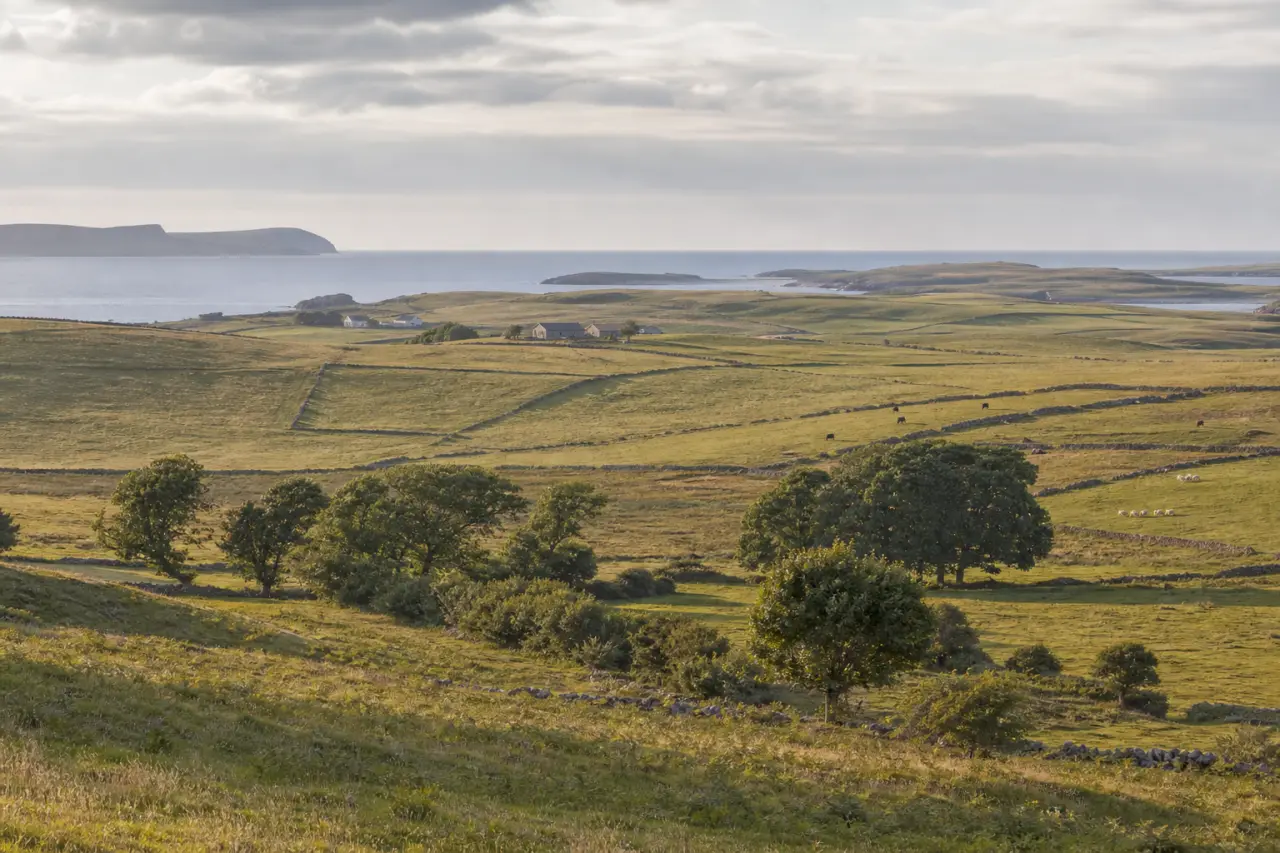
Shetland's landscape is defined by its maritime character, with no point on the islands more than three miles from the sea. The archipelago features dramatic cliff scenery, particularly on the west coasts, alongside more sheltered voes (narrow sea inlets) on eastern sides. This topography creates significant microclimates, with west-facing locations experiencing the full force of Atlantic weather systems whilst east-facing sites enjoy relative shelter. These variations directly impact land values and agricultural potential.
The islands possess no designated National Scenic Areas or Areas of Outstanding Natural Beauty, but extensive areas hold conservation designations. Multiple Sites of Special Scientific Interest (SSSIs) protect geological features, blanket bog, and important bird populations, whilst Special Protection Areas (SPAs) safeguard internationally significant seabird colonies. Sumburgh Head, Noss, Hermaness, and Fair Isle represent some of Britain's most important seabird breeding sites. Land buyers must be aware that these designations can restrict agricultural practices, development, and land management activities.
Transport connectivity, whilst improved, remains a practical consideration. NorthLink Ferries operates overnight services from Aberdeen to Lerwick (approximately 12-14 hours), essential for transporting vehicles, livestock, and materials. Sumburgh Airport provides multiple daily flights to mainland Scotland, though services can be disrupted by weather. Inter-island ferries connect the inhabited outer islands, but timetables and capacity constraints affect land management logistics. These factors influence land values, with more accessible locations commanding premiums.
The Sullom Voe oil terminal transformed Shetland's economy from the 1970s onwards, bringing employment, infrastructure investment, and revenue through the Shetland Charitable Trust. Whilst oil industry activity has declined, the terminal continues operating and the legacy funding supports community projects, business development, and infrastructure maintenance. This economic foundation provides stability often lacking in remote island communities, supporting land values and development potential.
Renewable energy represents a growing sector, with Shetland possessing exceptional wind resources and tidal energy potential. The Viking Energy wind farm, a joint venture between SSE and the community, demonstrates the scale of investment occurring. Smaller community wind projects on various islands provide income to local development trusts. For landowners, opportunities exist for turbine hosting, though planning processes are thorough and community consultation essential.
Planning and Development Considerations
Shetland Islands Council serves as the planning authority, implementing the Shetland Local Development Plan which takes a distinctively protective approach to development whilst recognising the need for economic sustainability. Understanding this planning framework is essential before purchasing land with development aspirations.
Housing development follows strict sequential criteria prioritising previously developed land, sites within settlement boundaries, and locations with existing services. New houses in the countryside require justification based on agricultural, crofting, or business operational needs. The Council applies a particularly rigorous test for appropriateness, examining whether the dwelling genuinely requires a rural location and whether applicants have explored all reasonable alternatives within settlements. This approach stems from concerns about preserving the islands' landscape character and efficient infrastructure use.
Crofting dwellings receive more sympathetic treatment where the applicant demonstrates genuine intention to actively work the croft. The Crofting Commission's support for an application carries significant weight, though the planning authority still examines design, siting, and landscape impact carefully. Replacement dwellings on croft land generally receive approval if appropriately located and designed, offering opportunities for those acquiring dilapidated crofts.
Design standards in Shetland emphasise appropriateness to the landscape and climate. The Council's Supplementary Guidance on New Housing in the Countryside specifies requirements for siting, scale, materials, and form. Traditional Shetland architecture featured low, horizontal forms with small windows and robust construction—principles that inform contemporary design expectations. Planning applications demonstrating energy efficiency, weather resistance, and sympathetic materials typically fare better than generic designs.
Agricultural and aquaculture buildings generally receive approval more readily, though siting remains important. Structures should be located to minimise visual impact whilst remaining functional for their intended purpose. Some areas have general permitted development rights for agricultural buildings under certain size thresholds, but checking with the planning authority is essential as restrictions apply in sensitive locations.
Telecommunications infrastructure requires consideration. Whilst Shetland has seen significant broadband investment, including superfast connections to major settlements, more remote locations may have limited connectivity. This affects both development viability and land values, particularly for businesses requiring reliable internet access. Those considering land purchases should verify available services rather than assuming coverage.
Septic tanks and drainage require careful planning. The islands' shallow peat soils, high water table, and exposed rock in many areas create challenges for sewage disposal. Scottish Environment Protection Agency (SEPA) regulations govern private drainage systems, and obtaining appropriate consents can prove challenging on unsuitable ground. Sites with demonstrated drainage solutions or connection to public sewers command premiums. For more information on navigating these requirements, see our comprehensive guide to planning permission.
Investment Potential and Market Trends
The Shetland land market operates differently from mainland Scotland, with prices reflecting the islands' unique circumstances. Agricultural land values typically range from £2,000 to £4,000 per acre for better quality improved pasture, though rough grazing may achieve only £500-£1,500 per acre depending on access and grazing quality. These figures sit below mainland Scottish averages but reflect realistic productive capacity in the challenging climate.
Croft prices vary enormously based on house condition, land quality, location, and whether vacant possession is available. A croft with a habitable house and 5-10 acres might range from £150,000 to £350,000, though prime locations near Lerwick command higher prices. Vacant crofts or those with derelict buildings offer more affordable entry points but require understanding of crofting law and often significant investment in housing.
Building plots with planning permission are scarce and valuable, typically achieving £40,000-£80,000 for a serviced plot near Lerwick, with more remote locations proportionally cheaper. The restricted supply and robust demand from returning islanders and incomers keep prices relatively stable. Those willing to navigate the planning process might acquire land more cheaply and add value through obtaining consent, though this requires patience and expertise.
Investment drivers for Shetland land include the islands' economic resilience, growing population (unusual for remote Scottish islands), expanding tourism sector, and renewable energy opportunities. The Council's proactive approach to economic development, excellent educational facilities, and strong community cohesion support long-term stability. However, buyers should view Shetland land as a lifestyle investment rather than expecting rapid capital appreciation.
Market activity tends to be modest in volume, with perhaps 10-20 significant agricultural or crofting properties trading annually across the entire archipelago. This thin market means comparable evidence can be limited, and each property must be assessed on its individual merits. Working with agents experienced in Shetland's particular market conditions is advisable.
Future prospects appear cautiously positive. The Scottish Government's commitment to supporting island communities, ongoing investment in ferry and air services, and opportunities in aquaculture and renewable energy provide economic foundations. Population stability contrasts favourably with many Scottish islands experiencing decline. However, challenges including an ageing population, recruitment difficulties for key workers, and climate change impacts on traditional industries require acknowledgement.
For those seeking a land valuation in Shetland, it's important to engage valuers familiar with island conditions who understand crofting tenure, renewable energy rights, and local planning nuances. Standard valuation methodologies may not fully capture the value or constraints affecting Shetland properties.
Environmental and Practical Considerations
Climate represents perhaps the most significant practical consideration. Shetland experiences strong winds throughout the year, with gales recorded on over 50 days annually. Rainfall averages 1,000-1,200mm per year—less than much of western Scotland—but the near-constant wind and low evaporation rates create wet ground conditions. Summer temperatures rarely exceed 15°C, whilst winters are relatively mild due to maritime influence, typically remaining above freezing. The growing season is short but the long summer daylight hours (19+ hours in midsummer) compensate partially. These conditions fundamentally shape what can be achieved with land.
Peat soils cover much of Shetland, creating both opportunities and constraints. Whilst peat provides excellent insulation and water retention, it also presents challenges for drainage, construction foundations, and trafficability. Deep peat areas are protected for their carbon storage and biodiversity value, with proposals affecting peatland requiring careful environmental assessment. Improved agricultural land on better drained mineral soils commands significant premiums.
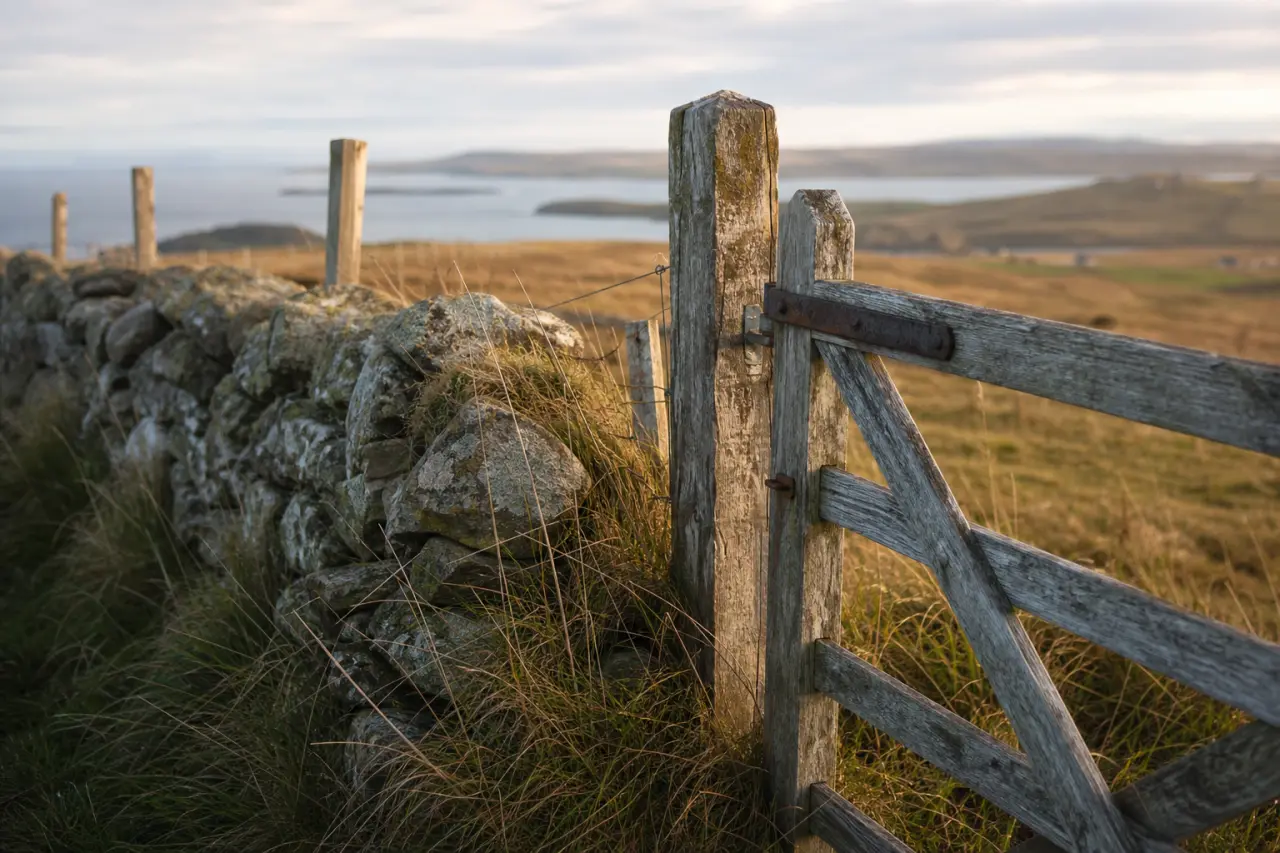
Fencing and shelter require robust construction. Traditional Shetland walls use local stone, though modern wire fencing predominates on agricultural land. Posts must be securely anchored, and fence lines require regular maintenance due to weather damage. Establishing shelter belts proves challenging due to wind exposure and thin soils, though some locations support native species including rowan, willow, and alder. Existing shelter significantly enhances land value and usability.
Livestock management in Shetland focuses overwhelmingly on sheep, with the native Shetland breed representing perhaps 50% of the breeding flock. These small, hardy, primitive sheep thrive on rough grazing and produce fine wool prized by hand-spinners and textile manufacturers. Cattle are rare due to the limited forage and infrastructure requirements. Ponies, including the famous Shetland pony, are kept mainly for showing and breeding rather than commercial agriculture.
Access and services vary dramatically across the islands. Lerwick and the main island 'mainland' have good road networks and most modern services. Outer islands including Yell, Unst, Fetlar, Whalsay, and Fair Isle rely on ferry services and have more limited infrastructure. Water supply is generally excellent from abundant rainfall and clean sources. Electricity reaches all inhabited islands, though supply reliability on outer islands can be affected by severe weather. Oil heating remains standard in most properties due to the absence of mains gas.
Community integration is important for successful land ownership in Shetland. The islands have strong social cohesion and expectations of community participation. Buyers planning to become resident will find warm welcome and support, but those acquiring land purely for speculative purposes or with no intention of contributing to island life may find integration challenging. Understanding and respecting local customs, attending community meetings, and supporting island initiatives smooths the path considerably.
For comprehensive guidance on the land buying process, including specific considerations for Scottish crofting regulations, see our complete guide to buying land in the UK.
Conclusion
The Shetland Islands offer a distinctive land market unlike anywhere else in Britain, with opportunities shaped by crofting heritage, maritime climate, and an isolated yet economically resilient island community. Whether seeking a croft for self-sufficient living, agricultural land for sheep production, or development opportunities in aquaculture and renewable energy, the islands provide options for buyers with realistic expectations and commitment to island life.
Success in Shetland's land market requires thorough research, understanding of crofting law and local planning policies, appreciation of the challenging climate, and ideally, visits throughout different seasons to understand what island living truly entails. Those prepared for the realities of Britain's most remote inhabited archipelago will find a welcoming community, dramatic landscapes, and land opportunities with genuine character and long-term potential.
Land Valuation
Get a free estimate for land in Shetland Islands
Buying Guides
Expert advice on purchasing land
Looking for Land in Shetland Islands?
Tell us what you're looking for and we'll help you find the right plot.