Land for Sale in Scottish Borders
South Scotland · SCOTLAND
Key Facts
Avg. Price/Acre
£3,500
area
1,827 sq miles
major Towns
Hawick, Galashiels, Peebles, Kelso, Jedburgh
population
116,000
Local Planning Authority: View planning portal →
# Land for Sale in the Scottish Borders
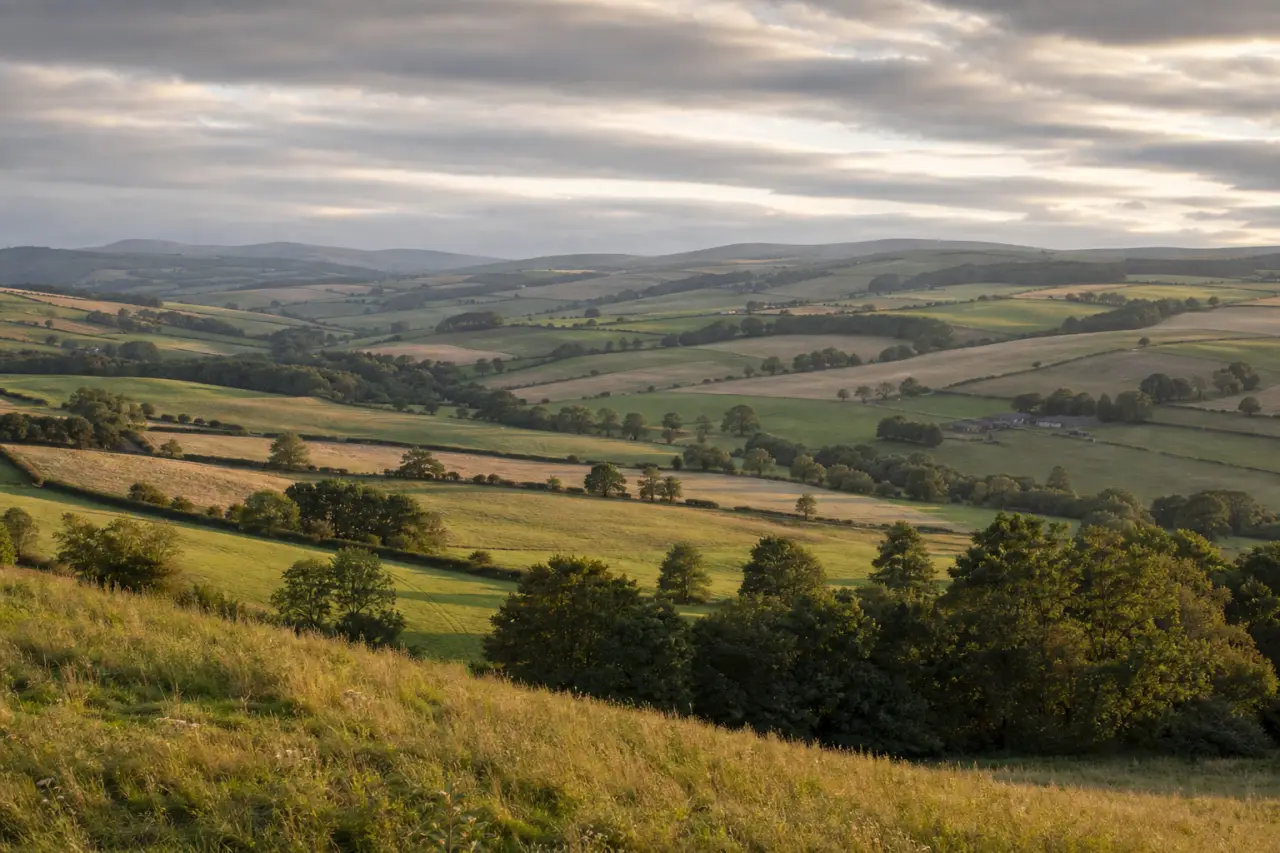
The Scottish Borders presents exceptional opportunities for land buyers seeking agricultural, forestry, or development parcels in one of Scotland's most historically rich and scenically diverse regions. Spanning 1,827 square miles from the Cheviot Hills along the English border to the Lammermuir and Moorfoot Hills in the north, this area combines productive farmland with expansive upland estates, offering remarkable value compared to more densely populated Scottish regions.
The land market in the Scottish Borders has traditionally attracted a mix of established farming families, forestry investors, and lifestyle buyers seeking rural retreats with genuine agricultural potential. With major towns including Hawick, Galashiels, Peebles, Kelso, and Jedburgh providing essential services and employment hubs, the region maintains strong rural communities whilst offering improving connectivity to Edinburgh (approximately 30-45 miles from most locations) via the A7, A68, and A1 routes. The recent reopening of the Borders Railway to Tweedbank has further enhanced accessibility, making agricultural and smallholding opportunities increasingly attractive to buyers seeking rural enterprises within commuting distance of the capital.
Land prices in the Scottish Borders remain competitive, with agricultural land typically commanding £4,000-£6,000 per acre for quality arable ground, whilst hill grazing and marginal land may achieve £1,500-£3,000 per acre depending on location and productive capacity. Forestry land and sporting estates offer diverse investment opportunities, particularly given the Scottish Government's ambitious woodland creation targets and the region's established reputation for game shooting and fishing.
Types of Land Available in the Scottish Borders
The Scottish Borders offers remarkable variety in land types, reflecting its diverse topography from fertile river valleys to exposed upland moorland. Arable farmland concentrates in the Tweed Valley and surrounding lower ground, where mixed farming operations produce cereals, root crops, and fodder for livestock. These productive acres, particularly around Kelso and the Merse district, represent some of Scotland's finest agricultural land and attract premium prices when brought to market.
Livestock farming dominates the upland areas, with extensive sheep grazing across the Cheviot Hills, Ettrick Forest, and Lammermuirs. Hill farms ranging from 500 to several thousand acres regularly come to market, offering buyers opportunities to acquire substantial landholdings with traditional stone farmhouses and steading buildings. These properties often include valuable sporting rights for grouse, deer stalking, and salmon fishing—heritage assets that enhance both amenity value and income potential.
Forestry land represents a growing segment of the Borders land market, with commercial conifer plantations established during the 20th century now reaching maturity alongside new native woodland creation schemes. Mixed woodland parcels combining productive timber with biodiversity value are particularly sought-after, benefiting from Scottish Government grants and carbon credit opportunities. The region's forestry heritage means experienced contractors and timber haulage infrastructure are readily available.
Smallholdings and lifestyle plots attract buyers seeking rural living combined with modest agricultural enterprises. Parcels of 5-50 acres with existing dwellings or renovation projects regularly appear on the market around Peebles, Melrose, and the more accessible valleys. These properties suit diversified rural businesses, equestrian activities, or traditional crofting-style mixed farming operations.
Notable Features and Regional Characteristics
Whilst the Scottish Borders contains no designated National Parks, significant areas fall within National Scenic Areas and Sites of Special Scientific Interest (SSSIs), particularly along the Tweed Valley and within the Cheviot Hills. The region is renowned for its unspoilt countryside, historic tower houses, and extensive public access rights under Scotland's Land Reform Act, which landowners must accommodate through responsible management.
The River Tweed and its tributaries define much of the region's character and economy, supporting world-renowned salmon and sea trout fisheries that add substantial value to riparian landholdings. Fishing rights, where retained, can generate significant sporting income and appreciate considerably over time. The river system also provides natural irrigation for adjacent farmland whilst creating flood risk considerations in lower-lying areas—particularly around Peebles, Galashiels, and Kelso—that buyers should investigate through SEPA flood mapping.
Transport infrastructure has improved markedly with the Borders Railway connecting Tweedbank to Edinburgh in 35 minutes, catalysing development interest around stations whilst maintaining the region's rural character. The A1 provides rapid access to Newcastle and England's motorway network, whilst the A7 and A68 serve as historic drove roads now carrying commercial and tourist traffic. These connections make the Borders increasingly viable for agricultural businesses serving Central Belt markets.
The region's textile heritage, centred on historic mill towns like Hawick, Galashiels, and Selkirk, continues to influence land use patterns, with former industrial sites occasionally offering redevelopment opportunities subject to contamination assessment. More significant economically are the tourism and outdoor recreation sectors, which support land diversification through holiday accommodation, mountain biking facilities, and guided sporting activities.
Planning and Development Considerations
Scottish Borders Council administers planning policy across the region, guided by the Local Development Plan 2016 and emerging SESplan strategic framework. Agricultural land buyers should recognise that Scotland's planning system differs from England and Wales, with greater emphasis on national planning policy and more generous interpretations of agricultural necessity when considering new rural dwellings.
Agricultural dwellings and steadings may be approved where genuine operational need is demonstrated, with the Council generally supportive of applications that sustain viable farming businesses. Conversion of traditional farm buildings to residential or commercial use is encouraged where this secures their preservation, though Listed Building consent applies to many historic steadings and tower houses throughout the region. For detailed guidance on navigating the planning process, consult our comprehensive guide on planning permission.
Forestry proposals require consultation with Scottish Forestry (formerly Forest Enterprise Scotland), with grants available through the Forestry Grant Scheme for woodland creation, management, and infrastructure. The Scottish Borders benefits from established forestry practice and generally favourable policies for commercial timber production balanced with native woodland expansion targets.
Change of use from agricultural to commercial purposes (holiday accommodation, equestrian centres, renewable energy installations) requires planning permission, with the Council assessing impact on landscape character, neighbouring amenity, and rural economy. The Borders' tourism-dependent economy means sympathetically designed diversification projects often receive support where they create employment and maintain landscape quality.
Environmental designations including SSSIs, Special Areas of Conservation (SACs), and the Tweed Rivers Heritage Site impose restrictions on land management practices. Buyers should conduct thorough environmental due diligence, including Phase 1 habitat surveys on ecologically sensitive sites and flood risk assessments in river valleys. Agricultural Payment Scheme cross-compliance requirements also mandate adherence to Good Agricultural and Environmental Condition (GAEC) standards.
Investment Potential and Market Trends
The Scottish Borders land market demonstrates consistent long-term appreciation driven by Edinburgh's expansion, Scottish Government agricultural support continuation (replacing EU CAP payments), and growing environmental land management opportunities. Quality agricultural land has appreciated 3-5% annually over the past decade, whilst forestry and sporting estates have attracted institutional investment seeking inflation-hedged natural capital assets.
Forestry investment appears particularly compelling given Scottish Government targets for 18,000 hectares of new woodland annually and maturing carbon credit markets. Productive forests generate income through timber sales whilst sequestering carbon—an increasingly valuable ecosystem service as corporate net-zero commitments drive demand for verified offsets.
Agricultural diversification opportunities abound, from farm shops and processing facilities serving Edinburgh's foodie culture to outdoor activity centres capitalising on the Borders' mountain biking and walking tourism. The region's designation as a UNESCO Global Geopark enhances tourism marketing potential whilst imposing no regulatory burden on landowners.
Residential development potential remains limited by Green Belt constraints around larger towns and the Local Development Plan's rural housing policies, though small-scale infill development and agricultural dwelling opportunities exist. Land with development potential commands significant premiums, making thorough planning advice essential before acquisition.
For those considering purchasing land in the Scottish Borders, obtaining an accurate professional valuation provides essential market intelligence and negotiating confidence. The region's diverse land types and varying productivity mean local expertise proves invaluable in assessing true value.
The Scottish Borders' combination of productive agricultural land, extensive forestry holdings, and outstanding natural beauty positions it exceptionally well for the evolving land market, where environmental stewardship, carbon sequestration, and sustainable food production increasingly drive capital allocation. For comprehensive guidance on the acquisition process, review our complete guide to buying land in the UK, which covers due diligence, legal considerations, and financing options applicable to Scottish land transactions.
Whether seeking a substantial hill farm, productive arable acres, forestry investment, or a modest smallholding, the Scottish Borders delivers diverse opportunities within a supportive rural community and some of Britain's most historically resonant landscapes.
Land Valuation
Get a free estimate for land in Scottish Borders
Buying Guides
Expert advice on purchasing land
Looking for Land in Scottish Borders?
Tell us what you're looking for and we'll help you find the right plot.