Land for Sale in Midlothian
East Scotland · SCOTLAND
Key Facts
Avg. Price/Acre
£10,000
area
137 sq miles
major Towns
Dalkeith, Bonnyrigg, Penicuik, Loanhead
population
94,000
Local Planning Authority: View planning portal →
# Land for Sale in Midlothian
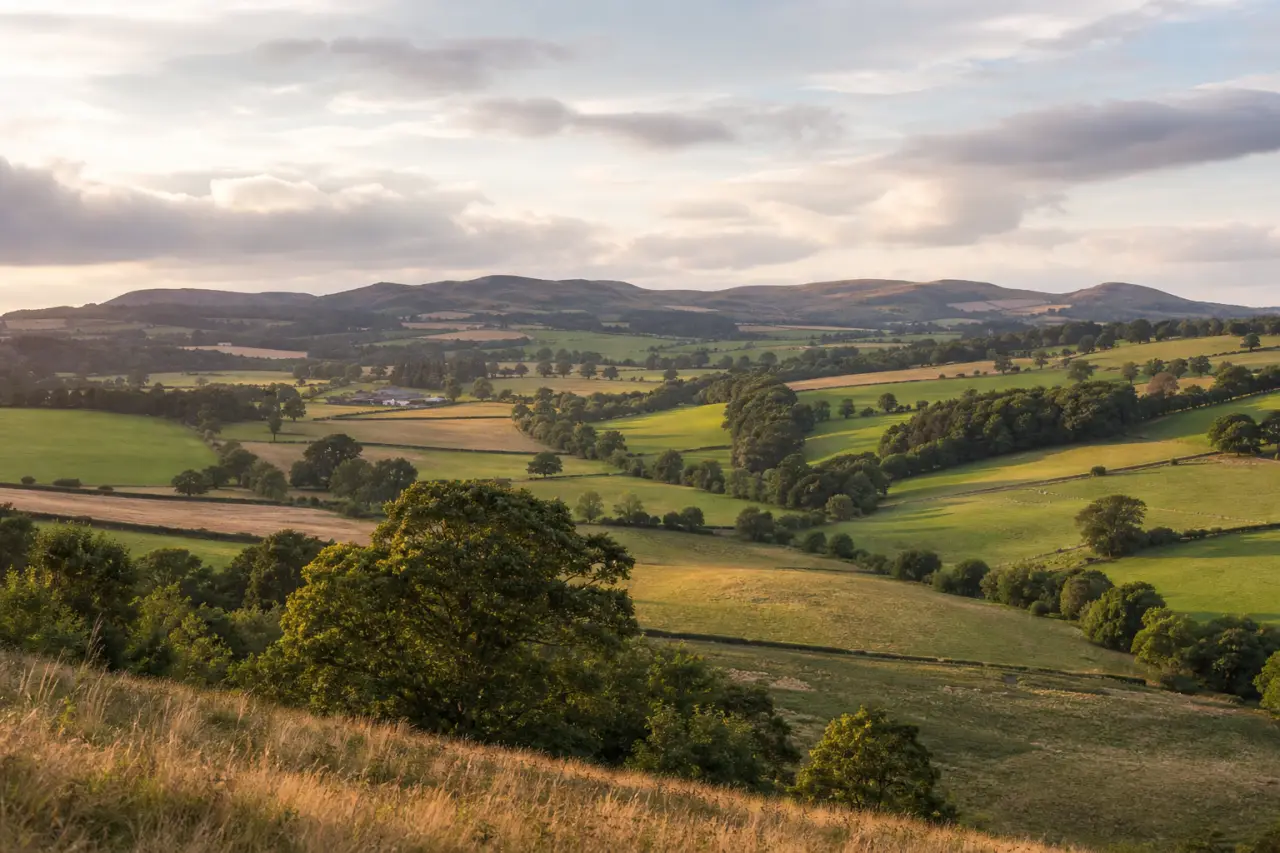
Midlothian presents compelling opportunities for land buyers seeking a strategic location within East Scotland. Situated immediately south of Edinburgh, this compact council area of 137 square miles combines excellent transport connectivity with diverse landscapes ranging from fertile agricultural plains to the dramatic Pentland Hills. The area's proximity to Scotland's capital city—with major towns like Dalkeith, Bonnyrigg, Penicuik, and Loanhead all within easy commuting distance—creates unique investment potential for both agricultural and development land.
The land market in Midlothian reflects its dual character as both a working agricultural region and a growth area for Edinburgh's expanding population. The council's commitment to managed development, particularly along the A7 and A701 corridors, has maintained land values whilst preserving the area's rural character. With a population of approximately 94,000 and significant planned housing growth, Midlothian offers opportunities that extend beyond traditional farming enterprises to include smallholdings, equestrian facilities, and longer-term strategic land investments.
For prospective land buyers, Midlothian's accessibility is a defining feature. The A720 Edinburgh City Bypass provides swift access to the capital's commercial centres, whilst the Borders Railway—reopened in 2015—connects several Midlothian communities to Edinburgh's city centre in under 30 minutes. This connectivity, combined with lower land prices than neighbouring East Lothian, positions Midlothian as an attractive proposition for those seeking value whilst maintaining proximity to Scotland's economic heartland.
Types of Land Available in Midlothian
Midlothian's varied topography supports a diverse range of land types. Prime arable land dominates the lower-lying areas around Dalkeith and the River Esk valley, where rich soils have historically supported cereal production and vegetable growing. These fertile lowlands typically command premium prices, with agricultural land in Midlothian averaging between £8,000 and £12,000 per acre, though prices vary considerably based on quality, accessibility, and development potential.
The rising ground towards the Pentland Hills Regional Park offers extensive grazing land suited to livestock farming, particularly sheep. These upland plots often come with more competitive pricing and can provide opportunities for diversification into rural tourism or conservation projects. The Pentlands' status as a regional park brings certain planning considerations but also enhances the appeal for lifestyle buyers seeking land with recreational potential.
Smallholdings and paddock plots have become increasingly prevalent, particularly in communities such as Penicuik and Roslin, where demand from Edinburgh-based buyers seeking equestrian facilities or semi-rural lifestyles remains robust. Woodland parcels also feature in the market, with both commercial forestry plantations and mixed deciduous woodland offering opportunities for timber production, carbon sequestration projects, or ecological enhancement.
Notable Features and Infrastructure
The Pentland Hills Regional Park represents Midlothian's most significant natural asset, stretching along the western boundary and providing approximately 90 square kilometres of protected landscape. For land buyers, proximity to the Pentlands can enhance property values whilst imposing certain development restrictions. The park's popularity for outdoor recreation creates opportunities for tourism-related diversification on neighbouring agricultural holdings.
Midlothian benefits from exceptional transport infrastructure for a predominantly rural area. The A7 and A701 trunk roads provide north-south connectivity, whilst the A68 offers direct access towards the Scottish Borders. The Borders Railway serves stations at Eskbank, Newtongrange, Gorebridge, and Stow, fundamentally altering the development landscape along this corridor. Land within walking distance of these stations has seen heightened interest from residential developers and strategic land investors.
The area hosts significant historical and cultural landmarks, including Rosslyn Chapel (of Da Vinci Code fame) and the National Mining Museum at Newtongrange, which contribute to the region's tourism economy. Edinburgh's southern suburbs effectively merge with northern Midlothian communities, creating a continuous urban fringe where development pressure remains persistent.
Economically, Midlothian has successfully transitioned from its coal-mining heritage to a more diverse base including healthcare (Borders General Hospital), retail parks along the Straiton corridor, and significant distribution facilities capitalising on the area's strategic location. The Edinburgh BioQuarter at Little France, though technically within Edinburgh, generates substantial employment for Midlothian residents and influences land values in adjacent areas.
Planning and Development Considerations
Midlothian Council's planning framework reflects the area's position within the Edinburgh and South East Scotland Strategic Development Planning Authority (SESplan). The council has allocated substantial land for housing development as part of addressing regional growth pressures, with major expansion planned around Shawfair (a new 4,000-home community), Danderhall, and Auchendinny. These allocations create a dynamic planning environment where agricultural land may transition to development use over strategic timeframes.
For those considering planning permission, understanding Midlothian's Local Development Plan is essential. The council operates a generally supportive approach to appropriate rural development, including agricultural buildings, equestrian facilities, and rural business diversification. However, the Green Belt surrounding Edinburgh extends into northern Midlothian, imposing stringent controls on development in these areas. The Midlothian Council planning portal at https://www.midlothian.gov.uk/planning provides comprehensive guidance and online application facilities.
Conservation considerations are significant in certain areas. Several Sites of Special Scientific Interest (SSSIs) exist, particularly within the Pentland Hills, and the River Esk catchment requires careful management due to flooding concerns in lower-lying areas. The former mining legacy means that ground conditions and potential contamination require thorough investigation, particularly in the central belt around Newtongrange, Gorebridge, and Mayfield. Professional site assessments are strongly recommended before committing to land purchases in these localities.
Agricultural planning applications generally receive sympathetic consideration, provided they align with Scottish Government policy on rural development. Proposals for forestry, renewable energy installations (particularly small-scale solar or wind), and farm diversification into tourism or recreational uses are regularly approved, making Midlothian an accessible area for those new to buying land in the UK.
Investment Potential and Market Trends
The Midlothian land market has demonstrated resilience and steady appreciation over the past decade. Agricultural land values have tracked the broader Scottish market, with quality arable land appreciating by approximately 3-5% annually in recent years, though this follows a period of correction after the 2015 peak. The "Edinburgh effect" maintains underlying demand, with the capital's continued economic strength creating spillover interest in neighbouring rural areas.
Development land opportunities require careful assessment and often lengthy timescales. Whilst the council's growth strategy creates theoretical opportunities, the planning process remains rigorous, and competition for land with near-term development potential is intense. Strategic land investment—purchasing agricultural land in areas likely to be allocated for development in future Local Development Plan reviews—can offer substantial returns but requires significant capital, patience, and risk tolerance.
The lifestyle buyer segment continues to strengthen, with equestrian and smallholding plots attracting premium prices relative to their agricultural value. This market segment demonstrates particular resilience during economic uncertainty, as buyers often have dual motivations combining investment with personal use. Plots between two and ten acres with good road access and existing infrastructure command strong interest.
Renewable energy presents evolving opportunities. Whilst Midlothian lacks the wind resources of western Scotland, solar installations on south-facing agricultural land have proven viable, and the grid infrastructure supporting Edinburgh provides good connection opportunities. Recent policy emphasis on tree planting and carbon sequestration may create additional revenue streams for landowners willing to dedicate areas to woodland creation schemes.
For accurate assessment of specific parcels, obtaining a professional land valuation provides essential insight into market positioning and investment potential. Local factors—including soil quality, access arrangements, existing buildings, and proximity to services—can create substantial value variations between superficially similar plots.
Conclusion
Midlothian offers land buyers a compelling combination of accessibility, diversity, and value. Whether seeking productive agricultural land, strategic development opportunities, or lifestyle smallholdings, the area's compact geography and strong transport links provide practical advantages. The ongoing evolution of the Borders Railway corridor, combined with Edinburgh's sustained growth, suggests continued market vitality, whilst the Pentland Hills and surrounding countryside preserve the rural character that makes Midlothian distinctive. As with any land purchase, thorough due diligence, professional advice, and clear understanding of planning frameworks will prove essential to successful investment in this dynamic East Scotland location.
Land Valuation
Get a free estimate for land in Midlothian
Buying Guides
Expert advice on purchasing land
Looking for Land in Midlothian?
Tell us what you're looking for and we'll help you find the right plot.