Land for Sale in Essex
East of England · ENGLAND
Key Facts
Avg. Price/Acre
£9,500
area
1,418 sq miles
major Towns
Chelmsford, Colchester, Southend-on-Sea, Basildon, Harlow
population
1,832,000
Local Planning Authority: View planning portal →
# Land for Sale in Essex
Essex represents one of the most diverse and dynamic land markets in the UK, offering exceptional opportunities for buyers across agricultural, development, and investment purposes. Stretching from London's eastern edge to the North Sea coast, this historic county encompasses 1,418 square miles of varied terrain including productive farmland, coastal marshes, ancient woodland, and rapidly developing urban corridors. With a population of 1.8 million and excellent transport links to the capital, Essex combines the accessibility of the Southeast with land values that often prove more competitive than neighbouring counties.
The county's land market benefits from its strategic position within the London-Stansted-Cambridge-Peterborough growth corridor, where significant government investment in infrastructure and housing is driving demand. Major towns including Chelmsford (the county town), Colchester (Britain's oldest recorded town), Southend-on-Sea, Basildon, and Harlow provide employment hubs and service centres, whilst extensive rural areas maintain Essex's agricultural heritage. The county offers genuine variety: from the Thames estuary's regeneration zones to the preserved landscapes of the north and west, land buyers can find opportunities ranging from small paddocks to substantial agricultural estates.
For prospective land purchasers, Essex presents particular appeal due to its planning framework balancing growth ambitions with environmental protection. The county's numerous garden towns and villages, including the government-backed Tendring Colchester Borders Garden Community, signal long-term development potential, whilst designated protected areas like the Dedham Vale Area of Outstanding Natural Beauty and Epping Forest offer premium locations with stricter planning controls but exceptional amenity value.
Types of Land Available in Essex
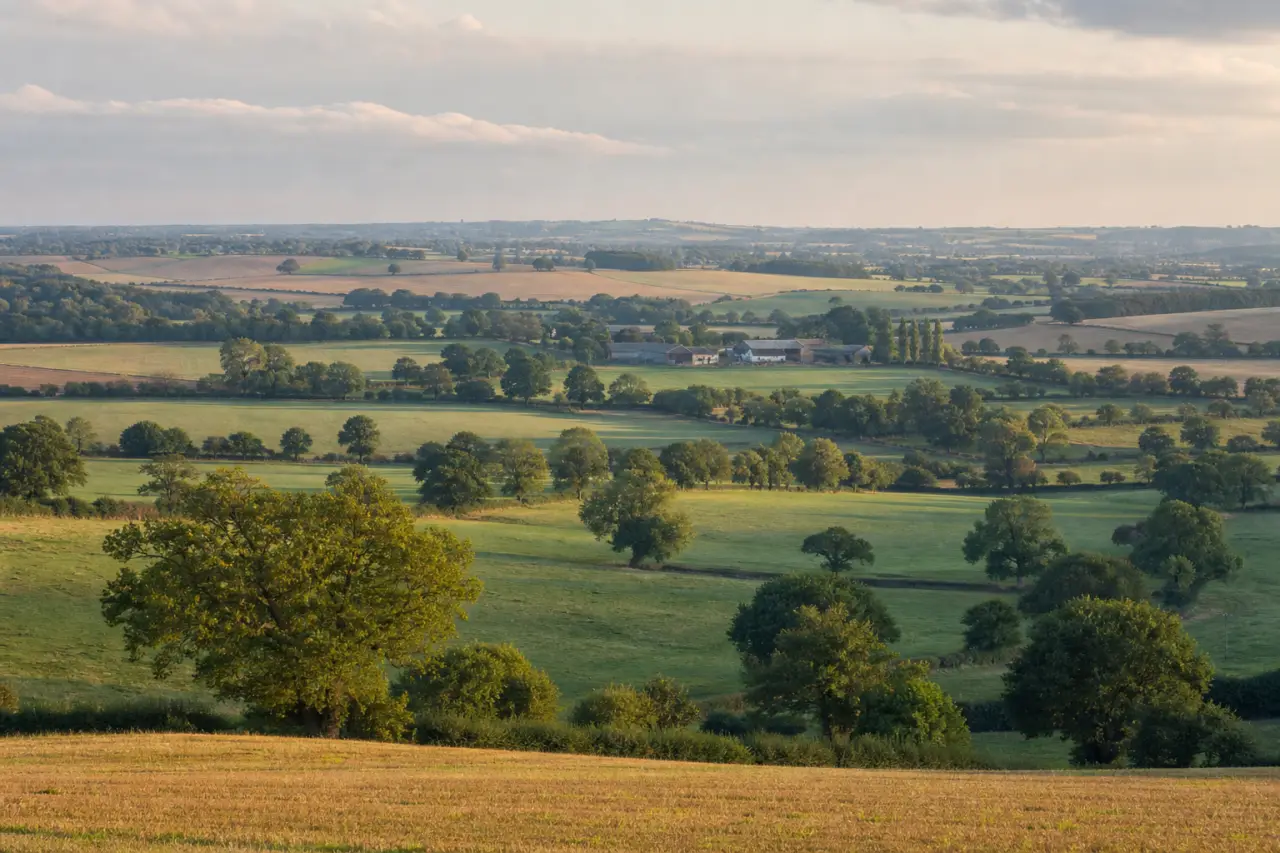
Agricultural Land dominates Essex's rural landscape, with the county being one of England's most productive arable farming regions. The gently rolling countryside, particularly in the central and northern areas around Braintree and Uttlesford, features Grade 2 and Grade 3 agricultural land ideal for wheat, barley, oilseed rape, and increasingly, vegetable production. Typical farm parcels range from 50 to 500+ acres, with average prices for quality arable land currently between £8,000 and £11,000 per acre, though premium parcels with good access near major towns can command significantly more.
Pasture and Grazing Land is widely available across Essex, particularly in coastal areas and the river valleys of the Chelmer, Colne, and Blackwater. These plots, often between 5 and 50 acres, appeal to equestrian users, smallholders, and lifestyle buyers. The county's equestrian sector is substantial, with numerous riding schools, livery yards, and breeding operations creating consistent demand for suitable paddock land. Prices typically range from £5,000 to £9,000 per acre depending on location, access, and facilities.
Woodland and Conservation Land can be found throughout Essex, particularly in ancient woodland sites protected under environmental designations. Hatfield Forest, managed by the National Trust, exemplifies the county's woodland heritage, and smaller commercial and amenity woodland plots regularly come to market. These range from 2-acre coppices to 50+ acre estates, valued between £6,000 and £15,000 per acre depending on timber quality, access, and ecological designations.
Development Land and Land with Planning Potential represents one of Essex's most active market segments. With housing demand consistently outstripping supply, particularly around London commuter towns, land with planning permission or allocation in local plans commands premium prices. Sites range from individual plot opportunities in villages to strategic development sites of 10+ acres. The government's focus on garden communities and the Thames Freeport designation create particular hotspots around Harlow, Basildon, and the Thames estuary.
Amenity Land and Smallholdings appeal to lifestyle purchasers seeking rural properties without full-scale farming commitments. These plots, typically 2-10 acres, often include or adjoin residential properties and provide space for personal use, stabling, or small-scale food production. Competition for well-located amenity land near good schools and stations drives prices to £10,000-£15,000 per acre in prime locations.
Notable Features and Regional Characteristics
Essex benefits from exceptional transport infrastructure making it highly accessible for land owners and investors. The M11 motorway provides direct links to London and Cambridge, whilst the M25, A12, and A13 serve coastal and southern areas. The county's rail network is extensive, with mainline services from Chelmsford to London Liverpool Street taking just 35 minutes, and Colchester, Southend, and Harlow enjoying frequent connections to the capital. London Stansted Airport, located in Uttlesford, enhances Essex's international connectivity and drives employment in the northwest of the county.
The Dedham Vale Area of Outstanding Natural Beauty straddles the Essex-Suffolk border around Colchester, offering protected countryside immortalised in John Constable's paintings. Land within or adjoining the AONB carries stringent planning restrictions but commands premium values for its scenic quality and recreational appeal. Similarly, Epping Forest to the west provides 2,400 hectares of ancient woodland with special conservation status, creating a green buffer between London and Essex's rural areas.
The county's coastline stretches approximately 350 miles including estuaries, offering unique land opportunities on coastal marshes, former industrial sites, and waterfront locations. The Thames Freeport designation covering the Thames estuary creates particular investment potential around Thurrock and south Essex, with tax incentives and simplified planning for qualifying developments. However, coastal land buyers must carefully assess flood risk, as significant portions of the Essex coast fall within Flood Zones 2 and 3, requiring specialised surveys and potentially expensive flood defences.
Major economic drivers include London Stansted Airport, the Port of Tilbury (Britain's newest Freeport), pharmaceutical and technology sectors around Harlow, and financial services in Chelmsford. These employment centres create demand for development land and influence residential land values within commuting distance.
Planning and Development Considerations
Essex County Council coordinates strategic planning, whilst 12 district and borough councils handle local planning applications (details at Essex Planning Services). The planning landscape is characterised by significant growth targets: Essex authorities must collectively deliver over 100,000 new homes by 2033, creating opportunities but also complexity around site allocation and infrastructure provision.
Garden Communities represent a distinctive feature of Essex's planning strategy. Three major projects—Tendring Colchester Borders, West of Braintree, and Gilston (near Harlow)—aim to deliver 43,000 new homes with supporting infrastructure. Land within or adjacent to these designated areas may offer long-term value appreciation, though the timescales for development can extend over 30+ years. Prospective buyers should review Local Plans carefully to understand allocation status.
Green Belt restrictions apply to significant portions of western Essex, particularly around Epping Forest and approaching the London boundary. Whilst these designations severely limit development potential, they protect land values in adjacent areas and can be attractive for agricultural or amenity purchasers seeking assurance against future development. Approximately 7% of Essex is designated Green Belt.
Change of Use applications for agricultural buildings under Permitted Development Rights have become increasingly common, allowing conversion to residential use subject to criteria including location, prior use, and highways access. This has created value in redundant farm buildings, though recent tightening of regulations means professional advice is essential. Our planning permission guide provides detailed insight into navigating these processes.
Environmental designations require careful consideration. Sites of Special Scientific Interest (SSSIs), ancient woodland, and protected species habitats limit development and land use options. The Essex Wildlife Trust manages numerous reserves, and land adjoining these may face restrictions. Conversely, environmental land management schemes including the Sustainable Farming Incentive and Countryside Stewardship offer payment opportunities for landowners delivering environmental outcomes, potentially enhancing agricultural land value.
Contamination issues are relevant particularly for former industrial sites, common in areas like Basildon, Harlow, and the Thames Gateway. Any land with previous industrial use requires Phase 1 and potentially Phase 2 contamination surveys before purchase, as remediation costs can be substantial. Thames-side locations may also face issues with historic contamination from riverside industries.
Investment Potential and Market Trends
Essex's land market demonstrates robust fundamentals driven by multiple factors. Housing demand remains acute, with average house prices 15-20% below comparable areas in Hertfordshire or Surrey, creating potential for residential development sites. The county's population is projected to grow by 180,000 by 2043, maintaining pressure on land supply.
Agricultural land values in Essex have remained relatively stable, with quality arable land averaging £9,500 per acre in recent transactions—above the English average but below premium southern counties. The shift toward environmental land management and carbon sequestration projects creates new value streams, with some landowners securing income from solar farms, rewilding initiatives, or carbon credits alongside or instead of traditional farming.
Lifestyle and amenity land demonstrates particularly strong demand, driven by London professionals seeking rural retreats within commuting distance. The COVID-19 pandemic accelerated this trend, with competition for well-located smallholdings and paddocks intensifying since 2020. This segment often achieves prices 20-30% above pure agricultural value where residential potential exists.
Strategic development land offers potentially the highest returns but requires patient capital and risk tolerance. Land purchased without planning permission but with allocation potential in emerging Local Plans might be acquired at £25,000-£50,000 per acre, with successful planning permission potentially increasing values to £500,000+ per acre depending on location and density allowances. However, the risks are substantial, and professional advice is essential.
For buyers considering purchasing land in Essex, obtaining a professional valuation specific to the site and its characteristics provides crucial market insight. Our complete guide to buying land in the UK offers comprehensive advice on the purchasing process, from initial searches through completion.
Key Considerations for Land Buyers
Prospective purchasers should prioritise several due diligence areas specific to Essex:
Flood Risk Assessment is essential for coastal and riverside sites. The Environment Agency's flood maps should be consulted early, and insurance costs factored into valuations. Some Essex locations previously considered safe now face increased flood risk due to climate change and coastal erosion.
Access and Rights of Way require careful verification. Many Essex agricultural holdings have access via private tracks crossing neighbouring land, making access rights critical to establish. Public rights of way crossing land can limit future use options, particularly for development scenarios.
Utilities Availability varies significantly between well-served urban fringe locations and remote rural parcels. Water supply, mains drainage, electricity, and increasingly broadband connectivity affect both agricultural viability and residential development potential. Connection costs for off-grid sites can be prohibitive.
Soil Quality and Drainage should be surveyed professionally for agricultural purchases. Essex's clay-heavy soils in some areas require careful management and may limit use intensity. Conversely, the lighter loams of northern Essex provide excellent arable capability.
Local Plan Status should be reviewed for any purchase, as emerging allocations or policy changes can significantly affect land values. Essex's 12 planning authorities are at various stages of Local Plan preparation, and understanding the strategic context is valuable for medium to long-term investment decisions.
Essex's land market offers genuine diversity and opportunity for informed buyers, combining the economic dynamism of the Southeast with more accessible price points than neighbouring counties. Whether seeking productive farmland, a rural lifestyle property, or a long-term development opportunity, Essex deserves serious consideration from land purchasers across all sectors.
Looking for Land in Essex?
Tell us what you're looking for and we'll help you find the right plot.