Land for Sale in East Riding of Yorkshire
Yorkshire and the Humber · ENGLAND
Key Facts
Avg. Price/Acre
£8,500
area
930 sq miles
major Towns
Beverley, Bridlington, Goole, Driffield, Howden
population
342,000
Local Planning Authority: View planning portal →
# Land for Sale in East Riding of Yorkshire
The East Riding of Yorkshire represents one of England's most diverse rural landscapes, stretching from the dramatic chalk cliffs of the Heritage Coast at Flamborough Head to the fertile plains of Holderness and the lowland wetlands bordering the Humber Estuary. Covering 930 square miles with a population of approximately 342,000, this predominantly rural county offers exceptional opportunities for land buyers seeking agricultural holdings, smallholdings, woodland, or development sites. The area's economy remains strongly rooted in agriculture, with some of the most productive arable land in the United Kingdom, whilst coastal towns like Bridlington and inland market towns such as Beverley, Driffield, and Howden provide thriving local communities and services.
For prospective land buyers, the East Riding presents considerable advantages: land prices typically remain more competitive than in neighbouring North Yorkshire, whilst transport links via the M62, A63, and Hull's rail connections provide excellent access to Leeds, York, and beyond. The region's agricultural heritage, combined with growing interest in lifestyle smallholdings and conservation projects, has created a varied land market catering to both commercial farmers and private buyers. The planning framework administered by East Riding of Yorkshire Council balances development needs with the protection of this working countryside, creating opportunities for well-considered proposals whilst safeguarding the area's rural character.
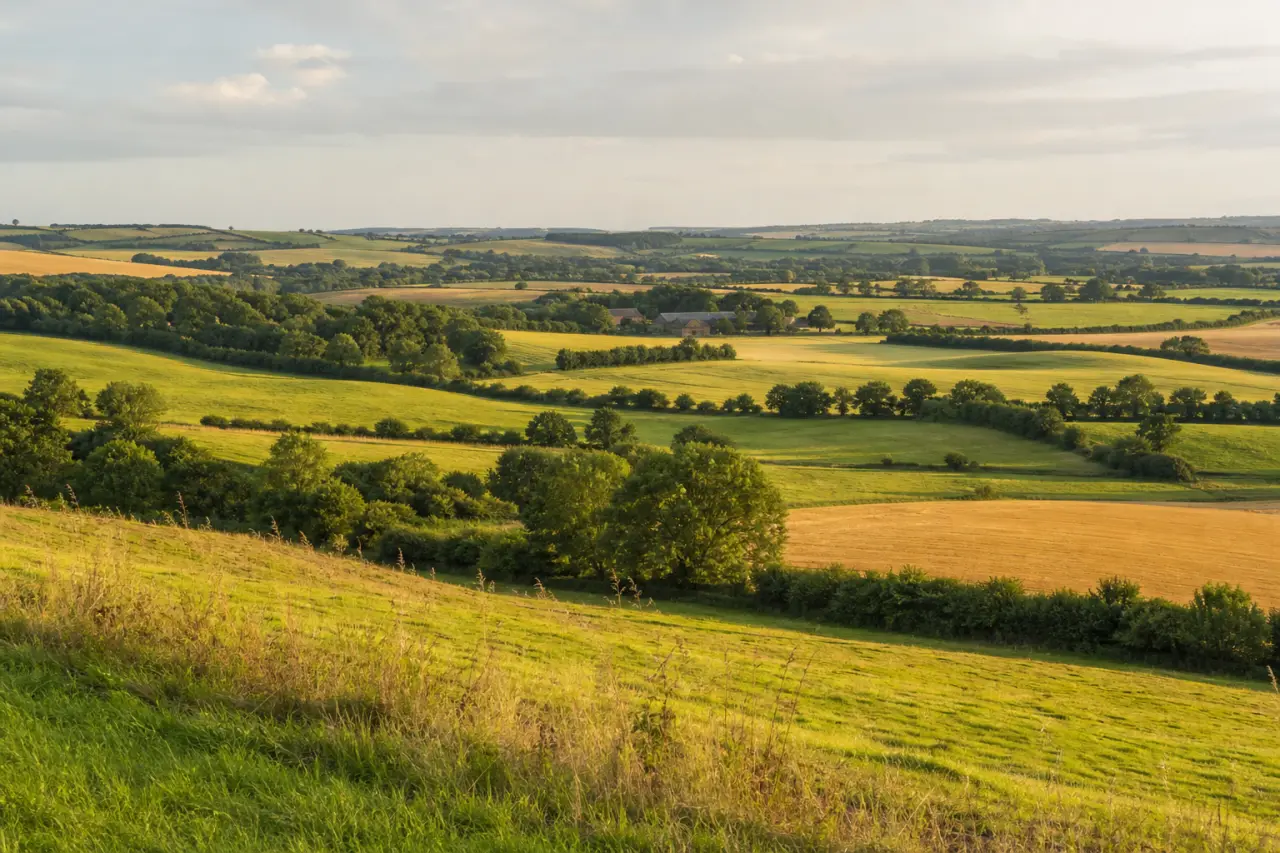
The landscape varies dramatically across the county, from the rolling Yorkshire Wolds – an Area of Outstanding Natural Beauty – through the flat, intensively farmed Holderness plain, to the low-lying areas around Goole and the Humber. This geographical diversity translates into distinct land markets, with premium arable acreage commanding top prices, whilst marginal land, woodland, and amenity plots offer more accessible entry points for first-time land buyers.
Types of Land Commonly Available
The East Riding's land market is dominated by arable farmland, with the region's deep, fertile soils supporting extensive cultivation of wheat, barley, oilseed rape, and potatoes. Commercial agricultural holdings ranging from 50 to 500+ acres regularly come to market, particularly in the productive Holderness area and across the Wolds. These parcels typically attract established farming operations, though smaller blocks under 20 acres increasingly appeal to new entrants and lifestyle buyers.
Pasture and grazing land features prominently, especially in the Yorkshire Wolds AONB where rolling grasslands support livestock farming. These holdings suit equestrian use, hobby farming, or conservation grazing schemes, with parcels from 5 to 50 acres commonly available. The area's strong equestrian community, centred around Beverley and surrounding villages, drives steady demand for paddocks and small pasture plots with stabling potential.
Woodland and conservation land opportunities exist throughout the county, from ancient woodland remnants on the Wolds to newer plantations and shelter belts. The East Riding's commitment to biodiversity enhancement and carbon sequestration has increased interest in woodland creation schemes, particularly on marginal arable land. Small woodland plots (2-10 acres) appeal to recreational buyers, whilst larger blocks attract forestry investors and conservation organisations.
Development land and plots with potential appear regularly near the principal towns of Beverley, Bridlington, Goole, and Driffield, where the local plan identifies growth areas. Brown belt sites, infill plots, and farmyard conversions offer opportunities for residential or commercial development, though navigating the planning process requires careful research. Smaller building plots occasionally emerge in village locations, particularly where existing permission or agricultural occupancy conditions create opportunities.
Amenity and recreational land, including former quarries, lakes, and redundant agricultural buildings, caters to buyers seeking storage, light industrial use, or leisure pursuits. The region's popularity for shooting and fishing means sporting rights and recreational land maintain steady values.
Notable Features and Infrastructure
The Yorkshire Wolds Area of Outstanding Natural Beauty dominates the western portion of the East Riding, encompassing picturesque chalk downland that significantly influences land values and planning considerations. Land within the AONB faces stricter development controls but offers premium countryside with considerable conservation value. The Wolds Way National Trail traverses this protected landscape, highlighting its recreational significance.
Transport infrastructure provides excellent connectivity: the M62 crosses the southern boundary near Goole, linking to Manchester and the North West, whilst the A63 connects Hull to Leeds and the national motorway network. The A1079 provides the principal route from York to Beverley and the coast. Rail services from Hull reach London King's Cross in under three hours, whilst Goole's position on the mainline to Doncaster serves the town's continued role as an inland port. This accessibility enhances land values in well-connected locations whilst more remote parcels command lower prices.
The Humber Bridge remains a defining feature, providing crucial links to North Lincolnshire and influencing development patterns along the southern coastal strip. Major employers include Siemens in Hull, the port industries, and an extensive agribusiness sector supporting the region's farming community.
Coastal assets along the Heritage Coast at Flamborough and Bempton Cliffs, together with the seaside resort of Bridlington, contribute to tourism and recreational land uses. However, coastal erosion presents serious challenges along the Holderness coast – the fastest-eroding coastline in Europe – with implications for land values and insurance in affected areas.
Planning and Development Considerations
East Riding of Yorkshire Council administers planning through its local development framework, which directs most development toward the principal towns and identified growth villages whilst protecting the open countryside. The authority's pragmatic approach balances economic development with environmental protection, though applicants should expect rigorous scrutiny of countryside proposals.
Agricultural development generally receives support under permitted development rights, allowing essential farm buildings, storage facilities, and agricultural dwellings subject to specific criteria. However, diversification projects – such as holiday lets, wedding venues, or commercial conversions – require full planning permission and must demonstrate agricultural necessity or justify countryside location.
Residential development faces strict controls outside settlement boundaries, with the local plan prioritising brownfield sites and allocated housing land. Agricultural occupancy conditions affect numerous rural properties, potentially restricting use or requiring evidence of agricultural need for removal. Professional advice proves essential when assessing development potential, as pre-application discussions with planning officers can save considerable time and expense.
Flood risk represents a significant consideration, particularly in low-lying areas around Goole, along the Humber Estuary, and in parts of Holderness. Environment Agency flood maps should be consulted early in any land purchase process, as flood zones affect development potential, insurance costs, and agricultural viability. Surface water flooding also affects parts of the Wolds following intense rainfall.
Environmental designations extend beyond the AONB to include numerous Sites of Special Scientific Interest (SSSIs), particularly along the coast and in wetland areas. Land with ecological value faces additional constraints but may qualify for environmental stewardship payments. The East Riding's Biodiversity Action Plan influences planning decisions, increasingly requiring biodiversity net gain on development sites.
Heritage considerations apply throughout this historically rich area, with conservation areas in Beverley, Howden, and numerous villages, plus countless listed buildings and scheduled monuments. Archaeological potential, particularly in the Wolds, may trigger investigation requirements during development.
Investment Potential and Market Trends
The East Riding land market demonstrates resilience underpinned by strong agricultural fundamentals and steady lifestyle demand. Agricultural land values in the region average £8,000-£10,000 per acre for prime arable ground, with Grade 1 and 2 land in Holderness commanding premium prices. Wolds pasture typically achieves £6,000-£8,000 per acre, whilst marginal or amenity land may sell from £3,000-£5,000 per acre depending on location and potential.
Smaller parcels suitable for equestrian use or smallholdings often achieve significant premiums above agricultural value, particularly within 10 miles of Beverley or in attractive Wolds villages. Development land with planning permission naturally commands substantially higher prices, with residential building plots in desirable locations reaching £100,000+ depending on size and services.
Market drivers include continued consolidation of farming operations, creating opportunities as holdings are rationalised; growing interest in rewilding and carbon offsetting projects; and steady demand from lifestyle buyers seeking rural retreats within commuting distance of Hull, York, and Leeds. The government's agricultural transition away from direct subsidy toward environmental payments will likely influence future land values, potentially creating opportunities in marginal areas suited to nature recovery.
Brexit and agricultural policy changes have introduced uncertainty, though the East Riding's productive farmland should remain competitive. Environmental Land Management schemes may enhance returns from less productive ground, whilst planning reform discussions could affect development prospects.
For those new to land ownership, the East Riding offers accessible entry points whilst rewarding investors benefit from the region's agricultural stability. Conducting thorough due diligence, understanding local planning policy, and assessing specific opportunities against personal objectives remain essential for successful land investment in this diverse and historic county.
Getting Started
Whether you're seeking a productive farming block, a lifestyle smallholding in the Yorkshire Wolds, or development land near one of the principal towns, the East Riding of Yorkshire offers diverse opportunities. Understanding local land values, planning considerations, and the specific characteristics of different areas within this large county will help you identify the right purchase. Consider obtaining a professional valuation for any land you're seriously considering, and don't hesitate to engage local expertise – from land agents to planning consultants – who understand this unique market's particular dynamics and opportunities.
Land Valuation
Get a free estimate for land in East Riding of Yorkshire
Buying Guides
Expert advice on purchasing land
Looking for Land in East Riding of Yorkshire?
Tell us what you're looking for and we'll help you find the right plot.