Land for Sale in Dorset

South West · ENGLAND

Map of Dorset

Key Facts

Avg. Price/Acre

£10,000

area

1,024 sq miles

major Towns

Dorchester, Bournemouth, Poole, Weymouth, Christchurch

population

780,000

Local Planning Authority: View planning portal →

# Land for Sale in Dorset

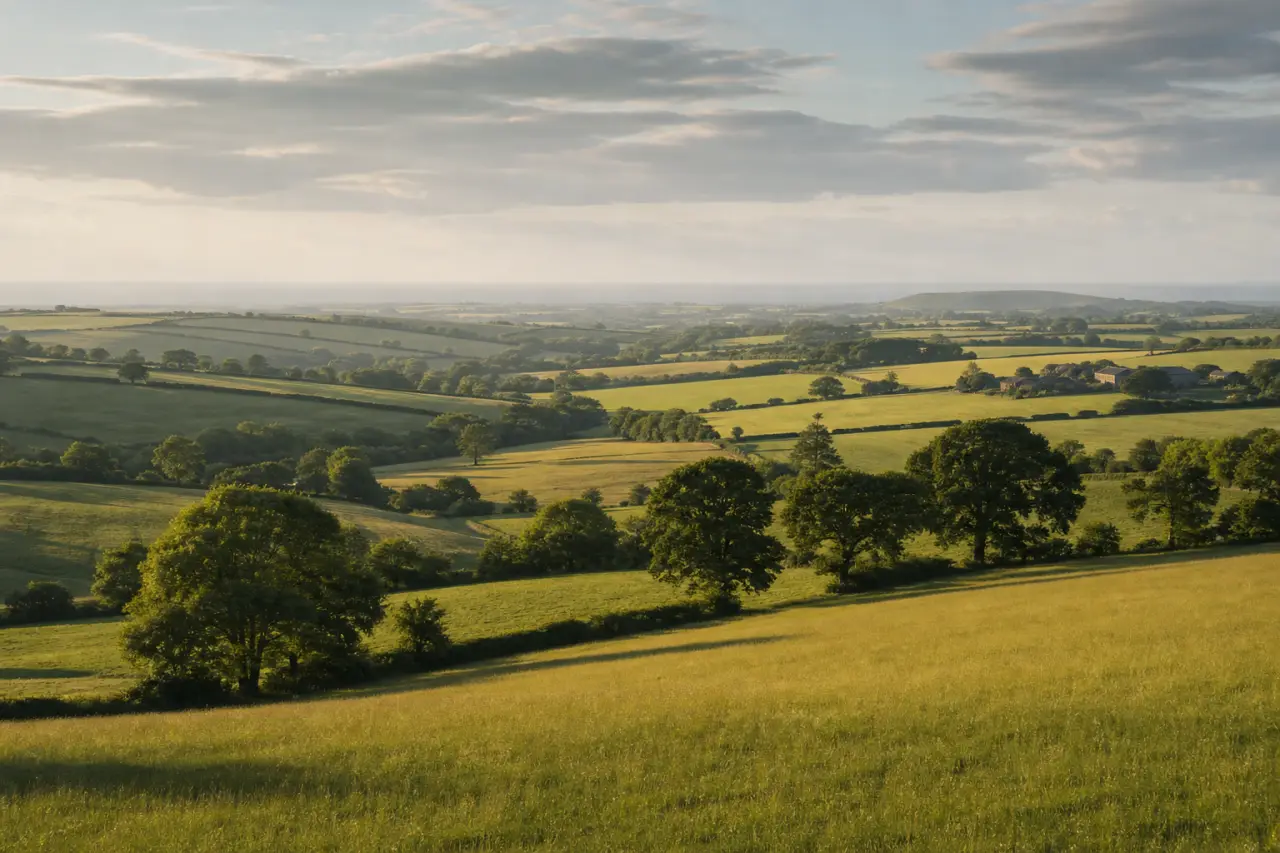
Dorset presents an exceptionally diverse land market that attracts buyers seeking everything from agricultural holdings to coastal development opportunities. Stretching from the dramatic Jurassic Coast—England's first natural World Heritage Site—to the heathlands of the Poole Basin and the chalk downlands of Cranborne Chase, this South West county offers varied terrain and microclimates that influence land values and usage considerably. The county's 1,024 square miles encompass both the bustling coastal conurbation of Bournemouth-Poole-Christchurch (with a combined population approaching 500,000) and the deeply rural interior where traditional farming communities still dominate.

For prospective land buyers, Dorset represents a market characterised by resilient demand and limited supply. The county's outstanding natural beauty, coupled with its proximity to London (just two hours by train from Bournemouth), has created sustained interest in both residential development land and lifestyle purchases. Agricultural land remains the dominant land type, with dairy farming particularly prevalent in the western valleys, arable farming across the central chalk downlands, and livestock grazing common throughout. The county's 780,000 population is projected to grow modestly, maintaining steady demand for strategically located development sites, whilst conservation designations across much of the county ensure that undeveloped land retains premium values.

The Dorset land market operates across distinct geographical zones, each with characteristic land types and planning considerations. The coastal strip from Christchurch to Lyme Regis commands the highest values, though development opportunities are severely constrained by the Dorset Area of Outstanding Natural Beauty (AONB), Heritage Coast designations, and flood risk in low-lying areas. The central band—including market towns like Dorchester, Sherborne, and Blandford Forum—offers the most accessible agricultural land and the greatest likelihood of securing planning consent for appropriate development. The northern fringes, bordering Wiltshire and Somerset, feature the expansive Cranborne Chase AONB, where large estates and traditional farming operations predominate.

Types of Land Available in Dorset

Agricultural land dominates Dorset's land market, with Grade 3 (moderate quality) land being most common, though pockets of Grade 2 (very good) exist in the sheltered valleys of West Dorset. Dairy farms remain significant, particularly around Bridport, Beaminster, and the Frome valley, though many holdings have diversified into tourism, renewable energy, or mixed farming. Arable land concentrated on the chalk downlands typically commands £8,000-£12,000 per acre, whilst grassland with dairy infrastructure may reach £10,000-£15,000 per acre depending on location and quality.

Smallholdings and lifestyle plots have become increasingly sought after, particularly within 10 miles of Dorchester, Sherborne, and the Bournemouth conurbation. These typically range from 2-20 acres and attract buyers seeking rural living with manageable land. Equestrian properties and land with stabling potential remain consistently popular, with the county's network of bridleways and rural character supporting a strong horse-keeping community. Such land with existing facilities commands premiums of 20-40% over bare agricultural land.

Woodland is relatively scarce in Dorset compared to neighbouring counties, but parcels between 5-50 acres occasionally come to market, particularly in the Blackmore Vale and around the Cranborne Chase. Prices typically range from £4,000-£8,000 per acre depending on access, timber quality, and any conservation obligations. The county's ancient woodland is often subject to Tree Preservation Orders, which restrict management but enhance ecological value.

Development land opportunities arise primarily through the planning permission process for small-scale residential infill in villages or on the edges of market towns. Dorset Council's Local Plan guides growth to the main settlements, with Dorchester, Weymouth, and the conurbation receiving the majority of allocations. Land with planning permission or allocated in the Local Plan commands significant premiums—potentially £500,000-£1.5 million per acre depending on location and density permissions.

Notable Features and Transport Infrastructure

Dorset's designation as largely Area of Outstanding Natural Beauty (approximately 50% of the county) fundamentally shapes its land market. The Dorset AONB, Cranborne Chase AONB, and the Dorset and East Devon (Jurassic) Coast World Heritage Site create stringent planning constraints that protect landscape character but limit development potential. For land buyers, this means that whilst open countryside retains its value and beauty, obtaining planning consent outside designated settlement boundaries is exceptionally challenging.

The county benefits from the A35 corridor connecting Dorchester to Bournemouth and Southampton, and the A31 providing access from the conurbation towards the New Forest and M27. However, much of rural Dorset relies on narrow B-roads and lanes, which can affect the accessibility and therefore value of more remote holdings. Rail connectivity is excellent along the coastal route (South Western Railway's Waterloo-Weymouth line), with Bournemouth offering frequent London services. The West of England main line serves Sherborne and Gillingham in the north, connecting to Exeter and Bristol.

Major economic drivers include the defence sector (Bovington Camp and the Royal Armoured Corps), tourism and hospitality, advanced engineering in the Bournemouth-Poole conurbation, and agriculture. The presence of Bournemouth University and Arts University Bournemouth creates a educated workforce, though the county generally experiences an ageing demographic profile. For land buyers considering commercial ventures, understanding these employment patterns is crucial.

Planning and Development Considerations

Dorset Council (formed in 2019 from the merger of most of the county's district councils, though Bournemouth, Christchurch and Poole operate as a separate unitary authority) administers planning across the majority of the county. The Dorset Council planning portal provides access to the Local Plan, which was adopted in 2020 and guides development through to 2038. The Plan identifies specific settlement boundaries where development may be acceptable, whilst designating the wider countryside for strict protection.

Key planning considerations for land buyers include:

Protected Landscapes: With AONBs covering half the county, any development proposals face heightened scrutiny regarding landscape impact, design quality, and the principle of development. Agricultural buildings may be permitted under Prior Approval processes, but residential conversion rights are often removed through Article 4 Directions in sensitive areas.

Flood Risk: Coastal areas and river valleys (particularly the Frome, Stour, and Piddle) have significant flood zones. The Environment Agency's flood maps are essential viewing before purchase. Land in Flood Zones 2 or 3 will face restrictions on built development and may require expensive mitigation measures.

Heritage and Archaeology: Dorset's rich history means archaeological constraints are common. Roman sites around Dorchester, Iron Age hill forts, and medieval field systems all trigger archaeological conditions on planning permissions. The county has over 12,000 listed buildings and numerous conservation areas affecting development potential.

Biodiversity and Heathland: Dorset's internationally important lowland heathland (habitat for rare species including sand lizards and smooth snakes) is protected by Special Protection Area and Special Area of Conservation designations. Development within 400m of heathland faces significant constraints, and land between 400m-5km may require financial contributions to Suitable Alternative Natural Greenspace (SANG).

Those considering buying land in Dorset should engage with planning professionals early in the process. Pre-application advice from Dorset Council costs £150-£1,500 depending on proposal scale but can provide crucial insight into development prospects before committing to purchase.

Agricultural Land Classification and Farming Potential

The Agricultural Land Classification (ALC) across Dorset reflects its varied geology and topography. The best agricultural land (Grade 2) occurs in the sheltered valleys of West Dorset and around the Blackmore Vale, where deeper soils and favourable microclimates support intensive dairy and mixed farming. The central chalk downlands are predominantly Grade 3, suitable for arable cropping of wheat, barley, and oilseed rape, often in rotation with temporary grass leys for sheep.

The sandy heathlands of southeast Dorset, whilst scenically attractive, are agriculturally poor (Grade 4-5), though they support niche uses including free-range poultry, conservation grazing, and increasingly, rewilding projects. Buyers interested in environmental land management schemes will find opportunities here, as these lower-grade lands are often eligible for enhanced Environmental Land Management (ELM) payments.

Land prices for agricultural holdings typically range from £7,000-£15,000 per acre, with variation depending on:

  • Soil quality and ALC grade
  • Availability of water and infrastructure
  • Existing buildings and their condition/potential
  • Access quality and road frontage
  • Proximity to markets and main settlements
  • Any development hope value or non-agricultural potential

Dorset's agricultural sector faces challenges including labour availability (particularly following Brexit), succession planning in family farms, and the transition from Basic Payment Scheme to Environmental Land Management schemes. However, the county's strong tourism sector creates opportunities for farm diversification, with glamping, farm shops, and agricultural contracting all common supplementary income streams.

Investment Potential and Market Trends

The Dorset land market has demonstrated resilience through economic cycles, supported by the county's desirability as a place to live and the structural undersupply of land in southern England. Agricultural land values have remained stable since 2015, with modest growth of 1-3% annually, though individual transactions vary considerably based on specific site characteristics.

Several trends are shaping current market conditions:

Urban-to-Rural Migration: The pandemic accelerated existing trends of buyers seeking rural properties with land. Dorset has benefited significantly, with competition particularly intense for smallholdings between 5-20 acres within 30 minutes of coastal towns or market settlements. This has pushed prices for such holdings 10-20% above pure agricultural value.

Environmental Markets: The emergence of biodiversity net gain requirements (mandatory from 2026) and carbon markets is creating new demand for land suitable for habitat creation and woodland planting. Lower-grade agricultural land in Dorset may increasingly be valued for environmental rather than production potential.

Renewable Energy: Solar farm development has been controversial in Dorset, with landscape sensitivity limiting suitable sites. However, some agricultural land with good grid connections and screening has achieved option agreements worth £800-£1,200 per acre annually for solar development.

Strategic Land: Land on the edges of Dorset's main settlements, particularly around Dorchester (the county town with significant growth allocations) and the northern market towns, is held speculatively by those hoping for future allocation in Local Plan reviews. Such land trades at premiums of 30-100% above agricultural value, though buyers should note that most will never receive planning consent.

For those seeking a professional valuation of land in Dorset, local expertise is crucial given the county's complex interplay of landscape designations, planning constraints, and varied agricultural potential. Estate agents reporting to the market typically note that quality holdings attract multiple bidders, often completing above asking prices, whilst land with limitations (poor access, complex legal histories, or contamination issues) may linger unsold.

Environmental and Practical Considerations

Beyond planning and agricultural factors, practical environmental issues affect Dorset land purchases:

Coastal Erosion: The Jurassic Coast's dramatic geology means cliff-top land is subject to ongoing erosion. Buyers should investigate erosion rates and the lack of coast protection in many areas. Some coastal land is effectively unmortgageable due to projected loss within typical mortgage terms.

Water Resources: Much of Dorset sits above chalk aquifers, meaning groundwater protection is a priority. Intensive agricultural practices face scrutiny, and development requiring new septic tanks or treatment plants in rural areas must demonstrate no aquifer contamination risk.

Contamination: Former military use (the county has extensive MOD training areas) and historical industrial activities can leave contamination legacies. Professional environmental surveys are advisable before purchase, particularly for land near former gasworks, railways, or military installations.

Access Rights: Dorset has an extensive public rights of way network (over 3,000 miles of paths). These can affect land use and development potential. Buyers should verify all public access routes with the Dorset Council definitive map before purchase.

The Dorset land market rewards careful research and professional advice. Whether seeking agricultural investment, a rural lifestyle purchase, or development opportunity, understanding the interplay of landscape designations, planning policy, and local market dynamics is essential to making a sound purchase decision in this beautiful but complex county.

Looking for Land in Dorset?

Tell us what you're looking for and we'll help you find the right plot.