Land for Sale in Conwy
North Wales · WALES
Key Facts
Avg. Price/Acre
£10,000
area
445 sq miles
major Towns
Llandudno, Colwyn Bay, Conwy, Abergele, Betws-y-Coed
population
118,000
Local Planning Authority: View planning portal →
# Land for Sale in Conwy: A Gateway to Snowdonia and the North Wales Coast
Conwy presents a compelling proposition for land buyers, combining stunning natural landscapes with growing economic opportunities. Straddling the dramatic North Wales coastline and the eastern gateway to Snowdonia National Park, this county offers exceptional diversity in land types and investment potential. From coastal development opportunities in established resort towns like Llandudno and Colwyn Bay to agricultural holdings in the rural heartland and woodland parcels in the foothills of Snowdonia, Conwy's 445 square miles encompass some of Wales's most desirable locations.
The land market in Conwy reflects both its tourism appeal and agricultural heritage. Coastal plots command premium prices, particularly those with sea views or development potential in popular areas like Llandudno and Conwy town. Agricultural land remains relatively affordable compared to English border counties, with average prices for productive farmland typically ranging from £8,000 to £12,000 per acre, though this varies significantly based on location, access, and quality. The county's dual economy—balancing traditional agriculture with a thriving tourism sector—creates diverse opportunities for land investment, whether you're seeking a commercial venture, lifestyle smallholding, or long-term strategic landholding.
Types of Land Available in Conwy
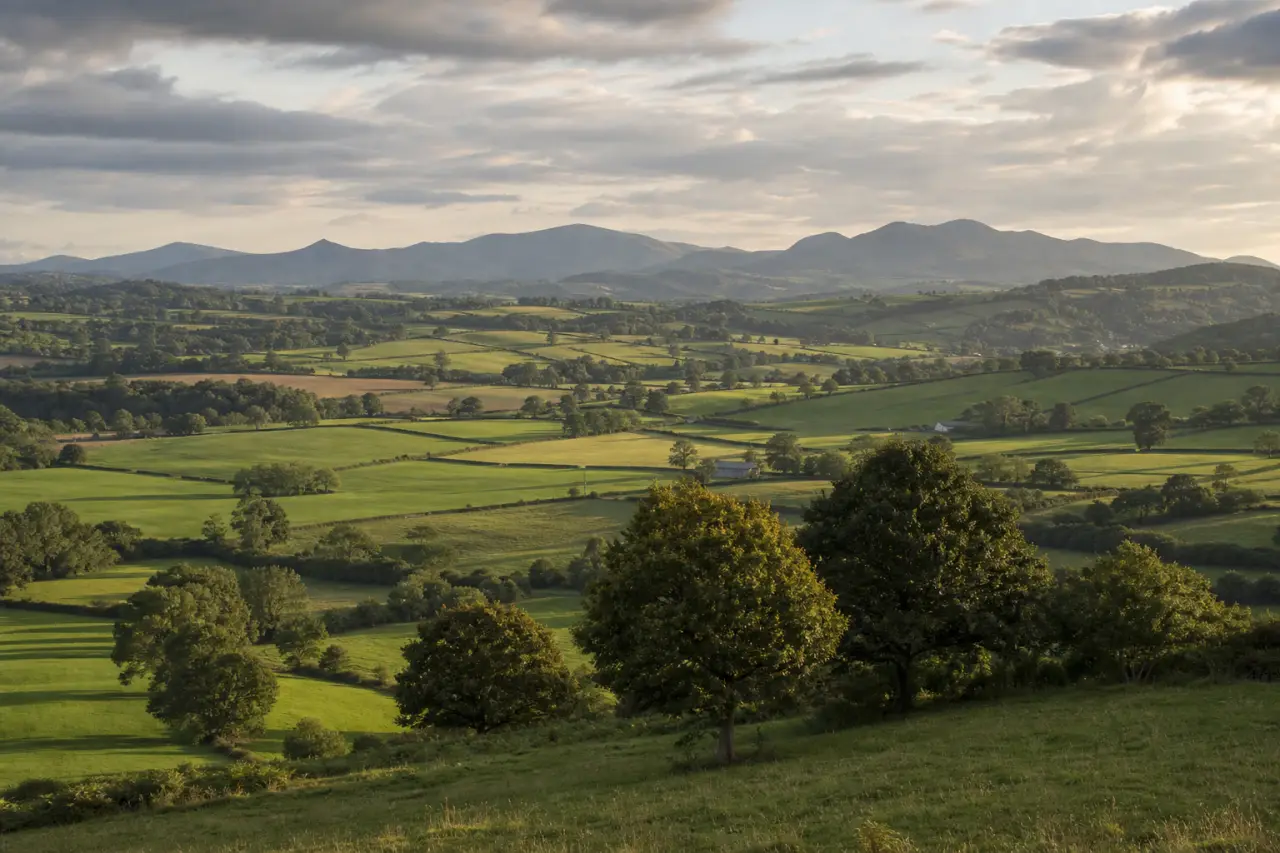
Conwy's varied topography gives rise to a diverse land market. Agricultural land dominates the rural interior, with sheep farming particularly prevalent on the upland areas and mixed farms in the valleys. The Conwy Valley itself offers some of the county's most productive agricultural land, with fields suitable for both livestock and fodder crops. Parcels typically range from 10 to 100 acres, though larger estates occasionally come to market.
Woodland and forestry plots are increasingly popular, particularly in the southern reaches near Betws-y-Coed and the Snowdonia fringe. These range from small amenity woodlands of 5-10 acres to commercial forestry blocks exceeding 50 acres. The proximity to the national park adds recreational and ecological value to such holdings.
Development land opportunities exist primarily in the established coastal towns and along the A55 corridor. Conwy County Borough Council's Local Development Plan identifies strategic growth areas, particularly around Llandudno Junction and Colwyn Bay, where brownfield regeneration and carefully managed expansion continue. Smallholding and equestrian properties also feature regularly, appealing to lifestyle buyers seeking a rural base within reach of the coast.
The county also sees occasional opportunities for tourism-related land, including camping sites, glamping ventures, and holiday accommodation development—sectors that benefit from Conwy's 10 million annual visitors.
Notable Features and Accessibility
Conwy's defining feature is its position between Snowdonia National Park, which covers the entire southern portion of the county, and the Irish Sea coastline. This creates exceptional landscape quality that influences land values and planning considerations. The county includes several conservation designations: parts of the Clwydian Range and Dee Valley Area of Outstanding Natural Beauty (AONB) extend into eastern Conwy, whilst the Great Orme and much of the coastline enjoy protected status.
Transport links are excellent for North Wales. The A55 dual carriageway runs the length of the county, providing swift access to Chester (35 miles) and connection to the M53/M56 motorway network. This makes Conwy viable for commuters and businesses serving both North Wales and Northwest England. The North Wales Coast railway line serves Llandudno Junction, Colwyn Bay, Abergele, and Conwy, with direct services to Crewe, Manchester, and beyond. Journey times to Manchester Airport are typically 90 minutes by car or rail.
Major towns each offer distinct characteristics: Llandudno remains Wales's premier seaside resort, Colwyn Bay has benefited from significant waterfront regeneration, Conwy town is a UNESCO World Heritage Site dominated by its medieval castle, whilst Betws-y-Coed serves as the gateway to Snowdonia's outdoor recreation opportunities. This diversity supports varied land uses and investment strategies.
Planning and Development Considerations
Conwy County Borough Council operates as the local planning authority, and understanding the Local Development Plan (LDP) 2007-2022 is essential for anyone considering land purchase with development aspirations. The current plan is being replaced, with the deposit version of the new LDP expected soon—this will set strategic direction for development through to 2033.
Given Conwy's landscape sensitivity, planning permission applications face rigorous scrutiny. Much of the county lies within or adjacent to designated landscapes where development is tightly controlled. The Snowdonia National Park Authority becomes the planning authority for land within park boundaries, applying particularly stringent policies to protect landscape character.
Agricultural ties and occupancy conditions are common on rural planning permissions, restricting residential use to those employed in agriculture or forestry. These conditions can significantly affect land values and should be thoroughly investigated before purchase. Conversely, land with existing planning consent or identified in the LDP for development commands substantial premiums.
The Welsh Government's planning policies place strong emphasis on sustainability, renewable energy, and the Welsh language. Proposals that demonstrate environmental enhancement or support the local language and culture may receive more favourable consideration. The Council's Pre-Application Advice Service is highly recommended for anyone considering development—early engagement can save considerable time and expense.
Conservation areas are numerous throughout the county, including the entire historic core of Conwy town, parts of Llandudno, and various villages. Listed buildings and scheduled ancient monuments further complicate some development scenarios. For those interested in navigating these complexities, our comprehensive guide to buying land in the UK provides essential background.
Environmental and Site-Specific Considerations
Conwy's topography and climate create specific environmental factors that influence land suitability and value. Flood risk is a significant consideration, particularly along the River Conwy and its tributaries, and in low-lying coastal areas. Natural Resources Wales (NRW) flood maps should be consulted for any land purchase, as properties and land in Flood Zones 2 and 3 face development restrictions and increased insurance costs.
The county's soil quality varies considerably. The Conwy Valley floor and coastal plain offer Class 3 agricultural land, whilst upland areas are predominantly rough grazing on thin, acidic soils. This affects both agricultural productivity and foundation design for any construction projects. Bedrock geology includes limestone, slate, and sandstone, which can impact drainage, excavation costs, and ground conditions.
Access can be challenging for land in more remote locations. Many rural plots rely on unclassified roads or private tracks, and establishing legal right of access is critical. Welsh winter weather can render unsurfaced tracks impassable, affecting the viability of year-round agricultural or tourism operations.
The county's popularity means utility connections are generally good in towns and larger villages, but rural plots may lack mains services. Off-grid solutions (private water supplies, septic tanks, LPG, or renewable energy) are common and should be factored into development costs and ongoing maintenance.
Investment Potential and Market Trends
Conwy's land market has shown resilience and steady appreciation, driven by several factors. The tourism economy continues to expand, with investment in infrastructure like the Conwy Marina and Colwyn Bay waterfront transformation creating knock-on opportunities for hospitality and leisure-related land uses. Planning consent for holiday accommodation commands particular value.
Lifestyle migration has accelerated post-pandemic, with buyers from Northwest England and the Midlands seeking quality of life in North Wales whilst maintaining connectivity to urban centres. This has driven demand for smallholdings, equestrian properties, and residential plots, pushing prices upward in desirable locations.
The forestry and woodland market remains buoyant, supported by carbon offset schemes and growing interest in natural capital investment. Woodland near the national park or with public access potential attracts premium prices, typically £4,000-£8,000 per acre depending on species, maturity, and accessibility.
Agricultural land values have been more stable, with the transition from EU to UK agricultural support creating uncertainty. However, Welsh Government schemes emphasising environmental stewardship and biodiversity may enhance the value of land suitable for such programmes. Forward-thinking investors are examining opportunities in rewilding, carbon sequestration, and sustainable land management.
Renewable energy presents opportunities, with several small-scale hydroelectric schemes operational in upland areas and solar installations on agricultural land. However, wind energy developments face considerable planning challenges in this sensitive landscape.
For those considering land purchase in Conwy, obtaining a professional valuation is advisable. Land values vary dramatically based on designation, access, services, views, and development potential—local expertise is invaluable in determining fair market value.
The Conwy Advantage
Ultimately, Conwy offers land buyers a rare combination: dramatic natural beauty, strong transport links, a diverse economy, and genuine investment potential. Whether your interest lies in agricultural production, conservation, tourism development, or simply securing a piece of this exceptional landscape, the county rewards careful research and long-term thinking. The planning environment requires patience and expertise, but successful projects benefit from being situated in one of Wales's most visited and economically vibrant regions.
The key to success in Conwy's land market is understanding the interplay between landscape protection, economic development, and community needs. Properties that align with local priorities—supporting tourism, enhancing biodiversity, or providing rural employment—are most likely to secure necessary consents and achieve strong capital appreciation. With professional advice and thorough due diligence, land investment in Conwy can deliver both financial returns and the satisfaction of stewardship in one of Britain's most beautiful counties.
Looking for Land in Conwy?
Tell us what you're looking for and we'll help you find the right plot.