Easements and Rights of Way: How to Check What Crosses a Plot
When you're considering purchasing land in the UK, one of the most critical legal aspects you need to investigate is what easements and rights of way affect the property. These invisible legal rights can significantly impact your use and enjoyment of the land—and potentially its value. A neighbour might have the right to walk across your plot, utility companies may have access rights to underground pipes, or you might discover you're legally obligated to maintain a shared driveway.
Understanding how to conduct a thorough easement check isn't just recommended—it's essential for any prudent land buyer in 2026.
What Are Easements and Rights of Way?
Before diving into how to check for them, it's important to understand what these terms actually mean in UK property law.
Understanding Easements
An easement is a legal right that allows someone who doesn't own a piece of land to use it for a specific purpose. The land that benefits from the easement is called the "dominant tenement," whilst the land burdened by it is the "servient tenement."
Common types of easements include:
- Rights of way: Permission to cross land to access another property
- Rights of light: Protection from having light blocked by neighbouring development
- Rights of support: The right to have your property supported by an adjoining building or land
- Drainage rights: The right to run water, sewage, or drainage pipes under someone else's land
- Utility easements: Rights for utility companies to lay and maintain pipes, cables, or other infrastructure
Easements are governed primarily by the Law of Property Act 1925 and can be created in several ways: expressly (by deed), impliedly (by necessity or common intention), or by prescription (through long use).
Rights of Way Explained
A right of way is the most common type of easement land buyers encounter. It grants someone the legal right to pass over your land, typically to access their own property. These can be:
- Private rights of way: Benefiting specific neighbouring properties
- Public rights of way: Allowing the general public to cross the land (footpaths, bridleways, byways)
- Vehicular rights: Permitting vehicle access
- Pedestrian only: Restricting use to foot traffic
The crucial distinction is that whilst you own the land, others have a legal right to use it in specific ways—and you cannot prevent them from doing so.
Why Conducting an Easement Check Matters
Failing to identify easements and rights of way before purchase can lead to:
- Development restrictions: Planning permission might be refused if your proposed building blocks an established right of way
- Maintenance obligations: You might be responsible for maintaining access routes others use
- Reduced privacy: Discovering people have the right to walk through your property
- Lower valuations: Easements can reduce land value, sometimes significantly
- Legal disputes: Conflicts with neighbours over access rights can be costly and stressful
- Insurance complications: Some easements affect insurability or increase premiums
A comprehensive land access rights check should be a non-negotiable part of your due diligence when buying land in the UK.
How to Check for Easements and Rights of Way
Conducting a thorough easement check involves multiple sources of information. Here's your step-by-step guide:
Step 1: Order Official Land Registry Documents
The Land Registry is your primary source for identifying registered easements and rights of way.
What to request:
Title Register: This three-part document (Property Register, Proprietorship Register, and Charges Register) will list any easements that burden the land (rights others have over it) and any easements that benefit the land (rights you have over neighbouring land)
Title Plan: The official map showing the land's boundaries and often marking the location of easements with coloured edging or notation
You can obtain these documents through the Land Registry website for just £7 per document. Look particularly at:
- Schedule of Notices of Leases: May reveal access rights granted to tenants
- Charges Register: Often contains details of easements, covenants, and rights of way
- Filed Plans: Sometimes show the precise route of rights of way
What the documents reveal:
Easements in the Charges Register might read something like: "The land has the benefit of a right of way on foot only over the land shown edged brown on the title plan." Or conversely: "The land is subject to a right of way granted to the owners of the adjoining property for all purposes with or without vehicles."
Pay careful attention to the wording—"with or without vehicles" has very different implications from "on foot only."
Step 2: Check for Public Rights of Way
Public rights of way aren't always shown on Land Registry documents, so you need to check additional sources:
Definitive Map and Statement
Every local authority in England and Wales maintains a Definitive Map showing public footpaths, bridleways, restricted byways, and byways open to all traffic. In Scotland, contact the local council's access officer.
To check:
- Contact the Rights of Way team at the relevant local authority
- Request a search of the Definitive Map for your specific plot
- Ask for copies of the Statement (written description of the paths)
- Inquire about any pending applications to register new paths
This search typically costs £10-50 depending on the authority.
Important: A public right of way that's used regularly for 20 years can become legally established even if not officially recorded—so a site visit is crucial.
Step 3: Commission Professional Searches
When you're serious about a purchase, professional conveyancing searches provide comprehensive information:
Local Authority Search (LLC1 and CON29)
This reveals:
- Public rights of way crossing the land
- Adoption status of access roads
- Planned new public paths
- Footpath diversion orders
Environmental and Drainage Search
Identifies:
- Water company rights to access sewers and drains
- Statutory undertakers' easements for utilities
- Canal and river navigation rights
These searches typically cost £200-400 and are normally arranged by your solicitor during the conveyancing process.
Step 4: Review Historical Documents
Older easements might not appear on modern Land Registry documents if the land hasn't changed hands recently or if it's unregistered.
Deeds and Conveyances
If the land is unregistered, ask the seller for:
- All historical deeds going back at least 30 years
- Previous conveyances and transfers
- Any separate easement deeds
Old Maps and Plans
Historical maps can reveal:
- Ancient trackways that might have become established rights of way
- Former field access routes
- Historical property boundaries
The National Library of Scotland and the British Library hold extensive historical mapping archives accessible online.
Step 5: Conduct a Physical Site Inspection
Paperwork tells only part of the story. A thorough site visit should include:
Look for physical evidence:
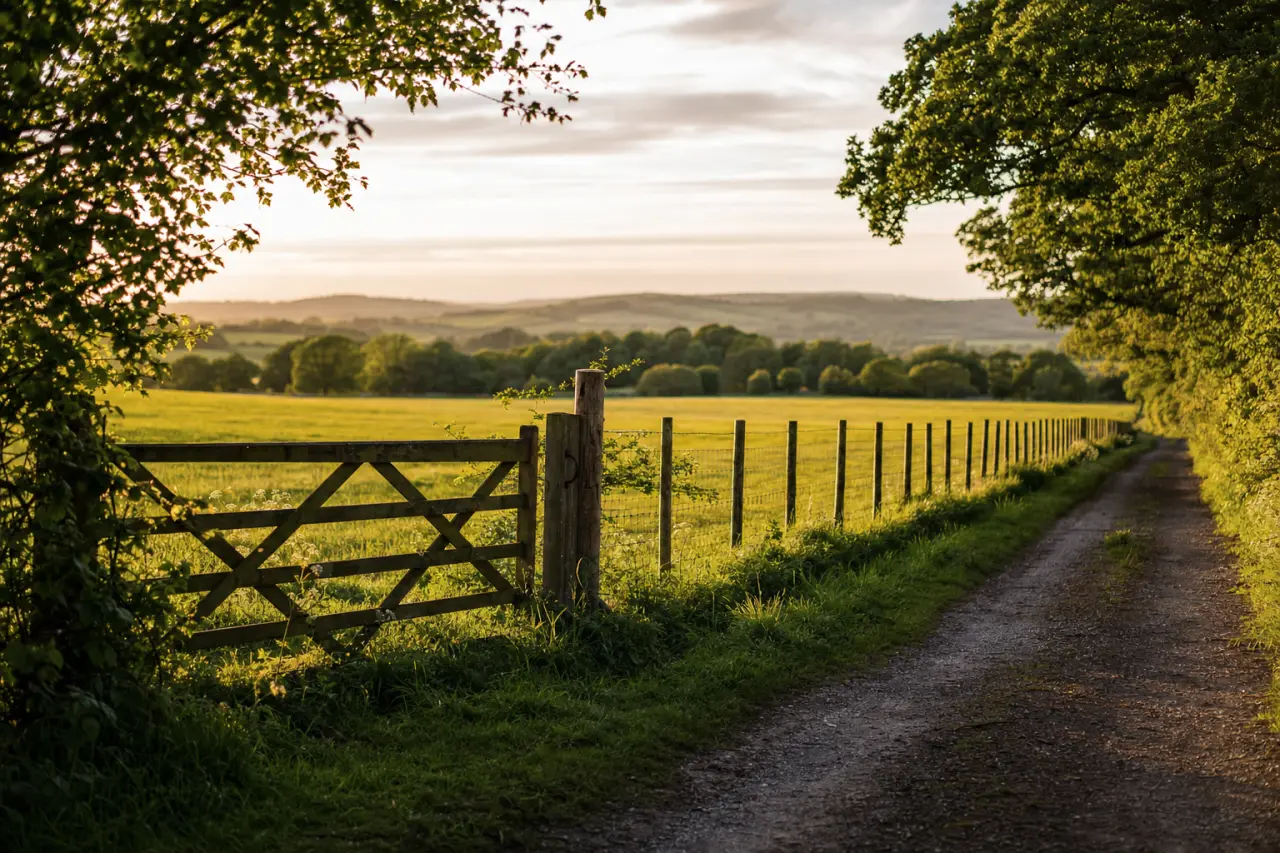
- Worn paths crossing the plot
- Gates or stiles on boundaries
- Waymarker posts or signs
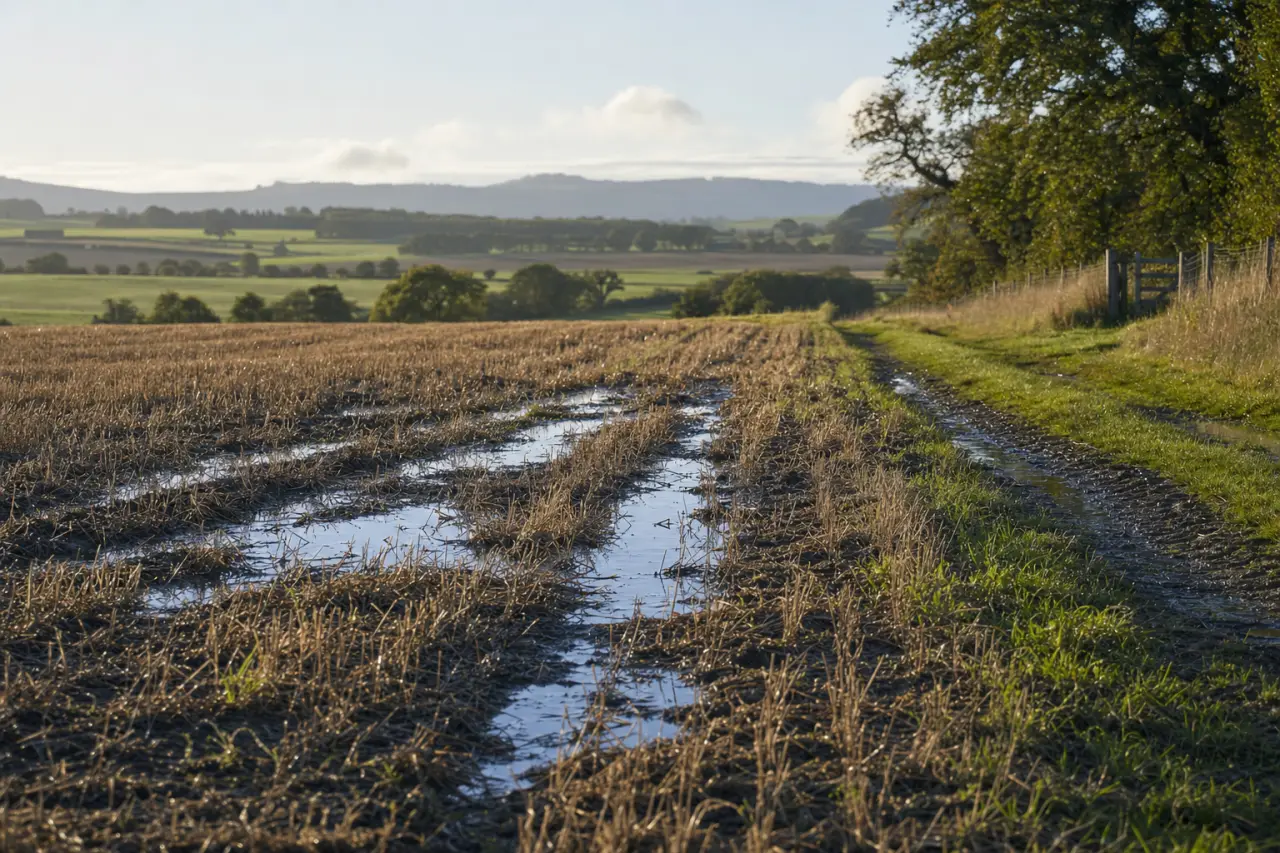
- Vehicle tracks through the land
- Utility company markers or manholes
- Evidence of regular use by others
Visit multiple times:
- Weekdays and weekends
- Different times of day
- Various weather conditions (muddy paths show use more clearly)
Talk to people:
- Dog walkers and ramblers using the area
- Neighbouring landowners
- Local farmers
- Parish councillors
Someone crossing your prospective land might be exercising a legal right, trespassing, or operating under a informal arrangement with the current owner that won't transfer to you.
Step 6: Question the Seller Directly
The TA6 Property Information Form (or TA10 for commercial land) requires sellers to disclose known easements, but it relies on their knowledge and honesty.
Ask specific questions:
- Are you aware of any rights of way across the property?
- Does anyone have permission to use the land?
- Have you granted any access rights to neighbours or utility companies?
- Are there any informal arrangements regarding access?
- Have there been any disputes about access or boundaries?
Insist on written answers and keep all correspondence.
Understanding What You Find
Once you've gathered information, you need to interpret it correctly.
Interpreting Easement Descriptions
Legal descriptions can be opaque. Here's what common phrases mean:
- "At all times and for all purposes": Unrestricted use, including vehicles
- "On foot only": Pedestrian access, no vehicles
- "In common with others": The right is shared; you can also use the route
- "In gross": A right that benefits a person rather than land (often utility companies)
- "Appurtenant": A right that passes automatically with ownership of the land
- "Quasi-easement": An arrangement that might become an easement on sale
Assessing the Impact
Consider:
Location: A footpath across a corner of your plot has less impact than one running through the middle
Frequency: A right of way serving one cottage differs from one serving a housing estate
Type of use: Occasional agricultural access is less intrusive than daily school-run traffic
Maintenance responsibility: Check who must maintain paths and access routes
Width: A two-metre footpath is more restrictive than a narrow pedestrian right
What Rights of Way Mean for Development
If you're buying land for development, easements require special consideration:
Planning Permission Implications
Local planning authorities won't normally grant permission that:
- Blocks or restricts an established right of way
- Makes exercising the easement impractical or unsafe
- Significantly interferes with public access
Before applying for planning permission, you may need to:
- Apply to divert or extinguish the right of way (costly and time-consuming)
- Design around the easement (potentially compromising your plans)
- Seek agreement from those benefiting from the easement (may require compensation)
Diverting or Extinguishing Rights of Way
Under the Town and Country Planning Act 1990 (Section 257) and the Highways Act 1980 (Section 119), it's possible to divert or close rights of way, but:
- The process typically takes 6-12 months
- There's no guarantee of success
- Objections from users must be considered
- Alternative routes must usually be provided
- Costs can reach £5,000-£15,000 or more
- Public rights of way are harder to extinguish than private ones
Easements and Land Value
Easements affect land values differently depending on various factors:
Positive easements (rights you have over neighbouring land) can increase value by:
- Providing essential access
- Ensuring utility connections
- Protecting light and views
Negative easements (rights others have over your land) typically reduce value by:
- 10-30% for minor footpaths in non-development land
- 30-50% for significant vehicular rights affecting prime development land
- 50%+ if easements make the land effectively undevelopable
When requesting a land valuation, always disclose known easements for an accurate assessment.
Common Easement Problems and Solutions
Being aware of typical issues helps you negotiate or walk away before exchange:
Problem: Unregistered Easements
Solution: Request indemnity insurance (typically £50-200) to cover claims arising from unknown easements. Most lenders accept this, though it doesn't protect against the easement being enforced—only against financial loss.
Problem: Excessive Use
Solution: If an easement is being used beyond its legal scope (e.g., commercial vehicles using a "domestic access only" right), legal action can restrict it. Document evidence of excessive use before purchase.
Problem: Ransom Strips
Solution: When land is landlocked except for access across a third party's "ransom strip," negotiate a formal easement before purchase. Assume 25-50% of the land's development value as the asking price.
Problem: Maintenance Disputes
Solution: Ensure the conveyance clearly states who maintains shared access routes. If unclear, negotiate a deed of easement specifying responsibilities before completion.
Scotland and Northern Ireland: Key Differences
Scotland
Scots law handles easements differently:
- Called "servitudes" rather than easements
- Different registration system (Registers of Scotland)
- Access rights governed by the Land Reform (Scotland) Act 2003, which grants public access to most land for recreation
- No Definitive Map system; contact local councils' access officers
Northern Ireland
- Land Registry of Northern Ireland holds title documents
- Rights of way governed by different legislation (Access to Countryside Order 1983)
- Contact the Department of Agriculture, Environment and Rural Affairs for public path information
Questions to Ask Your Solicitor
Your conveyancing solicitor should investigate easements, but ask specifically:
- Have you checked the title register thoroughly for all easements?
- Are there any rights reserved in previous conveyances?
- Have you searched for public rights of way with the local authority?
- What easements benefit this land (positive rights)?
- What easements burden this land (negative rights)?
- Are any maintenance obligations attached to easements?
- Do any easements restrict development potential?
- Should we obtain indemnity insurance for unknown easements?
- Are there any pending applications to register new rights of way?
- Have you identified who has the benefit of each easement?
The Cost of Getting It Wrong
Real cases illustrate the importance of thorough checks:
A Hertfordshire buyer purchased farmland for £450,000, only to discover an unregistered right of way across the only suitable building plot. Development value loss: approximately £200,000
A Sussex landowner's planning application was refused because it blocked a public footpath. The diversion application took 18 months and cost £12,000, with no certainty of approval
A Yorkshire plot buyer discovered utility company easements prevented excavation for foundations. The land proved undevelopable
These outcomes were entirely avoidable with proper due diligence.
Final Steps Before Purchase
Before exchanging contracts:
- Review all searches: Ensure your solicitor has completed comprehensive easement searches
- Visit the site again: Make a final inspection knowing what easements exist
- Consider implications: Assess honestly whether easements make the land unsuitable for your purposes
- Renegotiate if necessary: Use newly discovered easements as leverage for a price reduction
- Obtain insurance: Arrange indemnity insurance where appropriate
- Request warranties: Ask the seller to warrant their disclosure is complete
Conclusion
Conducting a thorough easement check and right of way over land investigation isn't optional—it's fundamental to making an informed land purchase decision. The combination of Land Registry documents, local authority searches, professional surveys, and physical inspections creates a comprehensive picture of what legal rights affect your prospective plot.
Whilst the process requires time, effort, and some expense, it's minimal compared to the financial and legal consequences of discovering problematic easements after completion. Remember that easements are legal rights that you cannot simply ignore or remove without proper legal process.
Whether you're buying a small paddock or a large development site, understanding exactly what crosses your plot—and who has the right to do so—is essential to protecting your investment and avoiding future disputes.
Ready to start your land search? Browse available plots by location or get a free valuation if you're selling land. For comprehensive guidance on the entire purchase process, read our complete guide to buying land in the UK.
Remember: when it comes to easements and rights of way, what you don't know can cost you dearly. Invest in proper checks now to ensure your land purchase delivers the freedom and value you expect.